
Thunderfunk Bass Amplifiers Manual de usuario

Thunderfunk Bass Amplifiers
OWNERS MANUAL

2 | ThunderfunkBassAmpliersUsersManual
Thank you for Your Purchase
Thunderfunk Bass Amps are designed to be versatile, lightweight, and powerful, with built-in
Enhancer and Limiter, designed for the working bass player, amplifying the natural quality of the
bass instrument. The intent of the amp is to give you the best tone possible as soon as you plug in.
Noneedtoddlewiththecontrols.Forthersttimeallyourbasseswillshowtheirsonicsigna-
tures, and will all sound different from each other. This is something that you won’t know until
you experience it.
ThunderfunkTFB800-B2
All of our products are designed to be serviceable in a professional application. Everything we do
we do for a reason, and that reason is either tone, reliability, or to make the amp easily repairable
while on the road. We don’t use any surface mounted parts as they can’t be repaired without spe-
cial equipment and knowledge. Our amps can be repaired by any corner TV service shop.We use
“EI”irontransformersovertoroidsbecausetheysoundbetter.Weuselmcapsinthesignalchain
because they sound better. We use Switchcraft and gold-plated Neutrik connectors because
they’re more reliable. We use in-rush current limiters and surge protectors to make the amp more
reliable.

PAGE | 3
Digital Amps
We don’t do digital for one reason. Analog sounds better! What you’ll notice in digital amps is the
lack of a “Th” in the “Thump.” So you get “ump, ump, ump” and the low end bubbles along. Now
when you take a solo, it may sound good, but go back to a low bass line, and you’ll disappear on
stage. And a studio player told us that he was using a popular digital amp from Italy, and in the
headphones he heard a chorus! Is it possible that they put a digital effect into the amp to “beef it
up?” It’d be easy to do. And a third reason is these amps are made with parts and circuits that are
impossible for the average repair shop to handle. That’s why repairs usually require replacement
of the amp. That’s not very convenient for a professional player.
♦CAUTION--Earsareyourmostimportantpieceofequipment,andcannotbereplaced.
♦Usecommonsense.DONOToperateathighvolumelevelsoratlevelsthatareuncomfortable.
♦Ifyoueverexperienceanyringingintheears,yourbodyistellingyousomething:TURNDOWN.
♦If you suspect hearing loss, consult a health care professional.
AFewSecretsBehindTheThunderfunkTone
Thunderfunk Bass Amps are pure op-amp and transistor solid state designs – made famous by
suchclassicdesignsastheAcoustic360,andtheAMPBH-420.Theyusethelargesthigh-quality
powertransformersthatcanbepackedintotworackspaces.Halftheweightoftheampisthe
powertransformer,anditisconservativelycontrolledby1200-wattsworthofpowertransistors
intheTFB800-B2.
Otherkeyelementsoftheamp’stoneareawhoppingamountofpowersupplyltercapacitance,
so dynamics are maintained and distortion reduced even at the highest volumes and lowest fre-
quencies. A competitors’ amp might sound good in the store at low volumes, but falls apart when
pushed.
Andthebiggestreasonisweusehighqualitylmandsilvermicacapsprovidingapunchymid-
range, and a sweet high end that even makes piezo tweeters sound good. Other amps try to save
money by using electrolytic caps in the signal chain. The problem is that type of cap changes its
valuewithfrequency.They’remadeforpowersupplyltersthatrunataconstant60or120Hz.
Sowhenyoudesignalteryoupickvaluestokeepthedelaythroughthelterconstantacross
the frequency range you’re interested in. If the values you design for are always changing with the
frequenciesgoingthroughthelter,yougetaconfusedphase-shiftedsignalthatisthecauseof
the “I can’t penetrate the room” syndrome, similar to having woofers out of phase.

4 | ThunderfunkBassAmpliersUsersManual
FrontPanelFeatures
DualInputJacks–TheleftjackisdesignedforastandardSwitchcraft“280“¼inchplug,from
either a passive or active bass system. Passive systems have been around since the invention of
the electric bass, and active systems typically include a 9-volt battery inside the Bass, or use an
external supply, e.g., some Alembic models.
Thesecond¼inchplugcanbeusedintwoways,andbothinputscanbeutilizedatthesametime.
♦Therstapplicationisasaline-levelmonoinsert.Theoutputfromanalternativesourcesuch
as a drum machine, CD/tape player, or even a mix from the PA can be added. Set the volume for
the second source using the remote controls. This can be used for practicing or live use.
♦Thesecond¼jackcanalsobeusedtoprovideanoutputsignaltoyourtuner.NOTE:Sincethe
secondinputdoublesasasignalinput,theMuteSwitchwillkillbothinputs.
MuteSwitchwithLEDIndicator
Thispushbuttonmutestheinputsignal,withtheRedLEDlightingtoindicatemutedoperation.
Sincethesecondinput“tunerout”jackdoublesasaninput,itisalsomutedbytheMuteSwitch.
Gain/Limit with LED Indicator
This control sets the preamp gain of the amp, and sets how much limiting is done when the Limiter
Switch is pushed IN. The Gain Control works in conjunction with the Volume Control (the last
knobontheright).WhileyoumightthinkoftheVolumeControlasa“MasterVolume”itisnot.
Theampisdesignedtonotdistort.Ifyouwanta“FuzzBass”youshoulduseapedalinfrontofthe
amp, or through one of the Effects Loops (back panel).
Limit Switch
The Limiter is engaged when the Limit Switch is pushed IN. In this position, the Limiter will pre-
vent the input signal from exceeding a preset level and is adjusted by the Gain/Limit Control.
A limiter is used to squeeze the sound into a smaller dynamic range. It can be used to restrict
excessively loud signals from going through the amp, such as clicks, and pops when playing a “slap”
bass style. It is also used to “raise” the lower level signals to a higher level by “limiting” the higher
level signals. Its effect is similar to a compressor. But, while a compressor squeezes all the signals
continuously,

PAGE | 5
a Limiter “clamps” the higher level signals only, thereby allowing you to set a higher overall Vol-
ume level without creating excessively high “peak” signals.
A small time delay is built into the Limiter to prevent it from “riding” the low frequencies, causing
anaudible“pumping”effect.Usinganylimiterorcompressorwillaffectyoursound,soyoushould
adjust it by ear. A red LED is provided to indicate when the Limiter is taking affect. The higher
you set the Gain/Limit control, the more the Limiter will clamp the signal, and the longer the LED
will light. Excessive use of the Limiter will add a distorted sound to your instrument. Some bass
guitarswithweakoutputsignalswillnotrethelimiter.
Setting the Limiter
TurndowntheGain/Limit,andVolumecontrolsontheamp.MakesuretheLimitSwitchispushed
IN. Then turn the volume and tone controls on your bass all the way up and also set any effects to
as high an output level as you will use. Now play the instrument aggressively, and turn the Gain/
LimitcontrolupuntiltheredLEDindicatorlightasheson.NowincreasetheVolumeControl
until you have the level you wish to play at. To have a more “compressed” signal increase the Gain/
Limit control as needed, and balance this by decreasing the Volume control to a proper overall
level. Once this knob is set, it generally will not need to be adjusted until you change instruments
oreffects.ToplaywithouttheLimiteryoucaneitherpresstheLimitSwitchtotheOUTposition,
or set the Gain/Limit control low enough so that the red LED never lights.
REDLEDLimiterIndicator
used with the Gain/Limit control, it lights when the input signal crosses the threshold of the limit
circuit, and limiting is taking place. It might also light when the Limiter is switched off, but the LED
can be ignored. The circuit is not limiting.
Enhance Control
This tone-shaping control changes the instruments harmonic effect, giving the bass a more
identiable,penetratingtone.Whensettotheminimumlevel,itiseffectivelyoutofthecircuit.
As you advance the knob, the sound tightens up, boosting the very low, upper middle and, high
frequencies, while adding a dip in the lower middle frequencies. This brings out the fundamental
notes by reducing frequencies that mask them, and it enhances the high-end transients, similar to
techniques often used for recording bass in the studio. The effect is especially noticeable when
“slapping” on the bass guitar, and becomes more “transparent” as the control is turned to maxi-
mum. Adjust this control to taste.

6 | ThunderfunkBassAmpliersUsersManual
Tone Controls
To match your speaker cabinets and the bass instrument to the room you are playing in, a very
widerangeoftoneshapingisavailable.Whiletheampsarerenownforsoundinggreatat,you
can also dial in nearly any tone imaginable. A little can go a long way; excessive boost or cut in any
one area may destroy your tone, while a single boost or cut can make a world of difference.
Overall bass and treble adjustments are made with the Bass and Treble controls, which con-
trolabroadrangeofthefrequencyspectrum.Manyplayersusethesecontrolstocompensate
for acoustic situations, relying on the Enhance and Parametric controls to achieve their sound.
Experiment!Addbottomtollinalowvolumegig.Adjustthelower-mid’stocompensatefor
that dead spot on your vintage neck. Add midrange to cut through the mix. Lower the high end to
reduce fret noise and string squeak.
Bass Control
Thistonecontrolisashelvingtype,providingaboostorcutof15dBstartingat80Hz.Frequen-
cies above this are not really affected, but frequencies below are boosted uniformly. The control
isatatthe12o’clockposition,foraneasyandfastatsetting.
Semi-Parametric Controls
There are four pairs of semi-parametric controls. These let you boost or cut the sound at the
specicfrequencies,compensatingforroomandspeakervariations,differentplayingstylesand
instruments,etc,withoutconictingsettings.Theupperknobselectsthefrequency,andtheknob
immediately below selects the amount boosted at that frequency, providing a 15 dB boost or cut
adjustedinaxedone-octavebandwidth.
FrequencyControls
These four controls are provided for selection of the low, low-middle, upper-middle, and high
frequencies you may wish to boost or cut.
Boost/Cut Controls
LocatedbeneatheachFrequencyControl,thesecontrolswillboostorcuttheselectedfrequency
by+/-15dB.Theyareatattheir12o‘clockposition,andthecontrolisdetentedsoitiseasyand
fasttosettheindividualEQcontrolstoat.
PAGE | 7
Asimpleturnfromonedottothenextcreatesadifference.Rememberthatalittlecangoalong
way.
♦Therstknobisoftenassociatedwith“Solid”,especiallyinthe50Hzarea.Atlowervolumes,
youmaywishanincreasetolloutthebottomend–similartothe“loudness”controlonyour
stereo –while at louder settings, consider a cut here. This is also a good knob to help out less
thanfullrangecabinetdesigns,addingbackthe“-3dB”oftenseeninspecications.Since“-3
dB”ishalvethepowerof“0dB”,acabinetdesignedforthefullrangeoftheinstrumentwill
always sound better.
♦Thesecondknobhasbeenfoundtobeusefulforllinginthedeadspotsocommononmany
necks –the one about ½ way up on the “G” string. The top three bands control frequencies
whereyoursoundstartstogetdenedashumanhearingstartstosharpen.Therightamount
of midrange gives you clarity and punch, but be careful: too much can sound harsh.
♦Fingernoisemaybefoundbetween500and1000Hz,andthethirdknobcanbeusedtosub-
tractunwantednoiseandoptimizethengereffect.Thoseusingaslaporpopstylewillnd
this useful to eliminating harshness by adjusting upper midrange frequencies. This is also a
useful range to adjust the “honk” prevalent in some speaker cabinets.
♦The fourth knob can help add a top end “snap” that dull-sounding speaker systems or pickups
lack, as well as compensate for an old set of strings.
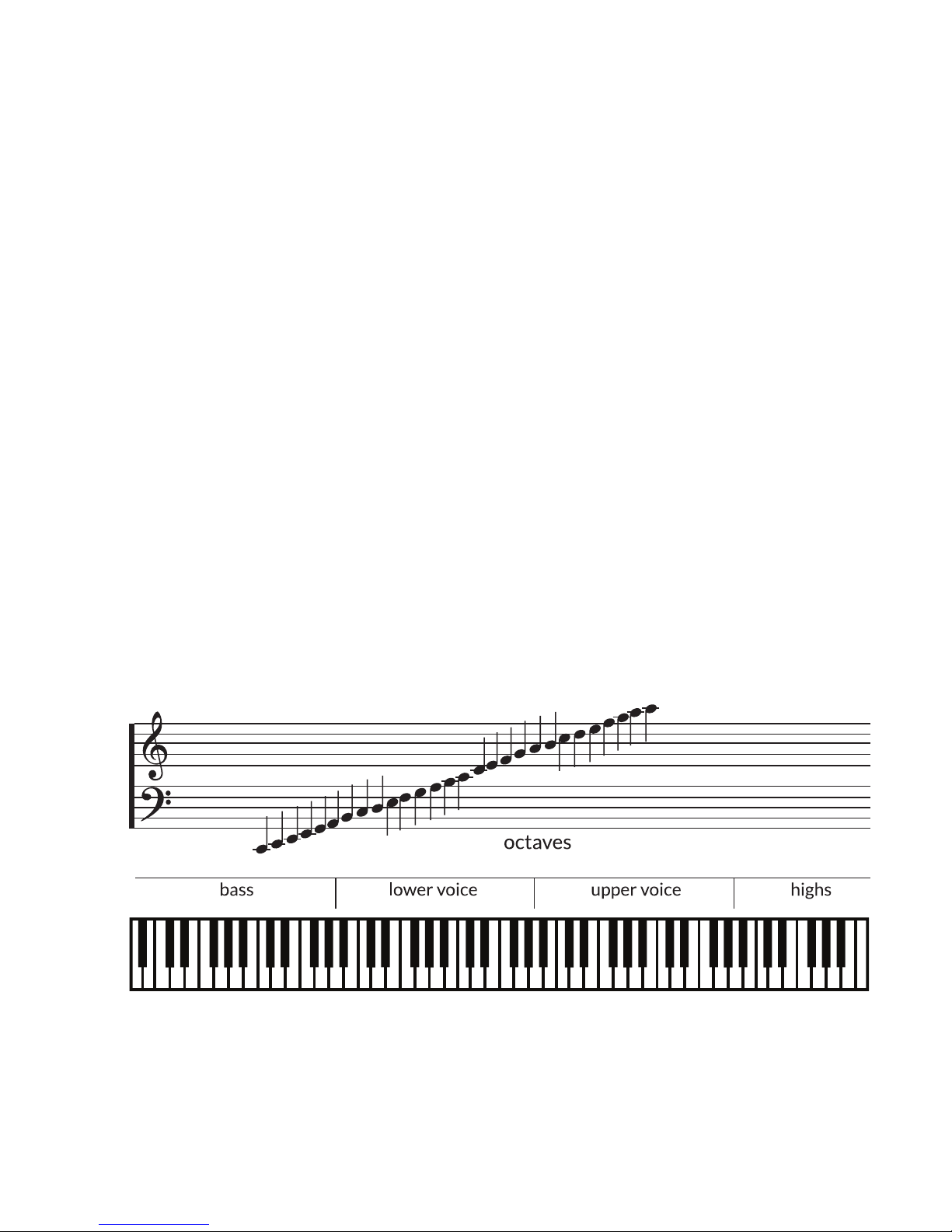
OpenStrings:“B”@31Hz,“E”@41Hz,“A”@55Hz,“D”@73Hz,“G”@98Hz,“C”@132Hz.

8 | ThunderfunkBassAmpliersUsersManual
LearningHowTheParametricControlsWorks
Try this. Boost the level control in one section, so you will more easily hear the frequency you are
adjusting. Then rotate the frequency control directly above it. After you identify what frequency
you’re adjusting, return to the level control to adjust it to the desired amount of boost or cut.
Contour the sound to your liking. When you become experienced with parametric adjustment,
you can of course skip most of the above, but parametric EQ is a very powerful tool that is easy to
overuse. When it doubt, use less.
FunWithTheParametric
To determine the low frequency response of your speakers, add boost using the lowest frequency
parametric control. You’ll hear an increase in low frequency response. While playing the lowest
note on your bass, turn the frequency control down until the low frequency response disappears.
Turn it back up until you hear the boost again. Look at what frequency the control is set to. That’s
the low frequency response of your speaker cabinet.
Treble Control
Thistonecontrolisashelvingtype,providinga15dBofboostorcutatslopestartingat2000Hz,
whichisabovethefundamentalnotesofevenastandardguitar.Frequenciesbelowthisarenot
reallyaffected,butfrequenciesaboveitareboosteduniformly.Thecontrolisdetentedatthe12
o’clockpositionforaneasyandfastatsetting.
This may be a good place to discuss harmonics. It is the sound of natural and addition vibrations
that distinguishes one instrument from another. They are why a piano sounds different than a
guitar, for example, and are a primary reason you have a unique sound.
Harmonicscanbedenedasweakervibrationsthatarehigherthanandmathematicallycoordi-
natedwiththefundamentalnotes.Harmonicsarecausedbyaninnitevarietyoffactors,includ-
ing for example where and how you pluck a string, the type of string, the wood the bass is made
from,theresponseoftheamplier,speakers,etc.
Timbre Control
This unique control is great for making rapid and useful adjustments to the overall tone. One use
istocompensatefordifferentinstruments,forexamplechangingaRickenbackertoa“P”bass.
Anotheruseistomakeaquickmid-setchangefromaFunktoaReggaesong.

PAGE | 9
LiketheEnhancecontrol,itisacomplexadjustmentofbothtrebleandbassononeknob.Useitto
range from a full to a punchy bass tone. Turned down you get a deep, full-bass tone, and turned up
you get a tight, punchy-bass tone.
ItissuggestedyoustartwiththeTimbreatthe12o‘clocksetting,settheEQforthespeakersand
room,andthenexperiment.Thecontrolisdetented,foraneasyandfastatsettingandremoval
from the circuit.

10 | ThunderfunkBassAmpliersUsersManual
ToneRevisited
HowyousetyourEQdependsonstyle,equipment,theroom,cabinetplacement,audience
quantity, etc. When playing in different rooms, cabinet placement and room acoustics play a criti-
calroll,foreveryonebutespeciallyforbass.Manyclubs,auditoriums,rehearsalhalls,etc.tend
tonaturallyenhancethefrequenciesbelow50Hz,whilepeopleintheroomabsorbthehigher
frequencies.ThisiscalledFrequencyEnhancement,andsometimesitisgood,sometimesitcauses
difculties.Lowfrequenciesdotendtobeomni-directional–youcan’treallytellwheretheyare
comingfrom.Placingthecabinetonaraisedwoodenstagewillacousticallycoupleitandsigni-
cantly boost fundamental frequencies. Setting it against the wall can couple the walls to your
speaker cone, and placement in a corner can add even more effect. Combine all these and exces-
sive “boominess” is a common result. It is not heard on stage, but often is at the back of the room.
To be felt as well as heard, try backing off the bass a little while boosting the upper-mids or treble
a bit.
When playing with other musicians, it is not unusual for instrument frequencies to interfere with
eachother.ThisisFrequencyMasking.EQsettingsthatonceseemedsoperfect,don’tworkwell
inadifferentroom.WhileaThunderfunkisoftenused“at”withnoadditionalEQ,thesound
next to the cabinet WILL be different than it is in other places in the room. This phenomena is
universal and is often more noticeable in the audience than on stage, and it is not uncommon for
the bass sound to seem a little thin on stage and the same time sound quite muddy at the back of
the room.
ThegoodnewsistheThunderfunkcanbeadjustedtonearlyanytoneimaginable.Ultimatelyit
boils down to experience, a good trained ear, and practice. If you get a sound check, or play the
same place often, move around to hear what it sounds like in different places. Try new things. Get
someone you trust to help, but remember: a little goes a long way, and a couple of dB’s of EQ, or
relocation of the cabinet, or a different cabinet may be all you need to solve these issues. One
other item: if you have guitar players in the band, ask them to follow the Les Paul rule. Les Paul’s
cardinal rule is this: point guitar speakers directly at the guitar player’s ear. Between us bass play-
ers, everyone will be glad when that happens.
Volume Control
Adjuststheoverallamplieroutput.Theactualvolumeofyourelectro-acousticsystemisdeter-
mined by many elements, the most important being the sensitivity of the speakers. A speaker sys-
temwithasensitivitythatis10dBmorethananotherspeakersystemwillsoundTWICEasloud.
Este manual sirve para los siguientes modelos
1
Tabla de contenidos


