Welcome, and thank you for purchasing Teleste’s CFO OP-X Products.
General
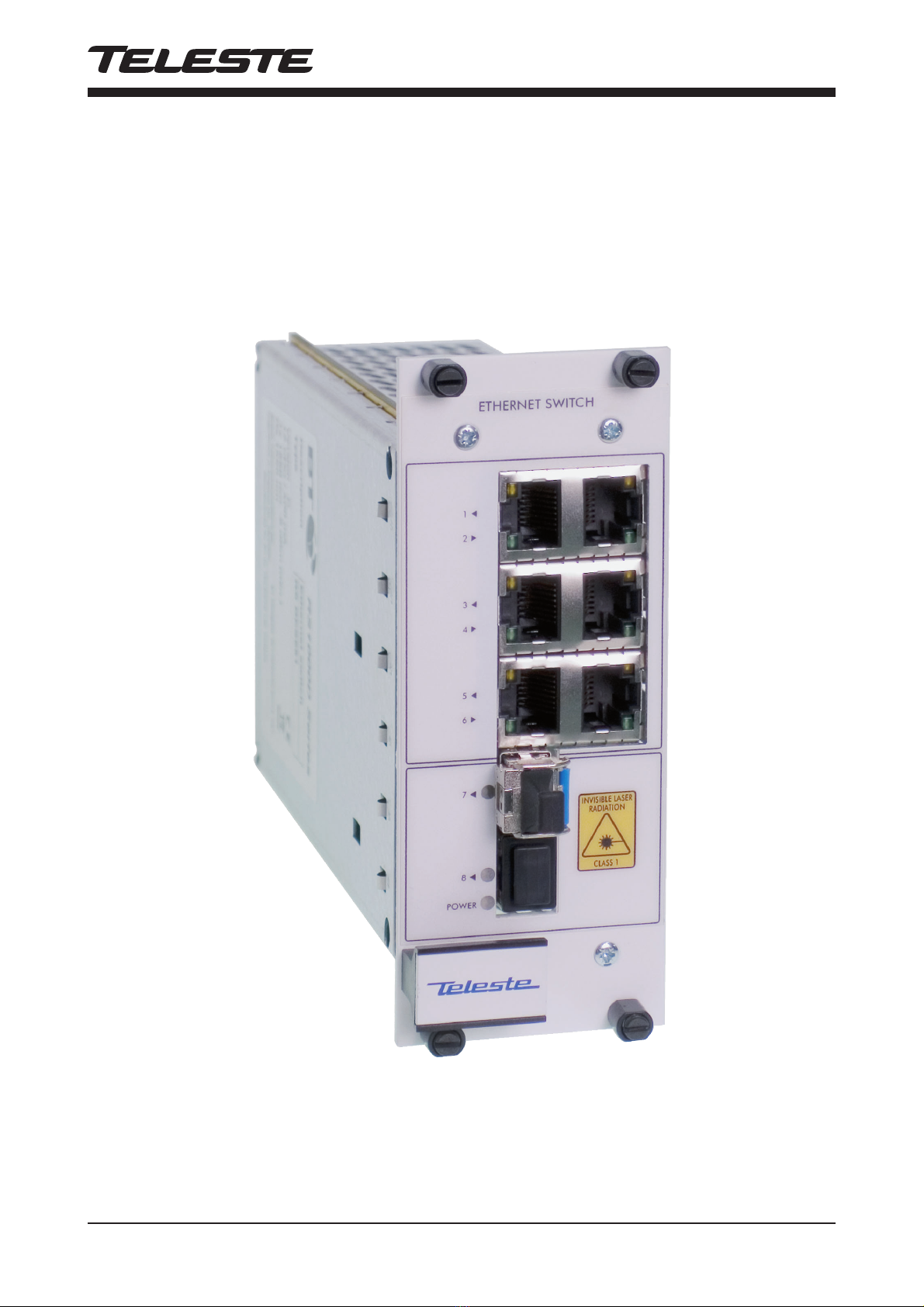
CES is an unmanaged (supports limited management) field hardened
stand-alone Fast Ethernet Switch for video networking applications.
The CES supports SNMP management, port configuration, port alarms,
QoS (layer 2 and 3) and port mirroring.
Switching Methods
The Switch stores every incoming packet and scans this for errors,
usually by checking the frame CRC (cyclic redundancy check sum).
If any errors are found or detected the packet is discarded. In addi-
tion each frame is checked for size. Undersized packets (less than 64
Bytes) and oversized packets (more than 1518 bytes (*)) are also
discarded. Once these basic checks have been carried out the
Switch can then start learning packet source and destination informa-
tion. (*) When implementing Ethernet MAC tagging maximum Ether-
net packet length is increased to 1522 bytes.
The Switch needs to make a decision regarding which port(s)
the packet is to be forwarded to. This decision is based upon
the MAC tables that are maintained and updated automatically by
the Switch. The process is known as Layer 2 Switching. When first
powered on the MAC tables within the Switch are empty. When
a packet is received on a port the Switch does not know where
the destination MAC address is located. The Switch learns
the address by ‘flooding’ the packet out to all ports. Eventually,
the destination node responds, the address is located and the Switch
remembers the destination port. In simplistic terms; when a Switch
receives a packet on a port it stores the source MAC address in
the MAC table that corresponds to that Port. The flooding technique
is always used with Broadcast and Multicast packets. If the Switch is
equipped with multicast management then multicast packets will not
be flooded.
A MAC table can hold up to 2 K entries; and with a total packet
memory of 1 Mbit this is adequate for normal networks. Naturally,
devices will be disconnected from Ports during the life of a network.
If the MAC table did not automatically monitor for idle nodes the table
would become full. If a node has been idle for more than a few
seconds the source and destination information for that node will be
deleted from the table. This is commonly known as the ‘age time’.
MAC table size is normally always large enough for industrial net-
works. Packet memory size on the other hand can affect perform-
ance and ability to handle short high load/overload situations when
an event occurs in a control network or similar industrial network.
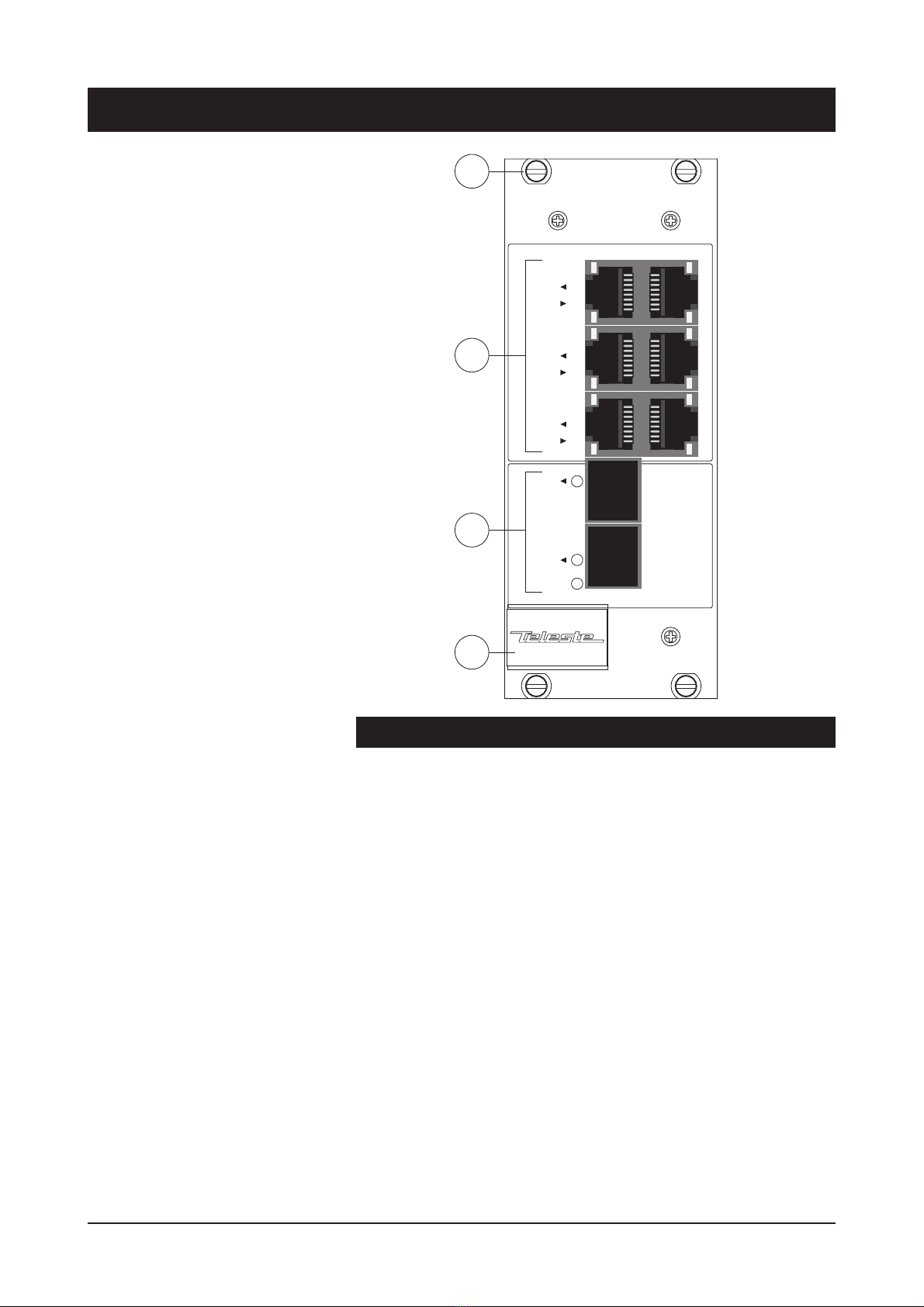
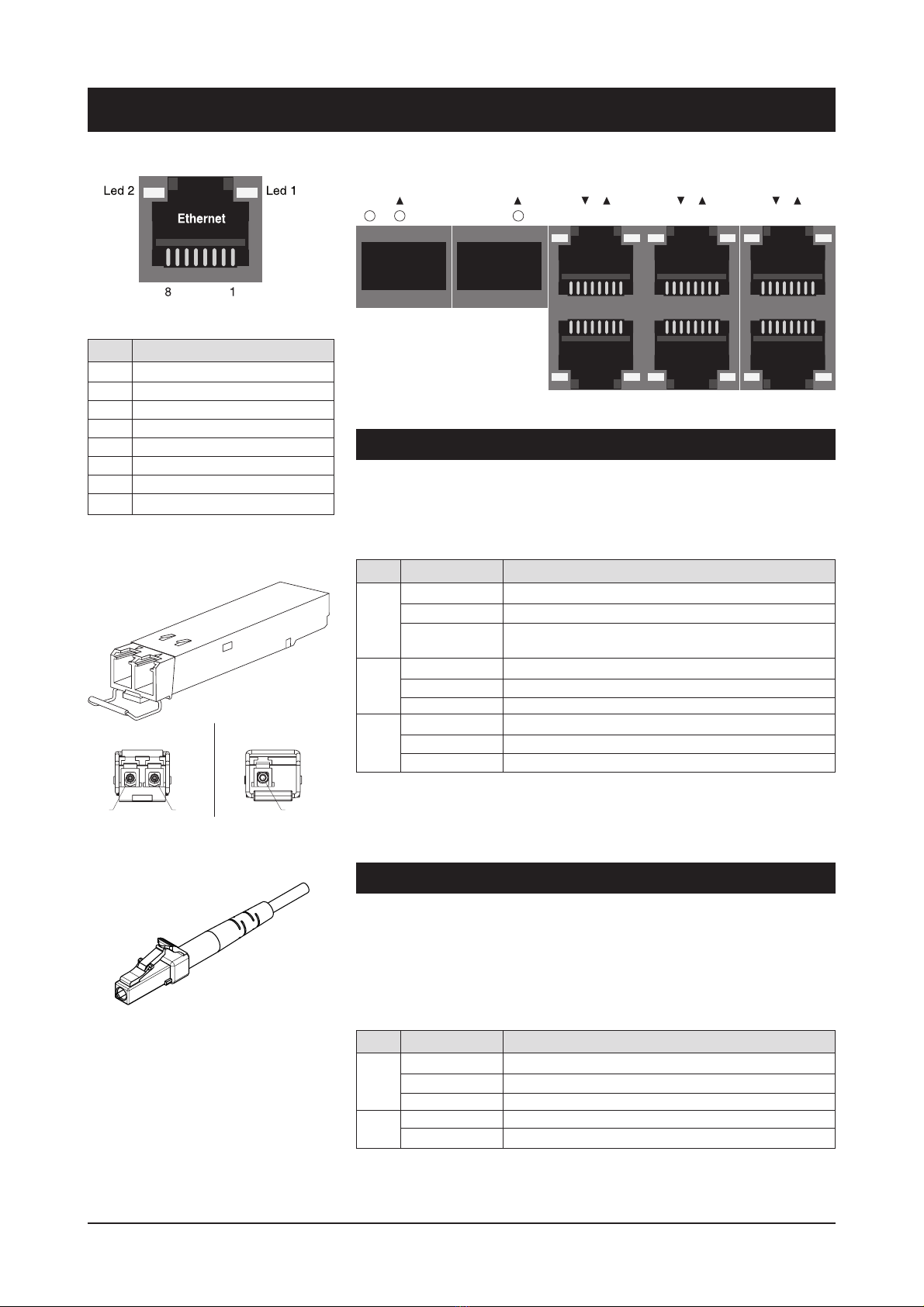
Stand-alone 8 port Fast Ethernet switch with 6 x 10/100Base-
Tx Local ports and 2 x 100Base-Fx Up-link ports, multimode or
singlemode devices
CES Fast Ethernet Switch Introduction
E
x6
M
gmt
CES Series User Manual rev002 1