5
cannot be seen. Like oxygen, CO enters
the body through the lungs during the
normal breathing process. It competes
with oxygen by replacing it in the red
blood cells, thereby reducing the flow of
oxygen to the heart, brain and other vital
organs. In high concentrations, CO can
kill in minutes.
Many cases of reported carbon monoxide
poisoning indicate that while victims are
aware they are not feeling well, they
become disorientated and unable to save
themselves by either exiting the building
or calling for assistance. Exposure during
sleep is particularly dangerous because
the victim usually does not wake up.
Symptoms of CO poisoning
The following symptoms may be related
to CO poisoning which all household
members should be made aware of:
• Mild Exposure: Slight headache,
nausea, vomiting, fatigue (often
described as ‘flu-like’ symptoms).
• Medium Exposure: Severe throbbing
headache, drowsiness, confusion, fast
heart rate.
• Extreme Exposure: Unconsciousness,
convulsions, cardiorespiratory failure,
death.
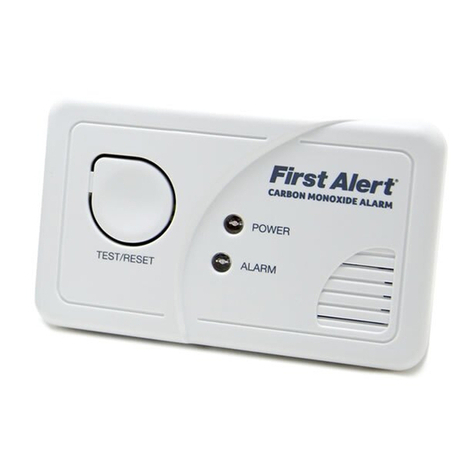
Your CO detector monitors the level
of CO as parts per million (ppm) in the
atmosphere surrounding the detector.
35ppm The maximum allowable
concentration for continuous
exposure for healthy adults
in any 8 hour period, as
recommended by the
Occupational Safety and Health
Administration (OSHA).
200ppm Slight headache, fatigue,
dizziness, nausea after 2 - 3
hours.
400ppm Frontal headaches within 1 - 2
hours, life threatening after 3
hours.
800ppm Dizziness, nausea and
convulsions within 45 minutes.
Unconsciousness within 2
hours. Death within 2 - 3 hours.
Should you suspect CO may be affecting
you or your family, open the doors and
windows of your property to ventilate,
turn off your appliances and evacuate
the premises. At this time the authorities
should be contacted to locate the source
of the carbon monoxide before re-
entering the building. Medical attention
should be sought for anyone suffering
the effects of CO poisoning.
Common sources of CO
• Oil and gas boilers
• Portable generators
• Oil or solid fuel cookers
• Gas or paraffin heaters
• Barbecues
• Clogged chimneys
• Wood or gas fireplaces
• Cigarette smoke
• Gas appliances
• Any fossil fuel-burning appliance
WARNING: This carbon monoxide
detector is not a combustible gas
detector, nor a smoke detector. Please
install the proper detectors to detect
combustible gases, or smoke.
This CO detector should not be seen as
a substitute for the proper installation,
use and maintenance of fuel-burning
appliances (including appropriate
ventilation and exhaust systems), nor the
sweeping of chimneys.
WARNING: Variables relating to your
fuel-burning appliances can change at
any point eg. the flue or chimney could
suddenly become blocked or damaged,
appliances may stop running correctly
or circumstances in neighbouring
properties may change resulting in the
presence of carbon monoxide. For this
and other reasons do not use this carbon
monoxide detector on an intermittent
basis, or as a portable detector for trying
to trace one source of the spillage of
combustion products from fuel-burning
appliances or from chimneys.
Do not:
• IGNORE ANY WARNING FROM YOUR
CO DETECTOR!
• Burn charcoal inside your home,
caravan, tent or cabin.