KATEK TeleAlarm LE80 Manual de usuario

LE80 Radio Receiver
LE80_UM_EN_V1.1_2021.12_Final
en User Manual


LE80 Radio Receiver Table of Contents | en 3
TeleAlarm User Manual LE80_UM_EN_V1.1_2021.12
Table of Contents
1 Safety instructions 5
1.1 General safety instructions 5
1.2 Environmental conditions 5
1.3 Electrostatic Discharge (ESD) 5
2 Product information 6
2.1 General description 6
2.2 Compatible transmitters 6
2.3 Main applications 7
2.4 Description of the different modes 8
3 Installation 11
3.1 Unpacking 11
3.2 Wall installation 11
3.3 Connecting the power supply 12
3.3.1 Power supply with the RJ12 power socket 12
3.3.2 Power supply connected to a wired installation 12
4 Connection compartment 13
4.1 Connecting ports 13
4.2 Mode selection 13
5 Programming 15
5.1 Enter programming mode 15
5.4 Program a transmitter in modes 1, 2, 5, 8 or 9 16
5.5 Delete a transmitter 17
5.6 Delete all transmitters 18
5.7 Program a door address in modes 3 or 4 19
5.7.1 Programming in modes 6 or 7 19
6 Operation 20
6.1 Standby mode 20

4en | Table of Contents LE80 Radio Receiver
LE80_UM_EN_V1.1_2021.12 User Manual TeleAlarm
6.1.1 Standby with no transmitter programmed 20
6.1.2 Standby with at least one transmitter programmed 20
6.2 Normal mode (modes 1 and 2) 20
6.2.1 Activation of a transmitter in normal mode 20
6.3 Dementia (mode 3) 21
6.3.1 Activation of a S37L Wristband Transmitter 21
6.3.2 Detection of a S37E Wristband Transmitter alone 22
6.3.3 Detection of a S37L Wristband Transmitter with a S37E
Wristband Transmitter nearby 22
6.4 Dementia with Accompany (mode 4) 23
6.4.1 Activation of a S37L Wristband Transmitter 23
6.5 Remote control (mode 5) 23
6.5.1 Activation of a programmed transmitter 23
6.5.2 Activation of a programmed transmitter with a battery-low
message or with a new battery 24
6.6 Open receiver (modes 6 and 7) 24
6.6.1 Activation of a transmitter in the reception range 24
6.7 Daily messages in modes 1, 2 or 5 25
6.7.1 Daily message with battery-low signal 25
6.7.2 Reset of a battery-low indication with button T1 25
6.8 Extended N46 (mode 8 from SW 1.10 on) 25
6.9 Dual channel receiver (mode 9 from SW 1.10 on) 26
7 Maintenance 28
7.1 Cleaning 28
7.2 Storage 28
7.2.1 Short term storage conditions 28
7.2.2 Long term storage conditions 28
7.3 Disposal 28
8 Technical data 29

LE80 Radio Receiver Safety instructions | en 5
TeleAlarm User Manual LE80_UM_EN_V1.1_2021.12
1 Safety instructions
1.1 General safety instructions
Installation and initial operation should only be carried out
by trained service personnel.
1.2 Environmental conditions
The LE80 Radio Receiver must not be located near a water
tap or any other source of water. The electrical safety of the
LE80 Radio Receiver is only guaranteed if the electrical
installation is in accordance with the national regulations
and if this installation works properly. The LE80 Radio
Receiver may not be used in buildings prone to fire and
explosion hazards.
The LE80 Radio Receiver may not be used under exposure
to direct sunlight, to heat, to dust or to an excessive humidity
(only use the equipment in a clean environment).
Connect the power adapter in a power outlet near the unit.
Make sure that it remains easily accessible.
1.3 Electrostatic Discharge (ESD)
WARNING!
The LE80 Radio Receiver contains highly sensitive electronic
components. It should be opened only in an ESD protected
environment with respect to the following precautions.
Discharge yourself from electrostatic loads by touching a
grounded conductive surface before opening the unit. Avoid
touching conductive parts inside the LE80 Radio Receiver if
not absolutely necessary.

6 en | Product information LE80 Radio Receiver
LE80_UM_EN_V1.1_2021.12 User Manual TeleAlarm
2 Product information
2.1 General description
The LE80 Radio Receiver is designed to receive radio signals
from different TeleAlarm radio transmitters at the frequency
of 868.8 MHz. After receiving radio signals from either
programmed or not programmed wireless transmitters, the
LE80 Radio Receiver reacts by switching relay outputs of
two relays and by activating its two multi-colors LEDs. The
radio network works bidirectionaly, improving radio
transmission reliability.
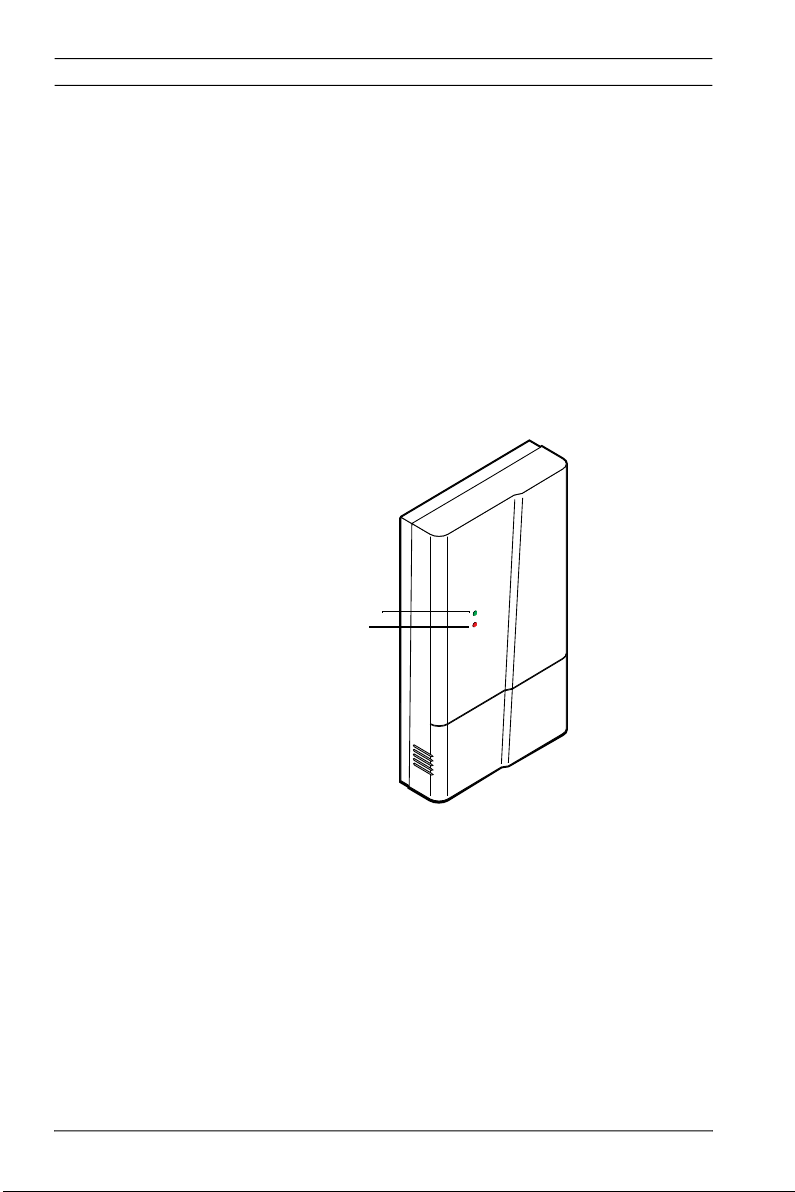
Figure 2.1 Front view of the LE80 Radio Receiver
2.2 Compatible transmitters
All of the following TeleAlarm wireless transmitters are
compatible with the LE80 Radio Receiver:
– S87 Wristband Transmitters
– S87L Wristband Transmitters with Locating function
– B80A Wristband Transmitters with Accompany
function
– S85 Pendant Transmitters
LED 1 (green)
LED 2 (red)

LE80 Radio Receiver Product information | en 7
TeleAlarm User Manual LE80_UM_EN_V1.1_2021.12
– RAC80 Wireless Contact
– UPCBA80 Universal Transmitter
– N86 Wall Transmitters
– All TA 868.8 MHz peripherals, like smoke detector and
other accessories
2.3 Main applications
2.3.1 LE80 Radio Receiver as a small stand-alone call
system
After receiving a radio signal from a programmed radio
transmitter, the relay output switches can be used to switch
a siren or a lamp to indicate locally a wireless call.
2.3.2 LE80 Radio Receiver connected to a nurse call
system via relay contact
After receiving a radio signal from a programmed radio
transmitter, the relay will be switched. This relay output is
connected to a wired nurse call system by wire and hereby a
call will be generated or forwarded.
2.3.3 LE80 Radio Receiver as part of a NurseCall
dementia system
After receiving a signal from a S87L transmitter, the relay
will be activated to close a monitored door or passage, or to
generate a call on a wired system.

8 en | Product information LE80 Radio Receiver
LE80_UM_EN_V1.1_2021.12 User Manual TeleAlarm
2.4 Description of the different modes
Mode Name Description
1 Normal (default
mode)
20 wireless transmitters can be
programmed. Calls are indicated by LED 2
and Relay 1. A battery-low signal is
indicated by LED 2 and Relay 2.
Additionally, the custom output provides
predefined voltages for four different
predefined calls.
2 LED 2 deactivated
at battery-low
indication
The same functions as in mode 1 are
available, except for the battery-low signal
which is not indicated by LED 2, but only by
Relay 2. Additionally, the custom output
provides predefined voltages for four
different predefined calls.
3 Dementia S87L and B80A wireless transmitters are
detected. Relay 1 can be used to lock a
monitored door. Relay 2 can be used to
interrupt a monitoring device.
4 Dementia with
Accompany
This mode allows the LE80 Radio Receiver
to be connected to a wired NurseCall
system, in which the Accompany function
can be implemented. It will wait 10 seconds
after receiving a signal from a S87L
transmitter. If it detects an B80A
transmitter in this lapse of time, then no
alarm is generated. If not, then Relay 1 is
activated for 2 seconds.
5 Remote control 20 wireless transmitters can be
programmed. Per sequence, only the same
transmitter can switch on and off the Relay1.
A battery-low signal is indicated by LED 2
and Relay 2.

LE80 Radio Receiver Product information | en 9
TeleAlarm User Manual LE80_UM_EN_V1.1_2021.12
6 Open receiver No wireless transmitter needs to be
programmed. Any transmitter within
reception range of the LE80 Radio Receiver
can activate the device.
7 Open receiver with
door number
Same functions as in mode 6, but with door
position transmission. Any transmitter
within reception range of the LE80 Radio
Receiver will activate the device, but only if
the LE80 receives a datagram (at the
exception of a dementia) which contains the
door number.
8 Unique N86
transmitter
behavior
Behavior is similar to normal mode 1, with
certain differences according to the
transmitter or call type that is activated.
Triggering an alarm on a programmed N86
transmitters will activate the Relay 1 for
max. 20 min. The 20 min. cycle can be
interrupted by the acknowledgment
function of the same N86.
The Call type "Assistance" from a
programmed transmitter in repetition mode
will produce the same effect as a programed
N86. Also in this case the 20 min. cycle can
be interrupted by the acknowledgment
function of the same transmitter.
9 Dual channel
receiver
All TeleAlarm wireless transmitters can be
programmed. Calls are indicated by Relay 1
or Relay 2, according to the slot in which the
wireless transmitter is programmed. A
battery-low signal is indicated by the red
LED.
Mode Name Description

10 en | Product information LE80 Radio Receiver
LE80_UM_EN_V1.1_2021.12 User Manual TeleAlarm
NOTICE!
Factory setting is normal mode 8, in which 20 wireless
transmitters can be programmed. Calls are indicated by the
LED 2 and Relay 1. A battery-low signal is indicated by the
LED 2 and Relay 2.
Tabla de contenidos
Otros manuales de Receptor de KATEK