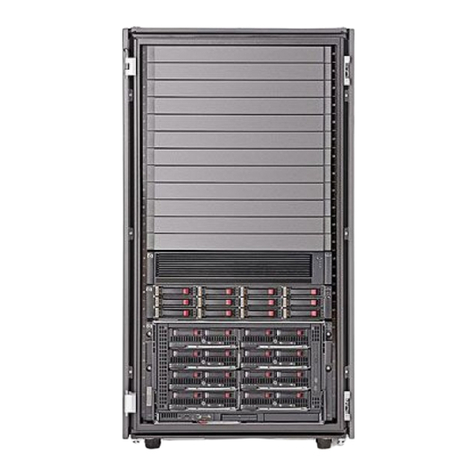
IBM FlashSystem 900 Manual de usuario

FlashSystem 900 Product Guide 1
®
FlashSystem 900 Product Guide
IBM Redbooks Product Guide
Today's global organizations depend upon the ability to unlock business insights from massive volumes of
data. Now, with IBM FlashSystem 900, they can make faster decisions based on real-time insights and
unleash the power of the most demanding applications, including online transaction processing (OLTP)
and analytics databases, virtual desktop infrastructures (VDIs), technical computing applications, and
cloud environments.
Easy to deploy and manage, the IBM FlashSystem 900 is designed to accelerate the applications that
drive business. Powered by IBM FlashCore™ Technology, IBM FlashSystem provides the following
characteristics:
Extreme performance with IBM MicroLatency™ delivers 90 µs write latency and 155 µs read latency
z
Macro efficiency lowers operating costs and increases efficiency of IT infrastructure by using much
z
less power and space than traditional hard disk drive (HDD) and solid-state disk (SSD) solutions
Enterprise reliability protects critical assists with two-dimensional RAID protection, IBM Variable
z
Stripe RAID, redundant and hot-swappable components, and concurrent code loads
FlashSystem 900 can be configured in capacity points as low as 2.4 TB usable after RAID 5 protection.
Coupled with 10 Gbps iSCSI, FlashSystem is positioned to bring extreme performance to small and
medium businesses (SMBs) and growth markets. Figure 1 shows FlashSystem 900.
Figure 1. FlashSystem 900
At the heart of FlashSystem 900 is IBM FlashCore Technology, which consists of the following three key
elements:
Hardware-accelerated architecture that is engineered for flash, with hardware only data path
z
IBM MicroLatency modules that are designed for low latency, density, and reliability
z
IBM Advanced Flash Management that improves MLC flash endurance 9x over standard
z
implementations without sacrificing latency

FlashSystem 900 Product Guide 2
Figure 2 shows IBM FlashCore Technology
Figure 2. IBM FlashCore Technology
Did you know?
FlashSystem 900 has these characteristics:
FlashSystem 900 is configurable with 2.4 - 57 TB of usable capacity for scalability and flexibility.
z
FlashSystem 900 provides flexible interface types including Fibre Channel, Fibre Channel over
z
Ethernet (FCoE), iSCSI, and InfiniBand to easily integrate into existing SAN environments.
FlashSystem 900 offers hardware-based AES 256 data-at-rest encryption with no performance
z
impact.

FlashSystem 900 Product Guide 3
Key features
FlashSystem 900 provides extreme performance with IBM MicroLatency™, macro efficiency, and
enterprise reliability.
Scalability and performance
FlashSystem 900 has the following scalability and performance features:
IBM FlashCore technology for consistently high performance at lower cost
z
90us/155us read/write latency
z
Up to 1.1 million random read 4 K IOPS
z
Up to 10 GB/second read bandwidth
z
IBM-enhanced Micron MLC technology for higher storage density and improved endurance
z
Flexible interface types of Fibre Channel, Fibre Channel over Ethernet (FCoE), iSCSI, and InfiniBand
z
Up to 16 ports of 8 Gbps or eight ports of 16 Gbps Fibre Channel
z
Up to 16 ports of 10 Gbps FCoE
z
Up to 16 ports of 10 Gbps iSCSI
z
Up to eight ports of 40 Gbps quad data rate (QDR) InfiniBand
z
Slots for up to 12 hot-swappable IBM MicroLatency storage modules (1.2 TB, 2.9 TB, or 5.7 TB)
z
Configurable 2.4 - 57 TB of capacity for increased flexibility
z
Enterprise-class reliability features
FlashSystem 900 delivers the following enterprise-class reliability features:
Concurrent code load enables customer applications to remain online during firmware upgrades to all
z
components, including the IBM MicroLatency modules.
Hot-swappable IBM MicroLatency modules by way of tool-less front panel access. If a MicroLatency
z
module failure occurs, critical customer applications can remain online while the defective module is
replaced.
All active components are redundant and hot-swappable, including IBM MicroLatency modules, RAID
z
controllers, management modules, interface, batteries, fans, and power supplies.
All components are easily accessible through the front or rear of the enclosure, so IBM FlashSystem
z
900 does not need to be moved in the rack and no top access panels or cables need to be extended.
Two-dimensional (2D) Flash RAID, which consists of IBM Variable Stripe RAID and system-wide
z
RAID 5. Variable Stripe RAID technology helps reduce downtime and maintain performance and
capacity in the event of partial or full flash chip failures. System-wide RAID 5, with easily accessed hot
swappable flash modules, helps prevent data loss and promote availability.
IBM Advanced Flash Management improves flash endurance 9x over standard implementations with
z
IBM engineered ECC, advanced wear leveling, and proprietary garbage collection, relocation, and
block picking algorithms.
Energy and space efficiency
FlashSystem 900 has the following energy and space efficiency characteristics:
40% greater density than previous generation
z
4x greater capacity than competitive all-flash products
z
Reduced power, space, and cooling with only 625 watts typical operating power and 2U form factor
z

FlashSystem 900 Product Guide 4
Manageability and security
FlashSystem 900 offers the following manageability and security features:
Hardware-accelerated AES-XTS 256-bit data at rest encryption including Hot Encryption Activation
z
and Hot Encryption Re-key
Intuitive graphical user interface (GUI) and command-line interface (CLI) which is available in any
z
supported browser
Simple Network Management Protocol (SNMP)
z
Email alerts
z
Syslog redirect to send system log messages to another host
z
Architecture and key components
IBM FlashSystem 900 enclosures include two fully redundant canisters. Each canister contains a RAID
controller, two interface cards, and a management controller with an associated 1 Gbps Ethernet port.
Each canister also has a USB port and two hot-swappable fan modules.
In addition to the canisters, IBM FlashSystem 900 enclosures include two battery modules and two power
supplies, which are all redundant and hot-swappable. All components are easily accessible from the front
or rear of the unit, so IBM FlashSystem 900 does not need to be moved in the rack, and any top access
panels or cables do not need to be extended. This configuration makes servicing the unit easy. The front
of the enclosure has the two battery modules on the far left of the enclosure, a LED indicator panel next to
this, and twelve IBM MicroLatency module slots to the right of the panel and battery modules, as shown in
Figure 3.
Figure 3. Front view of FlashSystem 900

FlashSystem 900 Product Guide 5
Figure 4 shows the components of IBM FlashSystem 900 from the rear. One of the two canisters is
removed, and you see two interface cards and two fan modules. The power supply unit to the right of the
fans provides redundant power to the system. All components are concurrently maintainable except for
the passive midplane, enclosure LED board, and power interposer board. All external connections are
from the rear of the system.
Figure 4. Rear view of FlashSystem 900 with one canister removed
Figure 5 shows a rear view of FlashSystem 900 with Fibre Channel or FCoE interfaces. The canisters are
to the left (large units) and the two power supply units are to the right (small units).
Figure 5. Rear view with Fibre Channel interface cards

FlashSystem 900 Product Guide 6
Specifications
Table 1 lists the specifications for FlashSystem 900.
Table 1. Specifications (part 1 of 2)
Specification Description
Model 9840-AE2, 9843-AE2.
Form factor 2U rack-mounted enclosure.
IBM MicroLatency module
quantity
Up to 12 IBM MicroLatency modules in increments of 4, 6, 8, 10, or 12
for the 1.2 TB module, and 6, 8, 10, or 12 for the 2.9 TB or 5.7 TB
modules. Modules of either 1.2 TB, 2.9 TB, or 5.7 TB cannot be
intermixed.
Flash type IBM-enhanced MLC
Raw capacity (TB/TiB) 7.1 TB/6.6 TiB, 10.7TB/9.7 TiB, 14.2TB/13.0 TiB, 17.8 TB/16.2 TiB,
21.4 TB/19.5 TiB, 26.3 TB/24.0 TiB, 35.1 TB/32.0 TiB, 43.9 TB/40.0
TiB, 52.7 TB/48.0 TiB, 70.3 TB/64.0 TiB, 87.9 TB/80.0 TiB and 105.5
TB/96.0 TiB
RAID 5 usable capacity
(TB/TiB)
2.4 TB/2.1 TiB, 4.8 TB/4.3 TiB, 7.2 TB/6.5 TiB, 9.6 TB/8.3 TiB, 11.6
TB/10.5 TiB, 12 TB/10.9 TiB, 17.4 TB/15.8 TiB, 22.8 TB/20.72 TiB,
23.2 TB/21.1 TiB, 29 TB/26.3 TiB, 34.2 TB/31.1 TiB, 45.6 TB/41.4 TiB
and 57 TB/51.8 TiB
Maximum capacity For RAID 5, the maximum capacity is 57 TB. Note that RAID 0 is not
supported on the FlashSystem 900.
IBM MicroLatency module
protection
ECC error correction, Variable stripe RAID data protection,
overprovisioning, and IBM two-dimensional Flash RAID.
RAID support RAID 5
Host interfaces Two RJ45 Ethernet connections for management and up to 16 host
interface connections, which are either SFP+ FC or QSFP InfiniBand
connections, depending on the selected features.
Maximum bandwidth 10 GBps Read (100%, sequential), 4.5 GBps Write (100%,
sequential).
Read IOPS ( 100% Random ) 1,100,000.
Write IOPS ( 100% Random ) 600,000.
Read latency 155 µs.
Write latency 90 µs.
Maximum volume support
(LUNs)
2 K (2048).
System management IBM FlashSystem 900 GUI is available in any supported browser.
o
IBM FlashSystem 900 CLI.
o
SNMP.
o
Email alerts.
o
Syslog redirect.
o

FlashSystem 900 Product Guide 7
Table 1. Specifications (part 2 of 2)
Specification Description
Cooling Four hot-swappable fan modules.
Power supply 1300 watts, high-power version to run at maximum performance for
longer durations during power supply servicing. Two redundant
hot-swap 200 - 240V AC auto-sensing power supplies.
Input power 1300 watts maximum, 625 watts RAID5 typical operation, per 2U
Heat dissipation Approximately 2133 BTU (assuming 625W). For maximum
configurations, it could go as high as 3753 BTU (maximum
configuration using RAID 5).
Hot-swap parts All active components.
Security features AES-XTS 256 bit data-at-rest encryption with local key management.
Two new functions have been added to the encryption feature and can
be accessed by using the FlashSystem 900 GUI:
Hot Encryption Activation - Adding an encryption license to a
o
previously initialized system
Encryption Re-key - Changing the encryption key on a previously
o
initialized system
Platforms supported For specific information, see the IBM System Storage Interoperation
Center (SSIC) at
http://www.ibm.com/systems/support/storage/ssic/interoperability.wss
Warranty Set of Machine Types in AAS, 24 X 7 Service level Agreement, 4 hour
response time:
9840-AE2 - One year.
o
9843-AE2 - Three years.
o
Service and support Optional warranty service upgrades and post-warranty services are
available on site with 24x7 2-6 hour response, 24x7, or 9x5 same day,
or 9x5 next business day response,
Physical Specifications
Dimensions Width: 445 mm (17.5 in.) (19-inch Rack Standard)
Depth: 761 mm (29.96 in.)
Height: 86.2 mm (3.39 in.)
Weight 34 Kg ( 75 lb ) for fully configured machine ( 12 IBM MicroLatency
modules )

FlashSystem 900 Product Guide 8
Models
The following set of Machine Types are supported in AAS as follows:
9840-AE2 - Warranty period 1 year
z
9843-AE2 - Warranty period 3 years
z
All FlashSystem 900. Storage systems include the IBM MicroLatency modules and blanks, power
supplies, fans, and canisters preinstalled. The IBM MicroLatency module type and quantity and the host
interface I/O cards must be pre-specified. The batteries are packaged separately and must be installed by
the person performing the FlashSystem 900 installation, before powering on the machine.
The following items are also shipped with FlashSystem 900:
System chassis
z
Rack rail kit
z
Warranty documentation
z
Printed quick start guide
z
Selected power cables
z
Selected interface cables (if any)
z
License CD
z
Interface cards
IBM FlashSystem 900 supports only one interface type per system. For example, it is not possible to use
two Fibre Channel interface cards and two InfiniBand interface cards in the same enclosure.
Interface cards are sold in groups of two feature codes (providing a total of four cards), and supply
interfaces of either eight or 16 ports for each system.
IBM FlashSystem 900 supports the following interface protocols and number of connections:
Fibre Channel (16 ports of 8 Gbps; these ports also support 4 Gbps)
z
Fibre Channel (eight ports of 16 Gbps; these ports also support 8 Gbps and 4 Gbps)
z
FCoE (16 ports of 10 Gbps FCoE)
z
Internet Small Computer System Interface (iSCSI) (16 ports of 10 Gbps iSCSI)
z
InfiniBand (eight ports of QDR InfiniBand 40 Gbps)
z

FlashSystem 900 Product Guide 9
Fibre Channel support
The Fibre Channel and FCoE protocols use the same interface cards. However, only one protocol is
supported per IBM FlashSystem 900 enclosure. Figure 6 shows the Fibre Channel interface card.
Figure 6. Fibre Channel interface card ( example shows a 16 Gbps Fibre Channel card )
IBM FlashSystem 900 supports the 16 Gbps Fibre Channel connection speed through the standard Fibre
Channel interface card.
Here are the rules for supporting 16 Gbps Fibre Channel on IBM FlashSystem 900:
If you use 16 Gbps Fibre Channel, only two (of the four) ports on the Fibre Channel modules can be
z
used. The two left-most ports (1 and 2) on each interface card are used for 16 Gbps support. If your
system is configured for 16 Gbps Fibre Channel, only the two leftmost ports (1 and 2) per interface
adapter are used. The other two ports are disabled.
If you use 16 Gbps Fibre Channel, all four of the Fibre Channel modules are configured for 16 Gbps.
z
This configuration supports a total of eight Fibre Channel ports for the system (2 ports x 4 interface
cards)
Four Gbps and 8 Gbps Fibre Channel connections are supported on the same system connecting to
z
16 Gbps devices, but there are still only a total of eight available active ports (ports 1 and 2 on each
interface card). For example, an IBM FlashSystem 900 system can have four Fibre Channel
connections at 16 Gbps and four Fibre Channel connections at 8 Gbps.
Fibre Channel interfaces support Fibre Channel Protocol (FCP) only, with point-to-point (FC-P2P),
z
arbitrated loop (FC-AL), and switched fabric (FC-SW) topologies. FC interfaces can be configured as
N
_
port or NL
_
port types. It should be noted that FC-AL is not supported for ports connected at 16
Gbps.
Full active-active multipathing across all interfaces is supported. Host software support for this
z
function might vary.

FlashSystem 900 Product Guide 10
Fibre Channel over Ethernet support
FlashSystem 900 supports 16 ports of 10 Gbps Fibre Channel over Ethernet. FCoE uses the same
interface cards as Fibre Channel.
Fibre Channel and FCoE Interface Cards
Each FlashSystem 900 canister supports two Fibre Channel interface cards for a total of four Fibre
Channel interface cards, 8 Gbps Fibre Channel cards support four ports, 16 Gbps cards support two
ports.
Table 2 shows the supported interface cards.
Table 2. Fibre Channel/FCoE supported interface cards
Item Feature code Ports
FC/FCoE Host Interface Card AF15
Corequisites:
AF18, AF19, or AF1A
-Up to 16 ports of 8 Gbps Fibre
Channel (with AF18)
-Up to eight ports of 16 Gbps Fibre
Channel (with AF19)
-Up to 16 ports of 10 Gbps Fibre
Channel over Ethernet (with AF1A)
8 Gb FC 8 Port Host Optics AF18 Up to 16 ports of 8 Gbps Fibre
Channel
16 Gb FC 4 Port Host Optics AF19 Up to eight ports of 16 Gbps Fibre
Channel
10 Gb FCoE 8 Port Host Optics AF1A Up to 16 ports of 10 Gbps Fibre
Channel over Ethernet
iSCSI interface card
FlashSystem 900 supports 16 ports of 10 Gbps iSCSI for clients looking for alternatives to SANs. The
iSCSI interface card looks similar to the FC/FCoE cards with fiber optical connections as shown in Figure
5 on page 5.
Table 3 shows the supported iSCSI interface card and port optics.
Table 3. iSCSI supported interface cards
Item Feature code Ports
iSCSI Host Interface Card AF17 (Corequisite : AF1D) Up to 16 ports of 10 Gbps iSCSI
10 Gb iSCSI 8 Port Host Optics AF1D Up to 16 ports of 10 Gbps iSCSI
Otros manuales para FlashSystem 900
2
Tabla de contenidos
Otros manuales de Sistema de matriz de discos de IBM
Manuales populares de Sistema de matriz de discos de otras marcas

Fujitsu
Fujitsu ETERNUS DX60 S2 Manual de usuario

Accom
Accom WSD/2XTREME Manual de usuario

HP
HP Compaq Presario,Presario 4400 Instrucciones de uso

ATTO Technology
ATTO Technology Diamond Storage Array V-Class Manual de usuario

National Instruments
National Instruments RMX-8268 Manual de usuario

Overland Tandberg
Overland Tandberg SnapServer DX1 Manual de usuario