evoo EVC141 Manual de usuario

User Guide
Evoo

Notes:
1.Before using the product, be sure to read Important safety information firstly
2.Some instructions in this guide may assume that you are using the built-in Windows 10 operating
system. If you are using other Windows operating system, some operations maybe slightly different. And
some operations may not apply to you, and thus shouldn't affect your use of this computer.
3.The features described in this guide are only used for EVOO EVC141 model, Some features may not
be available on your own other computers and or your other own computers may include some features
that are not described in this user guide.
First Edition(September 2020)
©copyright ESI 2020
NoticeforusersinUSA
●Ifyourproductisnotworkingcorrectly,Docontacttheaftersaleofficedirectly
●Formoretechnicalassistance,contactESIsupportspecialist7:00amto4:00pmbycallingto888‐999‐1682
●Additionally,youcandownloadsupportinginformationandupdatesontheESIWebsitelocatedat
http://www.evooproducts.com/

Chapter1 Quick start of your computer
Follow the below 4 steps for a quick start of your computer.

Chapter2 Getting to have a overview of your computer
This chapter provides information about the locations of connectors
Top view
Attention:Do NOT open the display panel beyond 135 degrees When closing the display panel, and Do
NOT leave pens or any other objects between the display panel and the keyboard.Otherwise, the display
panel may be damaged.

Camera:0.3M pixel front camera used for photo or video.
Microphone: The built-in two digital microphones can be used for video conference, or simple
audio recordings with noise cancelling functions
Display: The 1920x1080 IPS display panel provides the best brilliant visual output
Touchpad: The big size of touchpad provide user experience of precise clik,scroll,drag
Right side view
USB2.0: connects to USB2.0 devices
Micro SD slot: connect to micro sd card
Headphone port: connects to external 3.5mm headphones for audio output
Left side view
Charging port: connects to 3.5mm DC adapter for charging
USB3.0: connects to USB3.0&USB2.0 devices
Mini HDMI port: connects to devices with HDMI port such as a TV or a display to output the
laptop’s video or audio.

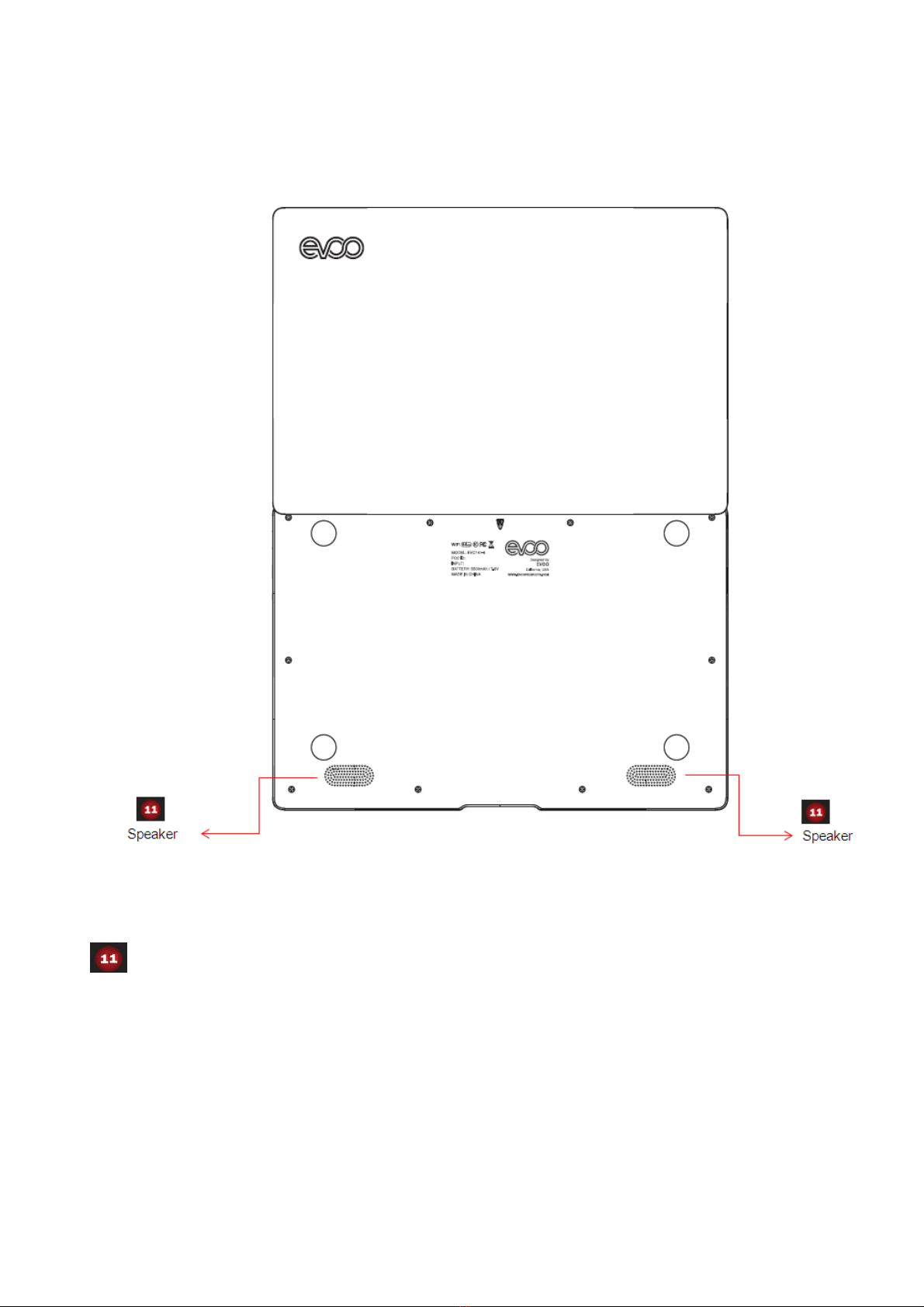
Bottom view
speakers: left and right speakers for a output of audio

Chapter3 Getting to know more about your computer
First use
1.Connect the power cord to the ac power adapter.
2.Connect the ac power adapter to the ac power adapter jack of the computer
3.Plug the power cord into an electrical outlet.
4.Press the power button on the keyboard to boot the computer
Putting your computer into sleep state or shutting it down
When you don't want to work with your computer, you can put it into sleep state or shut it down.or if you
will be away from your computer for only a short time, you also can put the computer into sleep state.
When the computer is in sleep state, you can quickly wake it to resume use and bypass the startup
process.
To put the computer into sleep state, do either of the following:
●Click and select Sleep from the Start menu.
●Press power button on keyboard.
To wake the computer, do either of the following:
●Press the power button.
●Press any key on the keyboard.
To shut down the computer, do the following:
●click the icon and choose the “shut down” option
Using the touchpad
●Touch: to move the cursor on the screen, slide your fingertip over the pad towards the direction in which
you want the cursor to move.
●Left click button: Has the same function with that of the left mouse button on a conventional mouse
●Right click button: Has the same function with that of the right mouse button on a conventional mouse

Using the Keyboard
●Numeric keypad
The keyboard has a separate numeric keypad besides the standard key part. To enable or disable the
numeric keypad pressFn+F12
●Function key combinations

Through the use of the function keys, you can change operational features instantly. To use this function,
press and hold “Fn” and then press one of the function keys
Fn+Esc Turn on or off the sleeping mode
Fn+F1 Enter or exit home page
Fn+F2Enable or disable touchpad
Fn+F3Volume down
Fn+F4Volume up
Fn+F5Turn on or off the volume
Fn+F6Stop or pause the Windows media player
Fn+F7Fast rewind the Windows media player
Fn+F8Fast forward the Windows media player
Fn+F9NA
Fn+F10Enable or disable insert function
Fn+F11NA
Fn+F12Enable or disable the numeric keypad
Fn+~ input ~
Fn+!input!
Fn+@ input @
Fn+# input #
Fn+$ input $
Fn+% input %
Fn+^ input ^
Fn+& input &
Fn+* input *
Fn+( input (
Fn+) input)
Fn+—input —
Fn++ input +

Connecting external devices
Your computer has a wide range of built-in features and connection capabilities. Which supports the
following types of peripherals:
●USB2.0: connects to USB2.0 devices
●USB3.0: connects to USB3.0&USB2.0 devices
●Micro SD slot: connect to micro sd card
●Mini HDMI port: connects to devices with HDMI port such as a TV or a display to output the laptop’s
video or audio.
Connecting a Bluetooth device and a WIFI AP
Since your computer has an integrated WIFI and Bluetooth RF module, that makes it possible for your
device to connect with other BT device or a wireless point to transfer data without cables,such as with a
BT speaker,cellphone,PADs
●Pair a BT device through clicking below icon
●connect a wifi AP through clicking below icon
Este manual sirve para los siguientes modelos
2