3
A. General
1. This manual covers the proper care and use of
the Alpine™ Condensing High Efciency Gas Fired
Boiler.
2. Instructions to safely operate and shut down
this boiler are shown in Figure 2 on page 5, as well
as on a label afxed to the boiler. Control locations
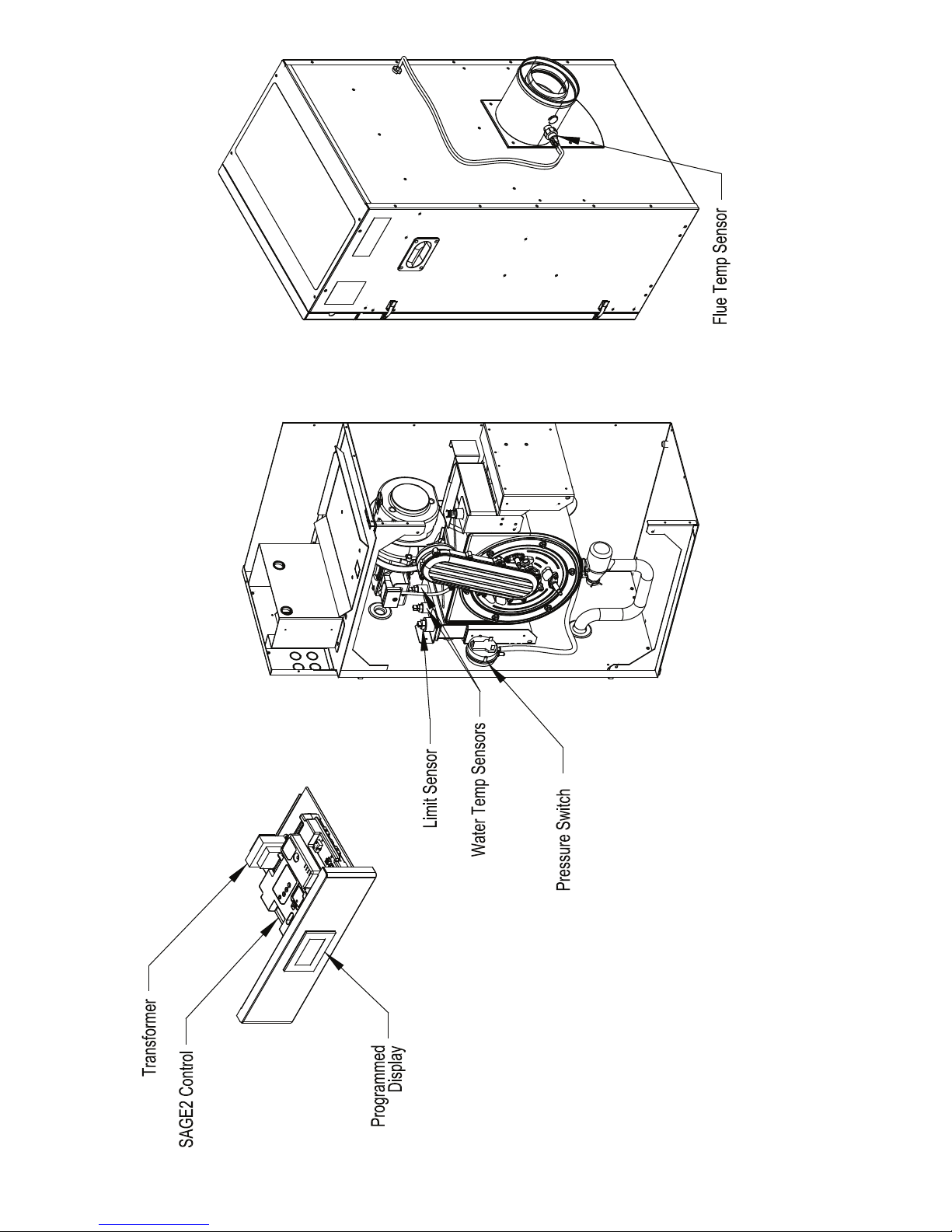
shown in Figure 1.
3. Alpine™ boilers use an electronic means built
into the ignition system to extinguish the burner in
the event that ames exit the combustion chamber.
If the boiler fails to re, call a qualied gas service
technician to diagnose and correct the problem.
4. Alpine™ boilers are equipped with a safety
feature which will shut down the burner in the
event that there is a blockage in the vent system. In
the event that the boiler fails to function, and the
boiler is vented through an outside wall accessible
from the ground, inspect the vent terminal on the
outside wall for a blockage such as a bee’s nest or
ice. If a blockage is found, the burner should ignite
approximately 30 seconds after the blockage is
removed. If no blockage is found, or if the terminal
is inaccessible from the ground, the problem must
be diagnosed and corrected by a qualied gas
service technician.
WARNING
Asphyxiation Hazard. In the event that the
ignition system on an Alpine boiler does
not permit the boiler to re, there is either a
problem with the ignition system or a problem
with the vent system. Call a qualied gas
service technician to diagnose and correct
the problem.
A shutdown of the burner due to the pressure
switch is an indication that there is a problem
with the vent system, such as a blockage. The
boiler pressure switch should only be reset
after a qualied gas service technician has
diagnosed and corrected the venting problem
that caused the pressure switch to open.
B. Maintenance
1. On a continuous basis:
• Keep the area around the boiler free from
combustible materials, gasoline, and other
ammable vapors and liquids.
• Keep the area around the combustion air inlet
terminal and the area around the boiler free
from contaminants, including all sources of
hydrocarbons such as bleaches, fabric softeners,
chemicals, sprays, cleaners, paint, paints, paint
removers, refrigerants, and cat boxes. Traces of
these chemicals can be drawing into the boiler,
causing severe corrosion damage to the boiler
and/or objectionable odors.
• Keep the boiler room ventilation openings open
and unobstructed.
• Do not expose the boiler to large amounts of dust
such as that generated by drywall construction or
woodworking.
2. On a monthly basis:
WARNING
If any of the below listed conditions is found,
follow instructions “TO TURN OFF GAS TO
APPLIANCE” in Figure 2 and contact a qualied
gas service technician to correct the problem
before placing the boiler back in service. Failure
to correct these conditions could result in
property damage, personal injury or loss of life.
• Inspect vent and combustion air intake terminals
for obstruction or damage due to impact or
excessive temperature.
• Inspect vent and combustion air exterior wall
penetrations to be sure they are weather tight.
• Inspect the vent and combustion air intake
system for obstructions, loose joints, condensate
leakage, sags in horizontal runs of pipe,
corrosion, or other deterioration.
• Inspect ue temperature sensor cap at boiler rear
for leakage and deterioration.
• Inspect water and gas lines for leaks.
• Remove boiler front door and inspect for carbon
(soot) in or near the burner compartment,
condensate drain leaks or blockage, or
deterioration of the visible controls, wiring, or
sheet metal components.
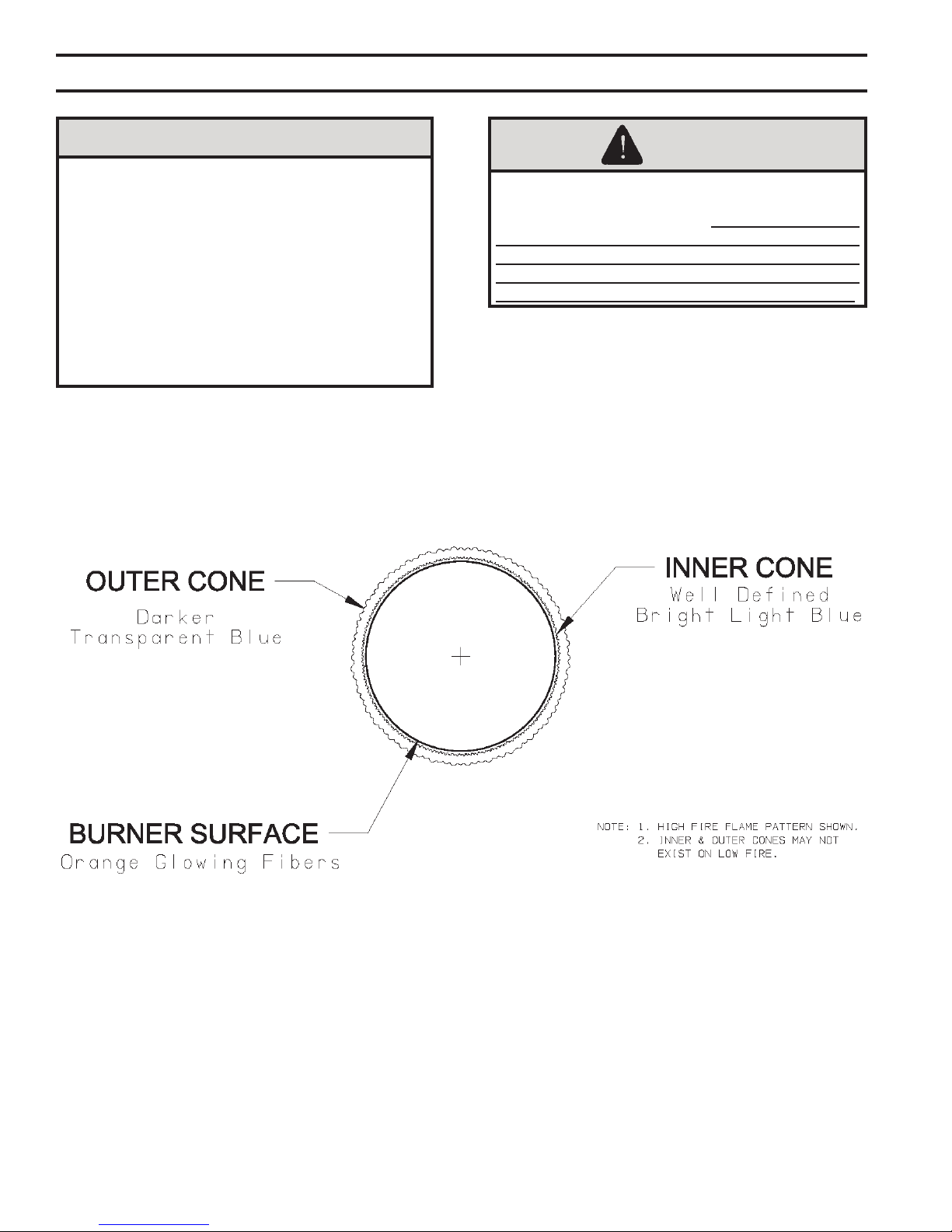
• Inspect ame for true yellow tipping. Adjust
thermostat to highest setting to turn on boiler and
view ames through observation glass with front
door removed. On high re the ame should be
stable and mostly blue. No true yellow tipping
should be present, however intermittent ecks of
yellow and orange in the ame caused by dust in
air are normal. See Figure 3. If the burner ame
looks satisfactory, adjust thermostat to normal
setting and reinstall boiler front door.
3. On an annual basis: have a qualied gas service
technician perform a more detailed inspection
of the burner, heat exchanger, controls, and vent
system and provide maintenance as specied in the
Installation, Operating, and Service Instructions.