HVPS Economy Series - Manual
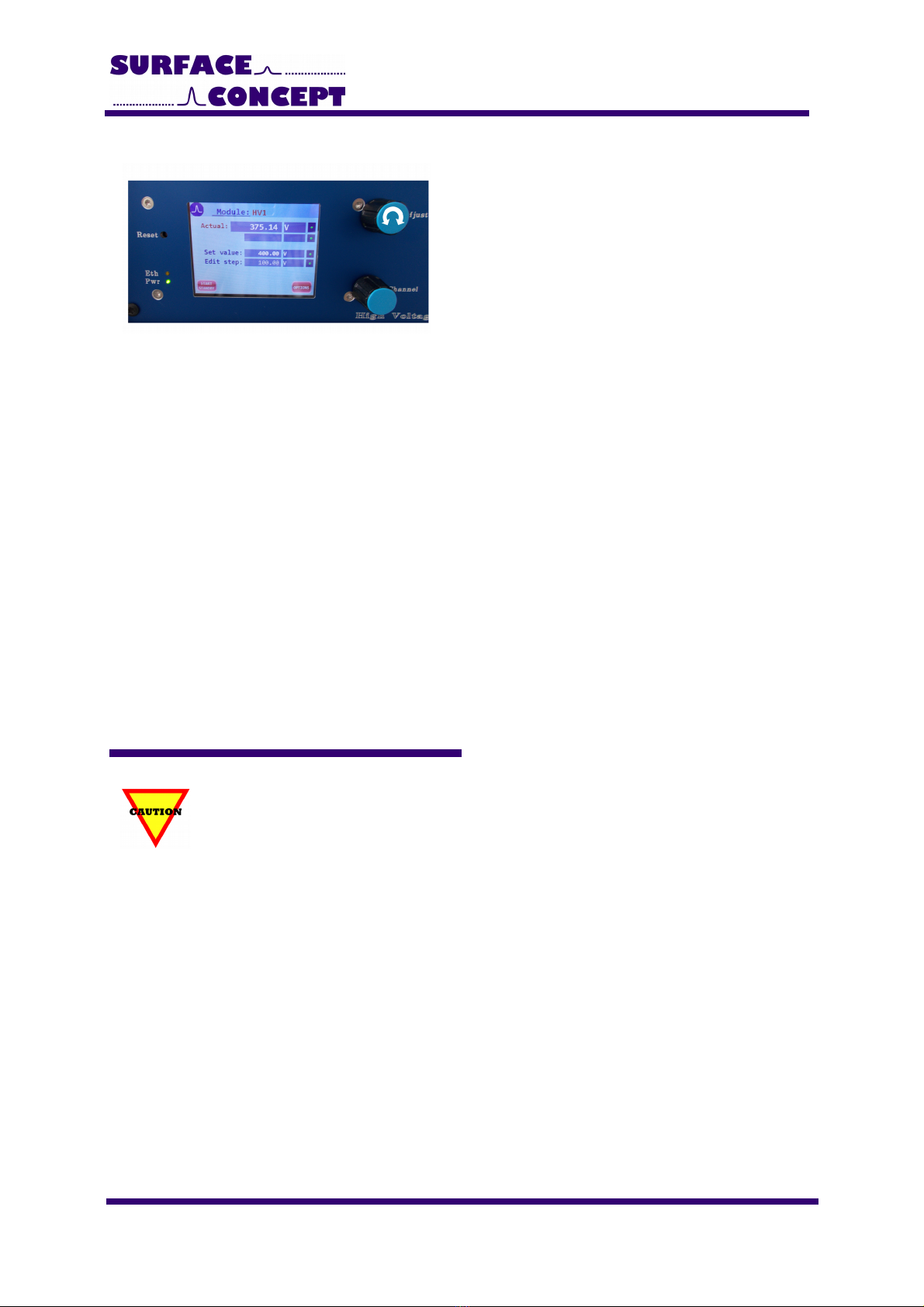
Figure 7: Operation mode – voltage adjustment
The “ djust” control knob is used to adjust the
output voltage.
Turn the “ djust” control knob
clockwise/counterclockwise to increase/
decrease the value of the output voltage in a step
width as defined in the line “edit step”.
The line “set value” displays the nominal value for
the output voltage as adjusted by the user. Voltage
adjustment can only be made in this line.
The line “actual” displays the actual value for the
output voltage on the output connector as
measured by the device.
The device always regulates the actual value of the
output voltage to fit to the nominal value as set by
the user.
Hereby the voltage measurement is always a
relative measurement between the two HV outputs
of one channel. dditional reference voltages (e.g.
in floating operation) are not measured and
therefore are also not displayed (see chapter 4.3
for further details)
Turn the “ djust” control knob
clockwise/counterclockwise while pushing it to
increase/ decrease the step width in the line “edit
step”.
Push the “Start/Standby”-button in the lower left corner of the display again to switch back to the “Standby”
mode.
4.3 Floating Operation on an external potential
The HVPS is specified for the floating operation on an external reference voltage of
maximum +/- 1000 V. Higher voltages can lead to internal HV sparking and to a damage
of the device.
pplication case 1: Channel 1 should be set to an output voltage of +1000 V floating on an external reference
potential of –500 V. In this case the external reference voltage is connected to the connector of the negative
polarity of channel 1 (
“HV -”
). First set the output voltage of Channel 1 to +1000 V. Then increase the external
reference voltage to the -500V. The display shows a value of CH 1 = 1000 V, but the output voltage in
respect to the ground potential is CH 1 = +500 V. The output voltage of +500V is given out on connector
“HV +”
of channel 1.
pplication case 2: Channel 1 should be set to an output voltage of -500 V floating on an external reference
potential of +1000 V. In this case the external reference voltage is connected to the connector of the positive
polarity of channel 1 (
“HV +”
). First set the output voltage of Channel 1 to -500 V. Then increase the external
reference voltage to the +1000V. The display shows a value of CH 1 = 500 V, but the output voltage in
respect to the ground potential is CH 1 = +500 V. The output voltage of +500V is given out on connector
“HV -”
of channel 1.
10