3
2.2 Installation of Additional Equipment
WARNING: THIS FIREPLACE HAS NOT
BEEN TESTED FOR USE WITH
DOORS. TO REDUCE THE
RISK OF FIRE OR INJURY, DO
NOT INSTALL GLASS DOORS.
A. Do not install a fireplace insert unless it is tested
with this fireplace.
B. Cutting or drilling a hole into the fireplace’s
floor or walls for gas supply for a vented decorative
gas appliance (log), or an ash dump, is acceptable.
C. If a decorative gas appliance is installed, it must
be installed in accordance with the National Gas
Fire Code, ANSI Z223.1.
D. It must incorporate an automatic shutoff device.
E. Installation must comply with the Standard for
Decorative Gas Appliances in Vented Appliances,
ANSI Z21.60 (1991) or American Gas Association
draft requirements for Gas-Fired Log Lighters for
Burning Fireplaces, Draft No. 4 dated August 1993.
3.0 Installation of the Fireplace
WARNING: DO NOT USE SUBSTITUTE
MATERIALS IN THE
ASSEMBLY, INSTALLATION
OR OPERATION OF THIS
FIREPLACE. TO DO SO WILL
VOID THE WARRANTY AND
MAY RESULT IN FIRE AND
PERSONAL INJURY.
It is most important that the Stone Age fireplace be
installed according to the following instructions. It is
also important that local building codes be consulted
and followed. Improper installation could result in:
• Overheating, leading to fireplace failure
• Cracks and settling because of poor founda-
tions
• Combustion of materials adjacent to the
fireplace.
WARNING: THIS FIREPLACE HAS NOT
BEEN TESTED WITH AN
UNVENTED GAS LOG SET. TO
REDUCE THE RISK OF FIRE
OR INJURY, DO NOT INSTALL
AN UNVENTED GAS LOG SET
INTO THIS FIREPLACE.
Do not install this fireplace in a manufactured or
mobile home.
3.1 Preparations
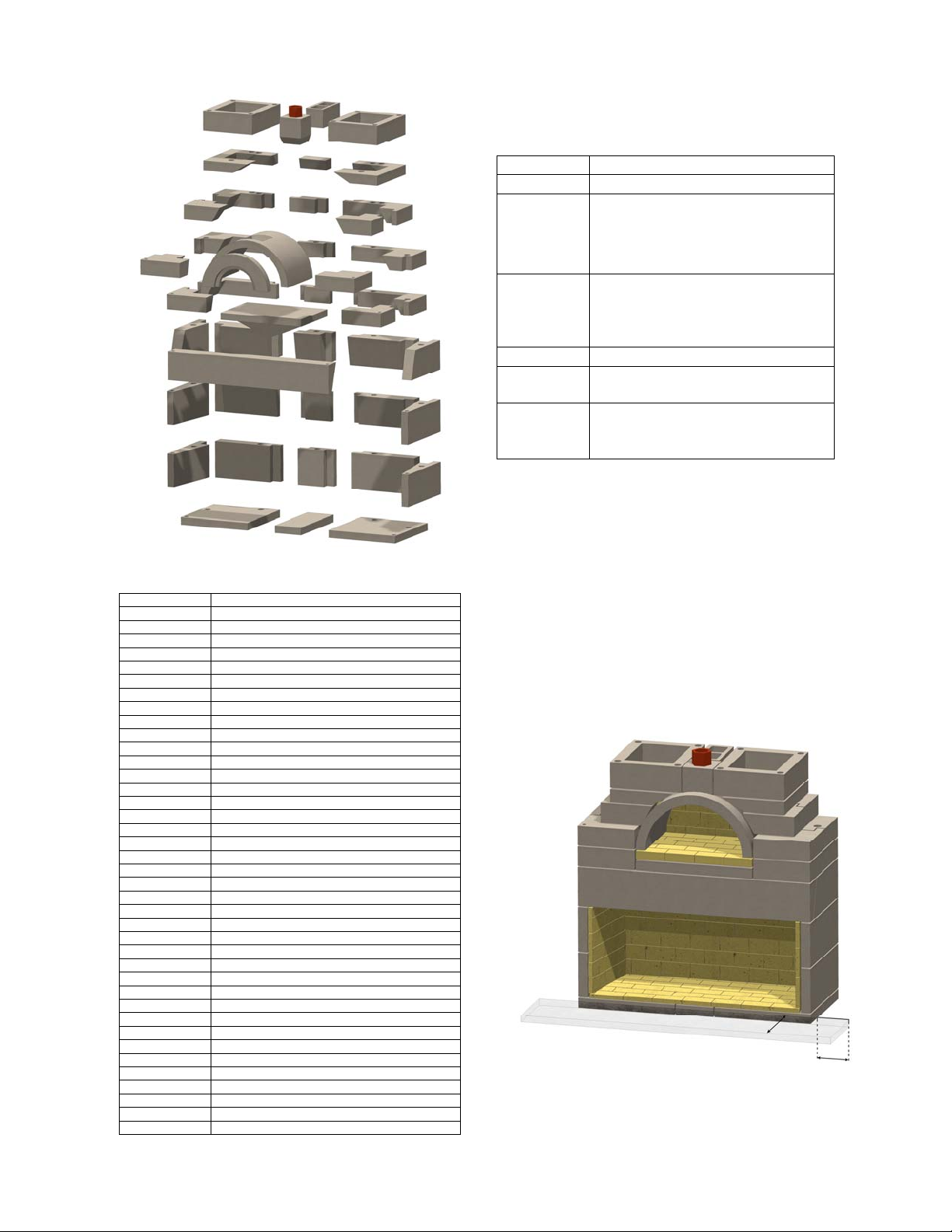
Select a location in the home plans or outdoor living
area where all the minimum distances, as shown in
Table 2 and Figure 3 can be met. Proceed as follows.
Numbers in ( ) are item numbers from Table 1 and
Figure 2. Ensure the base on which the fireplace is
to be installed is a solid and level foundation and is
composed of non-combustible material, such as con-
crete.
Due to varying climates, soil conditions, building
codes, construction methods and materials in differ-
ent geographical regions, Stone Age recommends
installers review local building codes, consult with
local building officials and/or a structural engineer
before beginning the construction of any Stone Age
product.
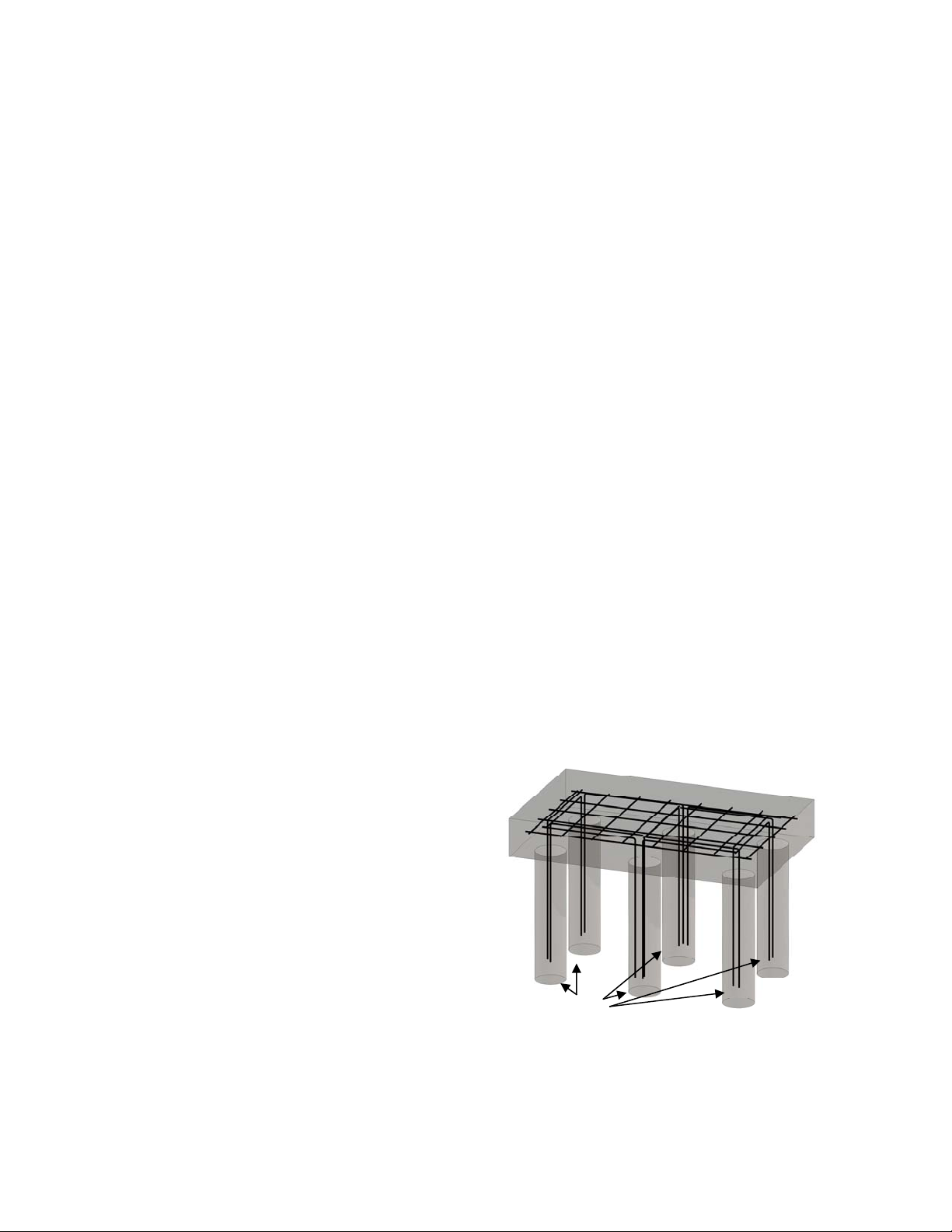
Pad or footings should be a monolithic pad con-
structed of steel reinforced concrete. Minimum foot-
ing specifications for fireplaces built on stable soil,
with overall height not exceeding 10 feet, are listed
in Table 3. Locations with unstable soil may require
a deeper footing or the addition of piers, to reach
more stable subsoil or bedrock. Areas with colder
climates may also require deeper footings or piers
that reach below the frost line to prevent frost heav-
ing. Piers should include steel reinforcement that
extends into the footing above. See Figure 4.
For taller applications, consult with an engineer to
determine the structural requirements based on the
overall height, and the weight of fireplace, chimney,
and finish materials. If custom hearths or additional
Figure 4. Footing with Piers - Cutaway View
Piers