Document ID: m100_user_guide_en_v20_01 5
GSM specific safety
Please read and follow the guidelines listed below. The precautions must be observed during all phases of the
operation. Breaking these rules may be dangerous, illegal or affect performance of the unit and/or invalidate
the unit’s approval and/or warranty.
General
Remember to follow any special regulations and warnings in force in any area and never use the unit whenever
it’s forbidden to use it. Do not use the unit when it may cause interference or danger. A wireless device exposed
to interference above specified limits could result in deteriorated performance.
Hospitals or other Medical environment
Do not use the unit in a medical environment such as health care facilities. Follow any regulations or rules that
instruct you to not use the unit.
Vehicle
If the unit is incorrectly installed in a vehicular environment, the operation of the unit could interfere with the
vehicle electronics. Faulty installation and/or operation can constitute a safety hazard.
Blasting areas
Do not use the unit where blasting is in progress or in “blasting areas”. Observe restrictions and follow any
regulation or rules.
Explosive atmospheres
Do not use the unit in any area with a potentially explosive atmosphere. Potentially explosive areas are often,
but not always, clearly marked. They include fueling areas such as petrol stations, below decks on boats, fuel
or chemical transfer or storage facilities, and areas where the air contains chemicals or particles, such as grain,
dust, or metal powder.
RF energy
The unit is a low power radio transmitter and receiver. When it is ON, it receives and also sends out radio
frequency (RF) signals. Most modern electronic equipment is shielded from RF signals. However, certain
electronic equipment may not be shielded against the RF signals from the wireless unit. All radio-transmitting
devices send signals, which may cause interference in different electronic devices. To avoid interference, place
the unit’s antenna sufficiently far from other electronics.
Critical applications
Cellular units operate using radio signals and cellular networks cannot be guaranteed to connect in all
conditions. Therefore you should never rely solely on a wireless device for essential communications, for
example medical emergencies.
Antenna care
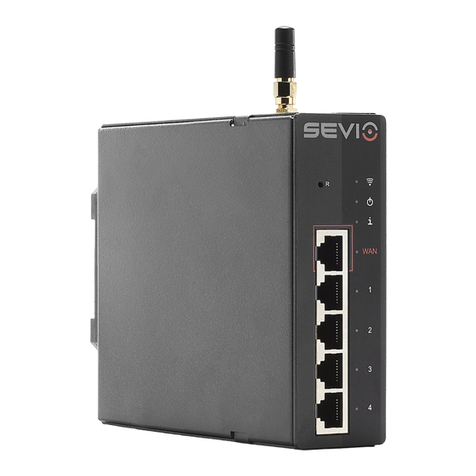
Use only the supplied or an approved replacement antenna. Unauthorized antennas, modifications, or
attachments could damage the unit and may violate current regulations.
Do not touch the antenna unnecessarily when the unit is in use. Contact with the antenna affects
communication quality and may cause the unit to operate at a higher power level than otherwise needed.