Page 2 For technical questions, please call 1-888-866-5797. 70491
IF YOU SMELL GAS
1. NO FLAMES OR SPARKS! Immediately put out all smoking
materials and other open flames. Do not operate lights,
appliances, telephones, or cell phones. Flames or sparks
from these sources can trigger an explosion or a fire.
2. LEAVE THE AREA IMMEDIATELY! Get everyone
out of the area where you suspect gas is leaking.
3. SHUT OFF THE GAS. Turn off the main gas supply
valve on your propane tank if it is safe to do so. To
close the valve, turn it to the right (clockwise).
4. REPORT THE LEAK. From a neighbor’s home or other
nearby building away from the gas leak, call your local
gas company right away. If you can’t reach your gas
company, call 911 or your local fire department.
5. GET YOUR SYSTEM CHECKED. Before you
attempt to use your generator, the gas company
or a qualified service technician must check your
entire system to ensure that it is leak-free.
CAN YOU SMELL IT?
Natural Gas itself is odorless and tasteless, but a chemical is
added to give it an odor in order to help detect leaks quickly.
Natural Gas is lighter than air and will collect in higher areas.
Since there is a possibility of odor loss or problems
with your sense of smell, you should respond
immediately to even a faint odor of gas.
NATURAL GAS DETECTORS
Under some circumstances, you may not smell a natural
gas leak. Natural gas detectors sound an alarm if
they sense natural gas in the air. They can provide an
additional measure of security. You should consider the
purchase of one or more detectors for your home.
GUIDELINES regarding natural gas detectors:
• Buy only units that are listed under the latest
Underwriters Laboratories (UL) standard.
• Follow the manufacturer’s instructions
regarding installation and maintenance.
• Never ignore the smell of gas, even if no
detector is sounding an alarm.
GENERATOR MAINTENANCE
LEAVE IT TO THE EXPERTS. Only a qualified service
technician has the training to install, inspect, service,
maintain, and repair your generator. Have your generator
inspected just before the start of each heating season.
DO NOT TRY TO MODIFY OR REPAIR valves, regulators,
connectors, controls, or other generator and cylinder/tank parts.
Doing so creates the risk of a gas leak that can result
in property damage, serious injury, or death.
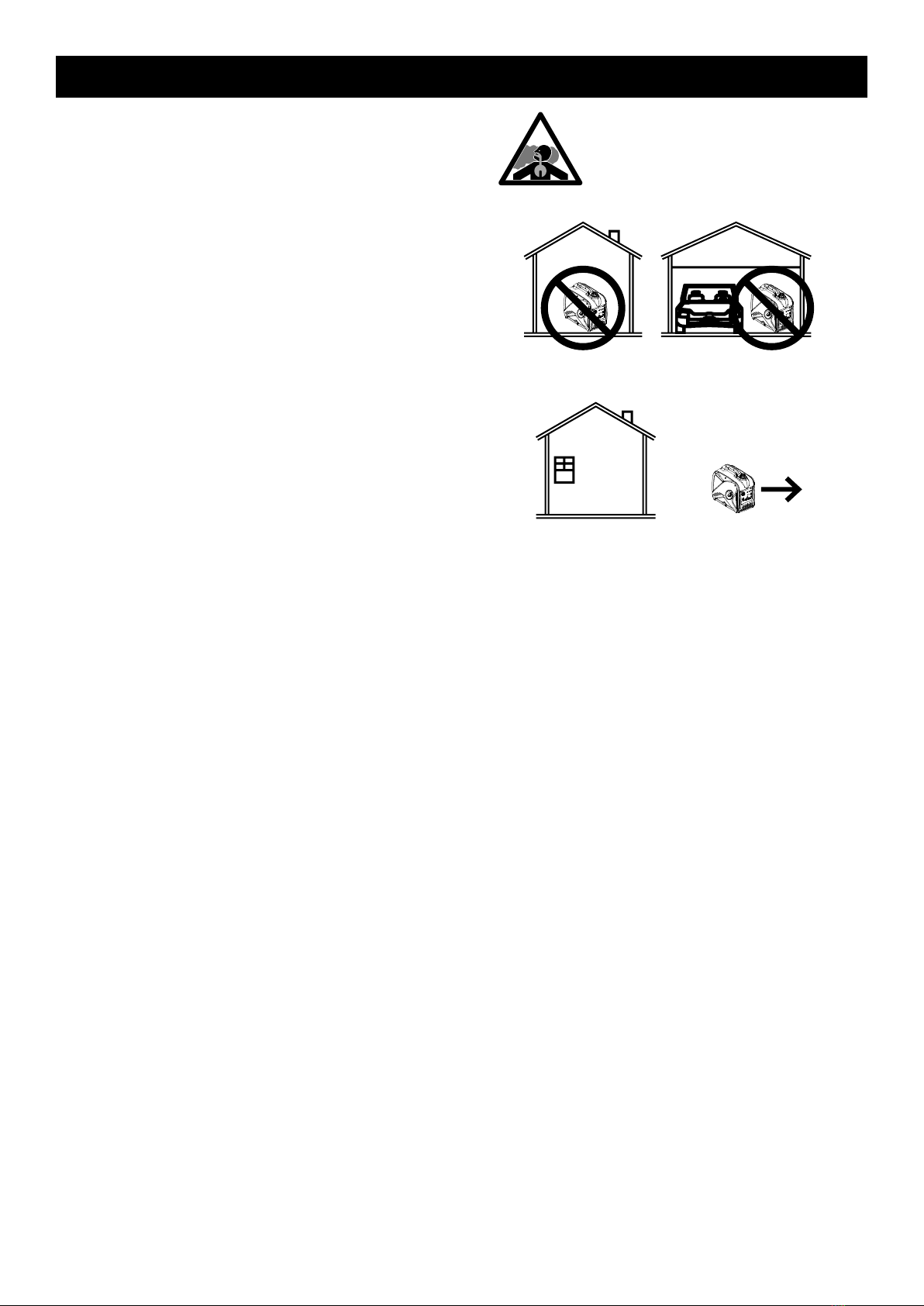
CO AND YOUR SAFETY
WHAT IS CARBON MONOXIDE (CO)?
You can’t taste or smell CO, but it is a very dangerous
gas. High levels of CO can come from appliances
that are not operating correctly, or from a venting
system or chimney that becomes blocked.
CO CAN BE DEADLY! High levels of CO can make you
dizzy or sick. In extreme cases, CO can cause brain damage
or death. Symptoms of CO poisoning include: headache,
dizziness, fatigue, shortness of breath, and nausea.
IF YOU SUSPECT CO IS PRESENT,
ACT IMMEDIATELY!
1. If you or a family member shows physical symptoms
of CO poisoning, get everyone out of the building
and call 911 or your local fire department.
2. If it is safe to do so, open windows to allow entry of fresh air,
and turn off any appliances you suspect may be releasing CO.
3. If no one has symptoms, but you suspect that CO is present,
call your propane retailer or a qualified service technician
to check CO levels and your propane equipment.
CO DETECTORS CAN IMPROVE SAFETY. For
an extra measure of safety, consider installing a CO
detector listed by UL on each level of your home.
TO HELP REDUCE THE RISK OF CO POISONING:
• Have a qualified service technician check your
propane appliances and venting systems annually,
preferably before the heating season.
• Install UL-listed CO detectors on every level of your home.
• Never use a gas oven or range-top
burners to provide space heating.
• Never use a barbecue grill (propane or
charcoal) indoors for cooking or heating.
• Regularly check your appliance exhaust vents for blockage.