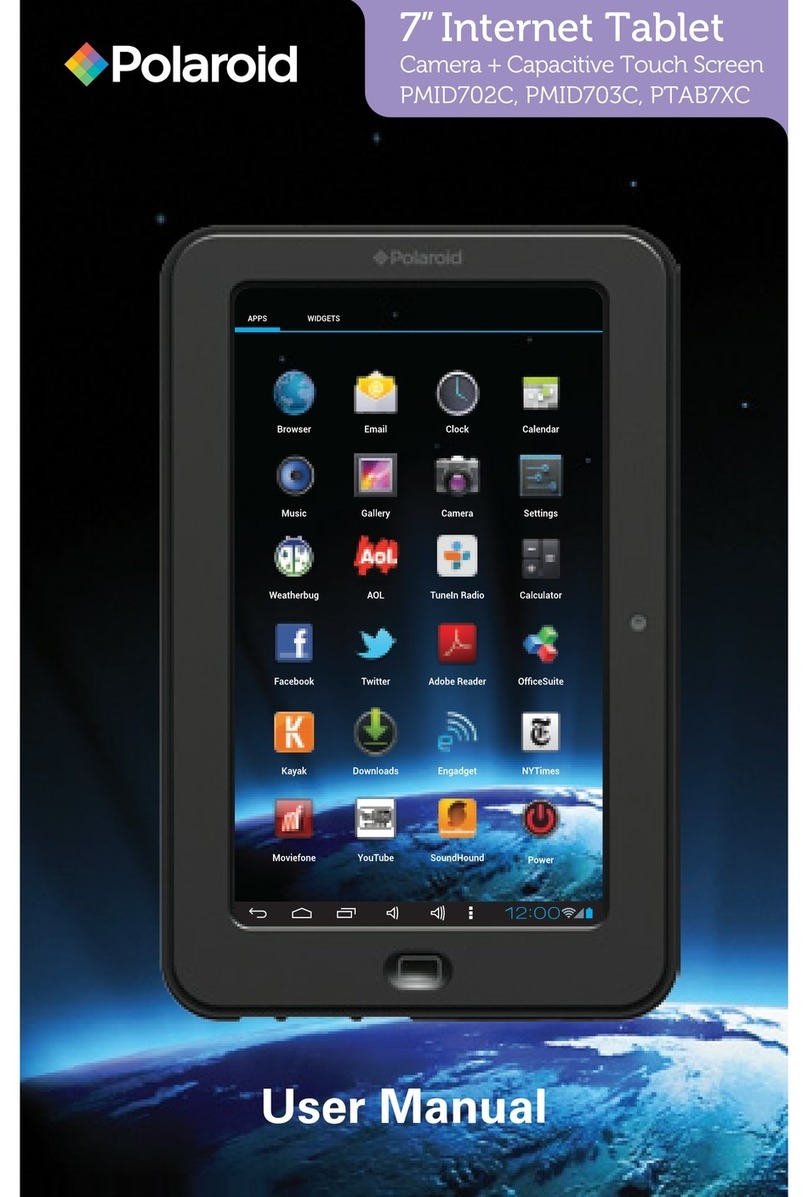
·With WIFI for mobile internet browsing
·OS: Android 4.4
·Support G-sensor
·Support 3D games and function customization
·Supports multiple audio formats
·Play up to 2160P video
·Built-in microphone, super long time recording
·Free set of energy-saving settings, display brightness, the interface background
·Support E-book reading, dependent bookmarks, automatically browsing, horizontal and vertical screen switching function
·USB2.0 high speed transmission interface
·Support TF card and OTG function, scalable storage space
Main Functions
32
Blasting sites and marked areas :
Turn off your device in potentially explosive areas. Follow all official instructions. Sparks in such areas can cause an
explosion or a fire, resulting in serious injury or death. Turn off your equipment in petrol/gas stations, especially when near
the fuel pumps. Strictly follow usage restrictions in fuel depots, chemical plants or in places using explosives.
Potentially explosive areas are often, but not always, clearly signed. These include areas where it is normally considered
advisable to turn of vehicle engines, the area below deck on ships, chemical storage or transfer plants, and areas where the air
contains chemical products or particles, such as grain, dust and metal powder. Check with the makers of LPG (such as propane
or butane) vehicles that the device can be used safely in their vicinity.
All our mobile devices conform to international standards and regulations, and if need be national ones, with a view to
limiting user exposure to electromagnetic fields. These standards and regulations were adopted after the completion of
extensive scientific research. This research established no link between the use of the mobile device and any adverse effects
on health if the device is used in accordance with standard practices.
However if you would like to reduce the level of exposure to radio frequency radiation you can limit your use of wireless,
because the time in contact with is a factor of exposure for a person, and you can move away the device from you, because the
exposure level decreases with a smaller distance.
CHILDREN
Keep your mobile device in a safe place, out of the reach of young children. The mobile device contains small parts that may
present a choking hazard.
Precautions for use
This mobile device meets guidelines concerning the exposure to radio waves.
Your mobile device is a radio transmitter and receiver. It was designed to meet the limits recommended by international
guidelines to limit the exposure to radio waves. These guidelines were developed by and independent scientific organization,
The ICNIRP; and include safety margins designed to ensure the protection of all, regardless of age and health.
The recommendations on exposure guidelines for mobile devices employ a unit of measure known as the Specific absorption
rate or SAR. The SAR limit defined in the ICNIRP recommendations is 2.0 watts/kilogramme (W/kg) averaged over 10 grams
of tissue. In tests to determine the SAR, the equipment is used in standard usage positions at its highest certified power level
in all tested frequency bands. The actual SAR level of a device in use may be lower than the maximum value because the
equipment is designed to only use the necessary power required reaching the network. That amount changes depending on a
number of factors such as the distance from a network base station.
Radio frequency interference
Radio frequency output from electronic devices can interfere with other electronic equipment and cause malfunctions. Although
this mobile device has been designed in accordance with EU regulations on radio frequency emission, mobile device wireless
transmitters and electrical circuits can cause interference with other electronic equipment. We therefore recommend taking the
following precautions:
Aircraft: Wireless equipment can cause interference in aircraft.
·Turn off your mobile device before boarding the aircraft
·Do not use on the ground until allowed to do so by the flight crew.
Vehicles: mobile device radio frequency emissions can affect the electronic systems of motor vehicles. In relation to your
vehicle, check with the manufacturer or dealer.
Medical implants :
Medical equipment manufacturers recommend a minimum distance of 15 centimeters between a wireless device and an
implanted medical device such as a pacemaker or defibrillator to avoid any interference with the medical device. It is
recommended that people fitted with such devices :
·Always keep wireless equipment more than 15cm away from the medical device.
·Never carry wireless equipment in a breast pocket.
·Place such equipment at the opposite ear to the medical device.
·Turn off the wireless equipment if they think it is interfering with their device
·Follow the instructions provided by the medical implant manufacturer.
If you are fitted with a medical implant and have any questions related to the use of your mobile/wireless equipment, you
should consult your doctor
Hearing :
Warning: Using a headset risks not be able to correctly hear outside sounds. Do not use a headset when it could endanger your
safety. Some mobile devices can interfere with the proper operation of hearing aids.
Other medical devices: Radio transmitting equipment including mobile devices may interfere with the proper operation of
insufficiently protected medical equipment. Consult a doctor or the medical equipment manufacturer to find out whether the
equipment is sufficiently protected from external radio wave signals. Turn of your device where required by regulations,
particularly in hospitals.
Health facilities: Hospitals and health facilities may be using equipment which is particularly sensitive to external radio
frequency emissions. Turn off the mobile device when staff or notices tell you to.