
Parsun F15BW Manual de usuario

OUTBOARD MOTORS
OWNER’S MANUAL
F15BM/BW/FW
F9.9BM/BW/FW
SUZHOU PARSUN POWER MACHINE CO., LTD.

Thank you for owning an outboard motor.
Thank you for your trust in our company and products.
The outboard motors are powerful, economic and safe, manufactured with
advanced technology.
Please read this manual carefully before operating your outboard motor. A
thorough understanding of the manual will help you to know this product for proper
operation, maintenance and care. This will ensure that your outboard motor operates
well under all conditions.
We seek continuous improvement in product quality. Therefore, while this manual
contains the most current product information available at the time of printing, there may
be minor discrepancies between your machine and this manual. If there is any
question concerning the manual, please consult your local PARSUN dealer.
Data, illustrations or explanations in this Owner’s Manual do not constitute base for
any legal claim against our company.
SUZHOU PARSUN POWER MACHINE CO., LTD.

Engine Identification Numbers
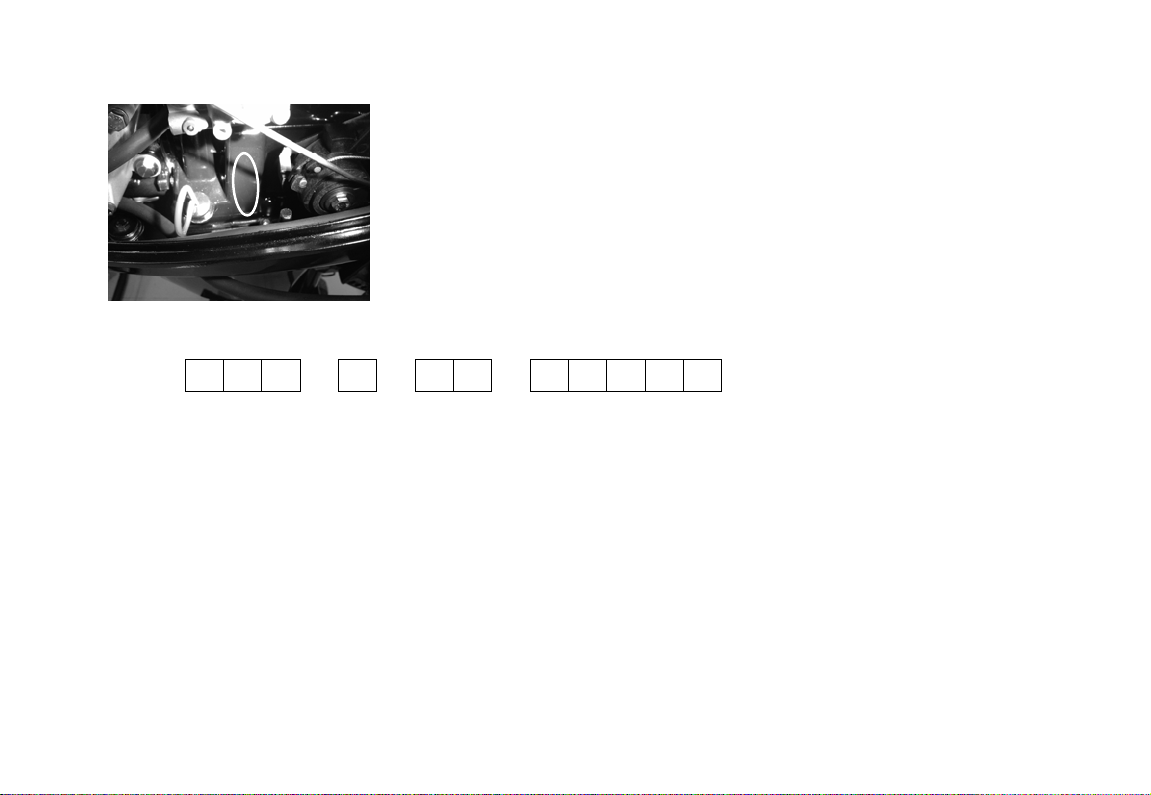
Outboard motor serial number
The outboard motor serial number is marked on the label. The label can be found on the bracket left
assembly or on the upper part of the bracket swivel.
Record your outboard motor serial number in the spaces provided to assist you in ordering spare parts
from your dealer or for reference in case your outboard motor is stolen.
1. Outboard motor serial number location
Serial number as follows:
SN
1
Engine serial number
The engine serial number is carved on the aluminum casting of engine.
Engine serial number as follows:
Manufacturer’s Declaration
This outboard motor complies with the requirements of Directive 2013/53/EU(RCD Ⅱ)in relation to
the exhaust and noise emissions. The following installation and maintenance instructions, if applied,
guarantee that the outboard motor will remain in compliance with:
1. Exhaust emissions limits throughout the normal life or the engine (350 hours or 10 years,
whichever occurs first) and under normal conditions of use.
2. Noise emissions limits under normal conditions of use.

Table of contents
1. Main components and General information....................................................................................... 1
1.1 Main components ............................................................................................................................ 1
1.2 General information......................................................................................................................... 5
1.2.1Specification .................................................................................................................................. 5
1.2.2 Fueling instruction ........................................................................................................................ 6
1.2.3 Propeller selection........................................................................................................................ 7
2 Operation ........................................................................................................................................... 8
2.1 Installation ....................................................................................................................................... 8
2.1.1 Mounting height............................................................................................................................ 9
2.1.2 Clamping the outboard motor ..................................................................................................... 10
2.2 Breaking in engine..........................................................................................................................11
2.3 Pre-operation checks .................................................................................................................... 12
2.4 Filling fuel ...................................................................................................................................... 14
2.5 Starting engine .............................................................................................................................. 14
2.6 Warm up engine ............................................................................................................................ 25
2.7 Shifting .......................................................................................................................................... 26
2.7.1Forward ....................................................................................................................................... 26
2.7.2 Reverse...................................................................................................................................... 27
2.8 Tiller............................................................................................................................................... 29
2.9 Stopping engine............................................................................................................................. 31
2.10 Trimming outboard motor ............................................................................................................ 34
2.11.1 Tilting up ................................................................................................................................... 36

2.11.2 Tilting down............................................................................................................................... 39
2.12 Cruising in other conditions ......................................................................................................... 40
2.12.1 Cruising in shallow water.......................................................................................................... 40
2.12.2 Cruising in salt water ................................................................................................................ 41
3. Maintenance.................................................................................................................................... 41
3.1 Greasing........................................................................................................................................ 42
3.2 Cleaning and adjusting spark plug ................................................................................................ 43
3.3 Checking the fuel system .............................................................................................................. 43
3.3.1 Cleaning the fuel filter................................................................................................................. 44
3.4 Inspecting idling speed.................................................................................................................. 45
3.5 Changing engine oil....................................................................................................................... 46
3.6 Checking wiring and connectors.................................................................................................... 48
3.7 Checking for leakage..................................................................................................................... 48
3.8 Checking propeller ........................................................................................................................ 48
3.8.1 Removing the propeller .............................................................................................................. 49
3.8.2 Installing the propeller ................................................................................................................ 50
3.9 Changing gear oil .......................................................................................................................... 50
3.10 Cleaning fuel tank........................................................................................................................ 52
3.11 Checking and replacing anode(s) ................................................................................................ 53
3.12 Checking top cowling .................................................................................................................. 53
3.13 Maintenance Table ...................................................................................................................... 54
4 Transporting and storing................................................................................................................... 56
4.1 Transporting .................................................................................................................................. 56

4.2 Storing ........................................................................................................................................... 57
5. Actions in emergency ...................................................................................................................... 59
5.1 Impact damage.............................................................................................................................. 59
5.2 Starter will not operate................................................................................................................... 59
5.3 Treatment of submerged motor ..................................................................................................... 62
Circuit diagram .................................................................................................................................... 67

1
1. Main components and General information
1.1 Main components
2
1
5
4
3
6
8
7
9
10
11
12
15
14
13
16
17
20
19
18
21
1. Top cowling 9. Steering friction bolt 16. Throttle grip
2. Top cowling lock handle 10. Tiller handle 17. Clamp bolt
3. Drain screw 11. Starter handle 18. Rope attachment
4. Anti-cavitation plate 12. Warning indicator(s) 19. Tilt support bar
5. Propeller 13. Gear shift lever 20. Fuel joint
6. Cooling water inlet 14. Engine stop button/ 21. Fuel tank
7. Trim rod Engine stop lanyard switch
8. Clamp bracket 15. Throttle friction adjuster

2
A portable fuel tank includes parts as follows:
1. Fuel tank cap 3. Air vent screw
2. Fuel joint 4. Fuel gauge
WARNING:
The fuel tank supplier with this engine could only be used as supply of fuel for its running
and must not be as a fuel storage container.
Remote control
The remote control lever actuates both the shifter and the throttle. The electrical switches are
mounted on the remote control box.
1. Remoter control lever
2. Neutral interlock trigger
3. Neutral throttle lever
4. Main switch/choke switch
5. Engine stop lanyard switch
6. Throttle friction adjuster
1
3
24
1
2 4

3
Remote control lever
Moving the lever forward from the neutral position engages forward gear. Pulling the lever back from
neutral engages reverse. The engine will continue to run at idle until the lever is moved about 35º (a
detent can be felt). Moving the lever farther opens the throttle, and the engine will begin to accelerate.
1. Neutral “N”
2. Forward “F”
3. Reverse “R”
4. Shift
5. Fully closed
6. Throttle
7. Fully open
Neutral interlock trigger
To shift out of neutral, first pull the neutral interlock trigger up.
1. Neutral interlock trigger
Neutral throttle lever
To open the throttle without shifting into either forward or reverse, put the remote control lever in
the neutral position and lift the neutral throttle lever.
Este manual sirve para los siguientes modelos
5
Tabla de contenidos
Otros manuales de Motor de Parsun


