1. Read Instructions: All safety and operating instructions should
be read before the device is operated.
2. Retain Instructions: The safety and operating instructions
should be retained for future reference.
3. Heed Warnings: All warnings on the device and in the
operating instructions should be complied with.
4. Follow Instructions: All operating and use instructions should
be followed.
5. Water and Moisture: The device should not be used near
water — for example, near a bathtub, wash bowl, sink, laundry
tub, in a wet basement, near a swimming pool, etc.
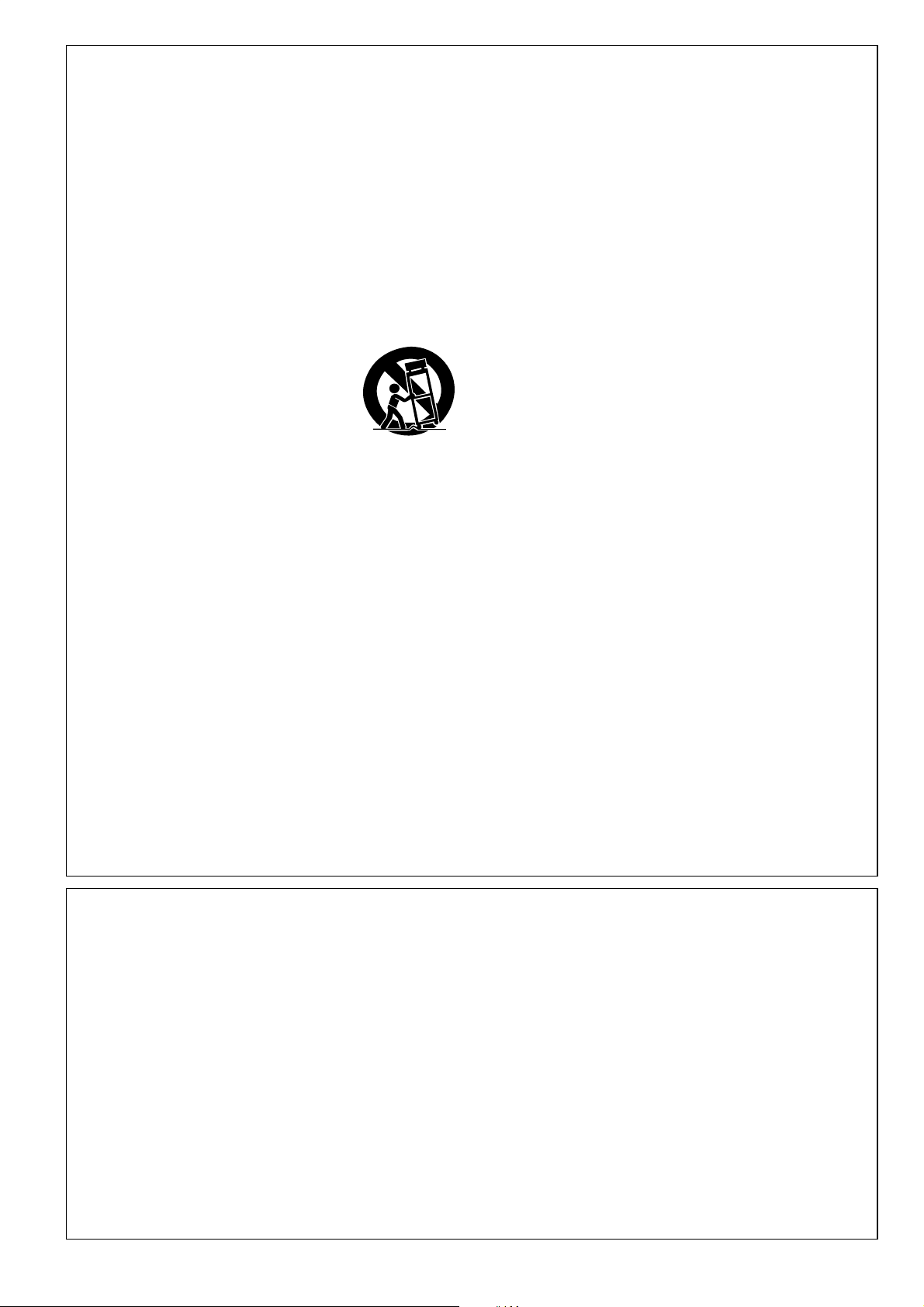
6. Carts and Stands: The device should be
used only with a cart or stand that is
recommended by the manufacturer.
A product and cart combination should be
moved with care. Quick stops, excessive
force, and uneven surfaces may cause the
product and cart combination to overturn.
7. Ventilation: The device should be situated so that its location or
position does not interfere with its proper ventilation. For
example, the device should not be situated on a bed, sofa, rug,
or similar surface that may block the ventilation openings; or,
placed in a built-in installation, such as a bookcase or cabinet
that may impede the flow of air through the ventilation openings.
8. Heat: The device should be situated away from heat sources
such as a radiator, heat register, stove or other appliances
(including amplifiers) that produce heat.
9. Power Sources: The device should be connected to a power
supply only of the type described in the operating instructions or
as marked on the device.
10. Power Cord Handling: Handle the power cord by the plug. Do
not pull out the plug by tugging the cord and never touch the
power cord when your hands are wet as this could cause a
short circuit or electric shock. Do not place the unit, a piece of
furniture, etc., on the power cord, or pinch the cord. Never make
a knot in the cord or tie it with other cords. The power cords
should be routed such a way that they are not likely to be
stepped on. A damaged power cord can cause a fire or give you
an electrical shock. Check the power cord regularly. When you
find it damaged, ask your nearest dealer for a replacement.
11. Power Cord Protection: Power supply cords should be routed
so that they are not likely to be walked on or pinched by items
placed upon or against them, paying particular attention to cords
at plugs, convenience receptacles, and the point where they exit
from the device.
12. Grounding or Polarization:
• If this product is equipped with a polarized alternating current
line plug (a plug having one blade wider than the other). This
plug will fit into the power outlet only one way. This is a safety
feature. If you are unable to insert the plug fully into the outlet,
try reversing the plug. If the plug should still fail to fit, contact
your electrician to replace your obsolete outlet. Do not defeat
the safety purpose of the polarized plug.
• If this product is equipped with a three-wire grounding type
plug, a plug having a third (grounding) pin, it will only fit into a
grounding type power outlet. This is a safety feature. If you are
unable to insert the plug into the outlet, contact your electrician
to replace your obsolete outlet. Do not defeat the safety
purpose of the grounding type plug.
13. Cleaning: The device should be cleaned only as recommended
by the manufacturer.
14. Non-Use Periods: The power cord of the device should be
unplugged from the outlet when left unused for a long period of
time.
15. Object and Liquid Entry: Care should be taken that objects do
not enter and that liquids are not spilled into the enclosure
through any openings.
16. Damage Requiring Service: The device should be serviced by
qualified service personnel when:
a. The power supply cord or the plug has been damaged; or
b. Objects have entered, or liquid has been spilled into the
appliance; or
c. The appliance has been exposed to rain; or
d. The appliance does not appear to operate normally or
exhibits a marked change in performance; or
e. The appliance has been dropped, or the enclosure
damaged.
17. Servicing: The user should not attempt to service the device
beyond what is described in the operating instructions. All other
service should be referred to qualified personnel.
Another part of Otari’s continuing technical support program for our
products is the continuous revision of manuals as the equipment is
improved or modified. In order for you to receive the information and
support which is applicable to your equipment, and for the technical
support program to function properly, please include the following
information, most of which can be obtained from the Serial number
label on the machine, in all correspondence with Otari:
• Model Number:
• Serial Number:
• Date of Purchase:
• Name and address of the dealer where the machine was
purchased and the power requirements (voltage and frequency) of
the machine.
SAFETY INSTRUCTIONS
All Otari products are manufactured under strict quality control. Each
unit is carefully inspected and tested prior to shipment. If, however,
some adjustment or technical support becomes necessary,
replacement parts are required, or technical questions arise, please
contact your Otari dealer or contact Otari at:
Otari, Inc. Otari Corporation
4-33-3 Kokuryo-cho 8236 Remmet Avenue
Chofu-shi, Tokyo 182 Japan Canoga Park, California 91304 U.S.A.
Phone : +81
/
42481-8626 Phone : +1
/
818-598-1200
Fax : +81
/
42481-8633 Fax : +1
/
818-594-7208
URL : www.otari.co.jp URL : www.otari.com
Otari Europe GmbH Otari Singapore Pte., Ltd.
Rudolf-Diesel-Strasse 12 701 Sims Drive #02-02 LHK Building
D-40670 Meerbusch, Germany Singapore 387383
Phone : +49
/
2159-50861 Phone : +65
/
846-1553
Fax : +49
/
2159-1778 Fax : +65
/
846-7875
COMMUNICATION WITH OTARI
FOR SERVICE INFORMATION AND PARTS
February 2001 3