45
Need
any
help
or
advice?
Call: 01282
873120
or Email: [email protected] www.northernpolytunnels.co.uk/videos or scan: Watch our helpful instruction video online at:
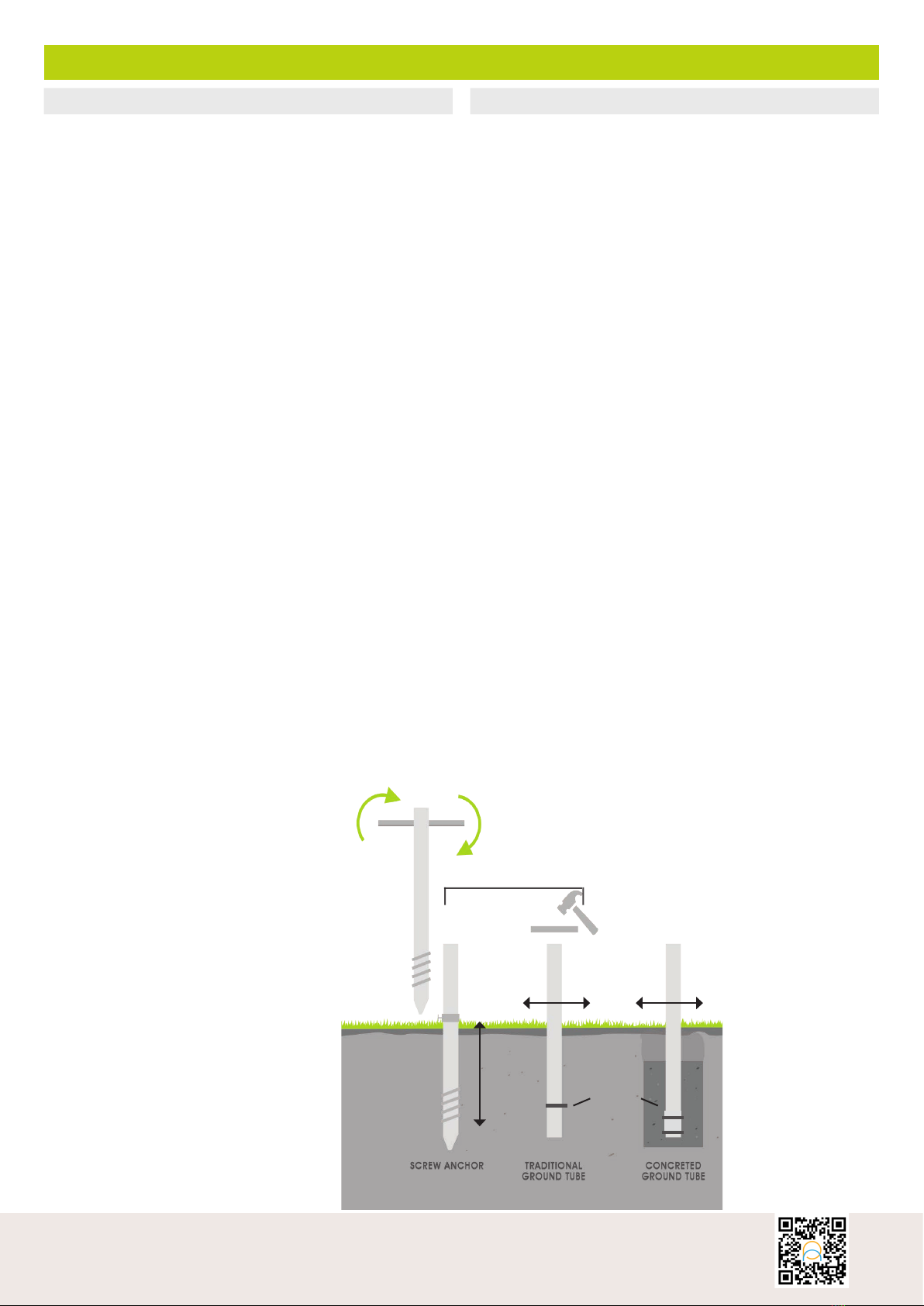
45cm
35cm 35cm
exhaust
clamps
Screw Anchors
n.b. Avoid on ground with a high stone/rubble content,
peat soils, or loose ground which has been recently
disturbed or deep cultivated.
Push each of the screw anchors into the ground, just
enough so they will stay in position.
Once you have squared the polytunnel and positioned
all the screw anchors (see page 4), they can then all be
screwed into the correct depth.
Insert the ‘T’ bar through the holes at the top of the
screw anchors and turn clockwise (as you would
a corkscrew) until the required depth is achieved.
(Approx. 40-45cm remaining above ground).
Even if some of the screw anchors hit large stones -
forcing you to dig them out - you can still secure the
screw anchors in place using concrete or quick setting
postmix if required.
If you find it dicult to screw in the screw anchors, you
can use a longer T-bar or eectively extend the one
supplied by sleeving a length of steel tube over one
end of the T-bar.
Foundations - Foundation Tubes
Traditional Ground Tubes
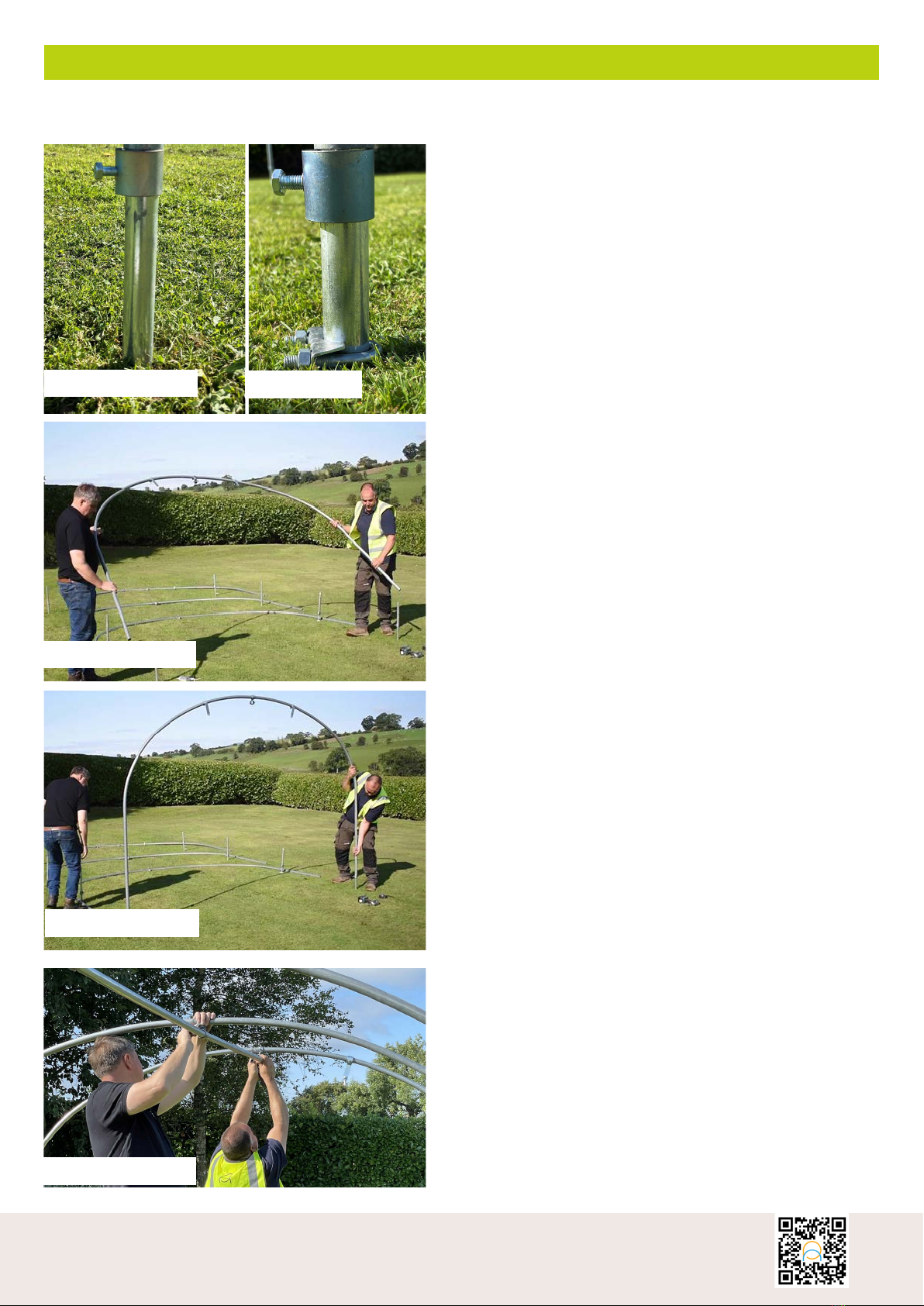
Concreting method: For each foundation tube, dig
a 35cm wide x 45cm deep hole. Fill the hole to the
required depth with concrete or quick setting postmix.
Position each foundation tube in the concrete leaving
40-45cm above the finished ground level.
Ensure the clamp has been securely fastened to the
base of the foundation tube. This will prevent the
foundation tube from pulling out after the concrete has
set.
The exact position of the clamp is not crucial so long
as it is somewhere in the bottom half of the concrete
foundation, the nearer the bottom the better. It may be
desirable not to fill the hole completely, but to leave a
space at the top to backfill with soil. This will hide the
concrete and allow you to cultivate up to the edges of
your polytunnel.
Driven into the ground: Foundation tubes are simply
knocked in the ground, leaving 35-45cm protruding
(depending upon the ground conditions). This method
is only recommended where the polytunnel cover is
trenched into the ground.
Traditional Ground Tubes
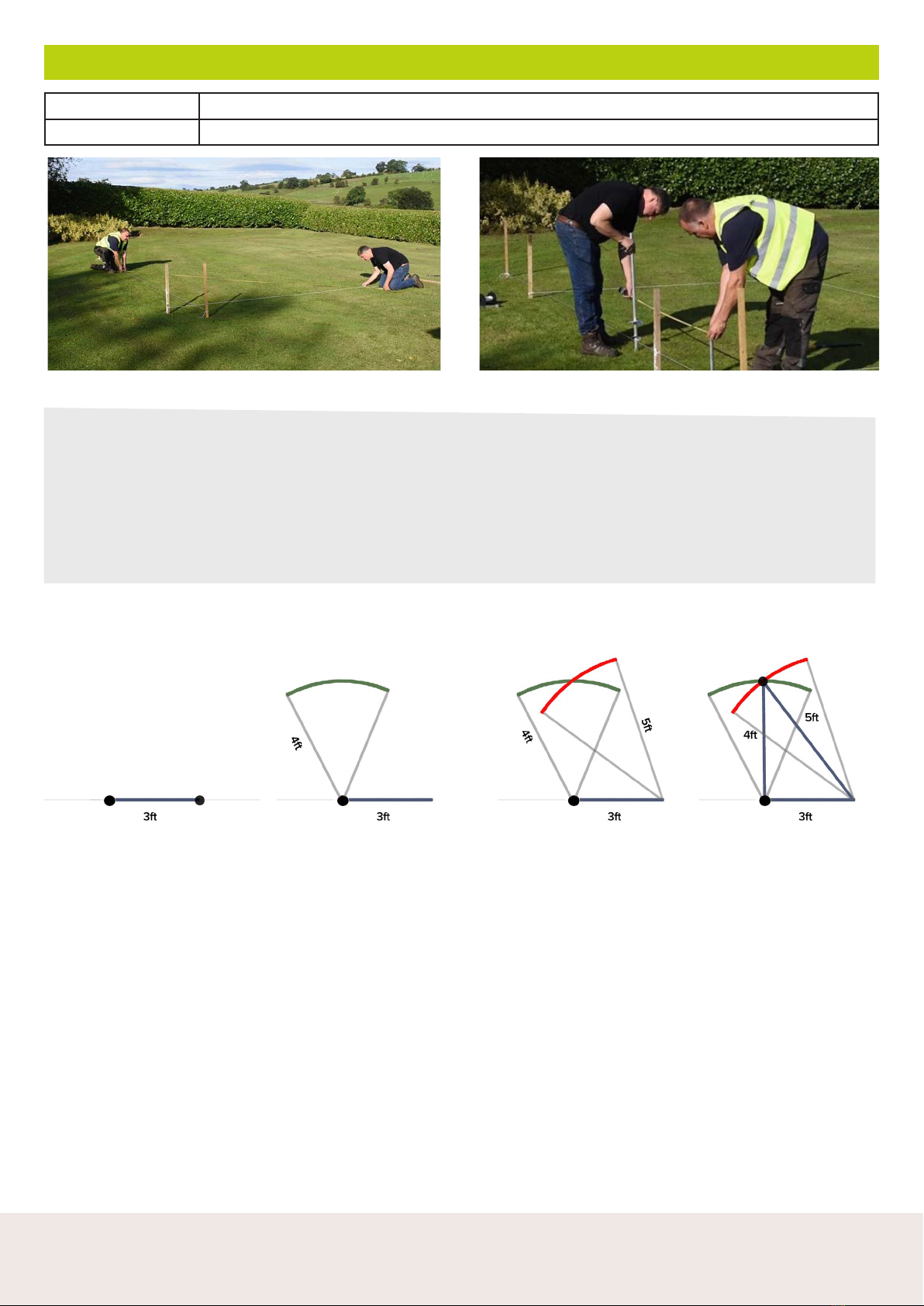
PLEASE NOTE: Regardless of which ground tube option you have chosen the same method of squaring will
apply. It is essential that the ground tubes are fitted accurately to ensure the polytunnel is constructed to a
satisfactory standard
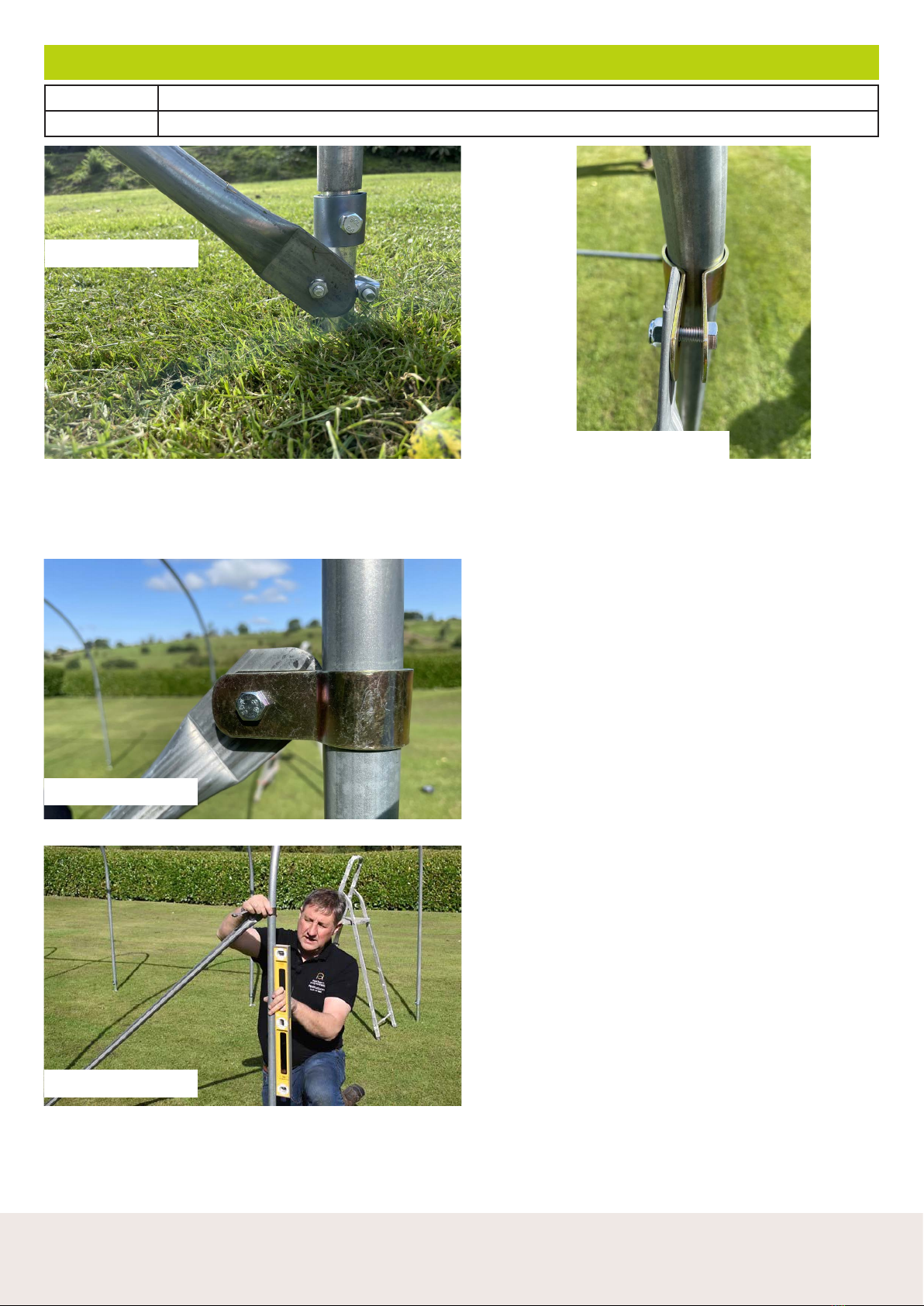
Make sure the ground tubes are in line and set to a constant height with their opposite ground tube.
Install each corner and run a builders string around the perimeter to aid with installing the inner ground tubes
Check that the ground tubes are at 90º to each other by measuring 3m down the length, 4m along the width
and checking the resulting measurement between the two points is 5m.