MasterCraft 55-0343-4 Manual de usuario

1050W Gasoline Powered Generator
55-0343-4
Owner’s Manual
Toll-Free Helpline: 1-800-689-9928
Before using the generator for the first time, read through this instruction manual carefully.
Keep for future reference; do not throw away.
Version 1


TABLE OF CONTENTS
SPECIFICATIONS ………………………………………………………………………….…………………2
SAFETY INSTRUCTIONS………………………………………………………………….………………3-6
KNOW YOUR GENERATOR………………………………………………………………………………..7
PREPARING THE GENERATOR FOR USE………………………………………………………….. 8-10
SUBSEQUENT USE OF THE GENERATOR…………………………………………………… ……….10
OPERATION…………………………………………………………………………………………………..11
USING THE GENERATOR……………………………………………………………………………….12-14
AC USAGE……………………………………………………………………………………………13-14
STOPPING THE GENERATOR ……………………………………………………………………………. 16
MAINTENANCE ……………………………………………..…………………………………………... 16-19
STORAGE & TRANSPORTINGYOUR GENERATOR….………………………………………….……. 19
TROUBLESHOOTING ……………………………………………………………………………………… 20
COLD WEATHER STARTING TIPS …………………………………………………………………….…21
EXPLODED DRAWING……………………………………………………………………………………...22
PARTS LIST ………………………………………………………………………..…………………….….. 24
ORDERING REPLACEMENT PARTS……………………………………………………………………..25
LIMITED WARRANTY……………………………………………………………………………………...25
SPECIFICATIONS
Model 55-0343-4
Degree of Protection IP23
AC Output Voltage(V) 120V
Cont. AC Output(w) 1050
60Hz Max. AC Output(w) 1350
Alternator
Power Factor 1.0
Model R100
Type 4-stroke, OHV air-cooled gasoline engine
Displacement(cc) 99cc
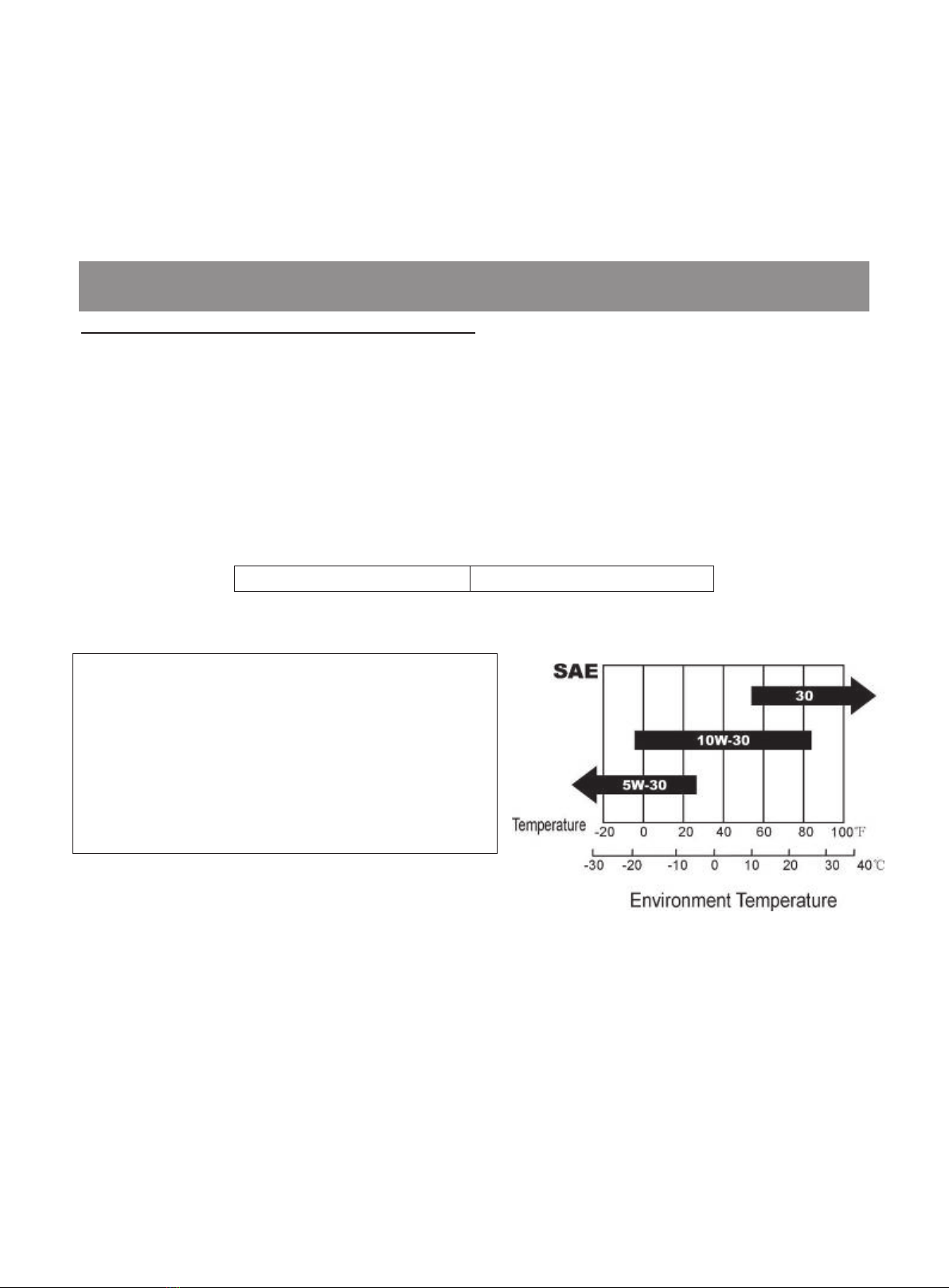
Lubrication Oil SAE 10W30
Lubrication Oil Volume(L) 0.35
Intake Valve 0.15mm
Engine
Exhaust Valve 0.20mm
Fuel 90 Octane Gasoline
Fuel Tank Capacity(L) 7.5
Sound Power Level (dB) 75dBA
Starting System Recoil
Unit
Dimensions and Weight 18 1/8 x 14 1/8 x 16 1/2" (46 x 36 x 42 cm), 57 lb 5 oz (26 kg)
Run Time (under 50% load) 9H
2

NOTE:
The figures quoted on the previous page in the above table are emission levels and are not necessarily safe working levels. While
there is correlation between the emission and exposure levels, this cannot be reliably used to determine whether or not further
precautions are required. Factors that influence the actual level of exposure include the characteristics of the work room, other
sources of noise, etc. Also the permissible exposure level can vary depending on the country. This information, however, will
enable the user of the machine to make a better evaluation of the hazard and risk.
SAFETY INSTRUCTIONS
WARNING
If any portion of this manual is not understood, contact the nearest authorized Repair Depot for
starting, operating and servicing procedures. The operator is responsible for proper and safe use of
the equipment. We strongly recommend that the operator read this manual and thoroughly understand
all instructions before using the equipment. We also strongly recommend instructing other users how
to properly start and operate the unit. This prepares them if they need to operate the equipment in an
emergency. Save these instructions for future reference. If you loan this unit to someone, ALWAYS
include these instructions to the individual as well. The generator can operate safely, efficiently and
reliably only if it is properly located, operated and maintained.
BEFORE OPERATING OR SERVICING THE GENERATOR:
• Become familiar with and strictly adhere to all local, state and national codes and regulations.
• Study all safety warnings in this manual and on the product carefully.
• Become familiar with this manual and the unit before use. The manufacturer cannot anticipate every
possible circumstance that might involve a hazard. The warnings in this manual, and on tags and
decals affixed to the unit are, therefore, not all-inclusive. If using a procedure, work method or
operating technique that the manufacturer does not specifically recommend, ensure that it is safe for
others. Also make sure the procedure, work method or operating technique utilized does not render
the generator unsafe.
GENERAL HAZARDS
• NEVER operate in an enclosed area or indoors EVEN IF doors and windows are open.
• For safety reasons, the manufacturer recommends that the maintenance of this equipment be
carried out by an Authorized Repair Depot. Inspect the generator regularly, and contact the nearest
Authorized Repair Depot for parts needing repair or replacement.
• Operate generator only on level surfaces and where it will not be exposed to excessive moisture, dirt,
dust or corrosive vapours.
• Keep hands, feet, clothing, etc., away from drive belts, fans, and other moving parts. Never remove
any fan guard or shield while the unit is operating.
• Certain parts of the generator get extremely hot during operation. Keep clear of the generator until
the generator has cooled to avoid severe burns.
• Do NOT operate generator in the rain.
• Do not alter the construction of the generator or change controls which might create an unsafe
operating condition.
• Never start or stop the unit with electrical loads connected to receptacles AND with connected
devices turned ON. Start the engine and let it stabilize before connecting electrical loads. Disconnect
3

all electrical loads before shutting off the generator.
• Do not insert objects through unit’s cooling slots.
• When working on this equipment, remain alert at all times.
• Never work on the equipment when physically or mentally fatigued.
• Never use the generator or any of its parts as a step. Stepping on the unit can stress and break parts,
and may result in dangerous operating conditions from leaking exhaust gases, fuel leakage, oil
leakage, etc.
• On electric start models, disconnect the POSITIVE (+) battery cable from the engine starter OR the
NEGATIVE (-) battery cable from the battery terminal, whichever is easier, before transporting the
generator.
EXHAUST & LOCATION HAZARDS
• NEVER use inside, or in partly enclosed areas such as garages, EVEN IF doors and windows are
open! ONLY use outdoors and far from windows, doors and vents. Only use in an area that will not
accumulate deadly exhaust.
ELECTRICAL HAZARDS
• The generator produces dangerously high voltage when in operation. Avoid contact with bare wires,
terminals, connections, etc., while the unit is running, even on equipment connected to the generator.
Ensure all appropriate covers, guards and barriers are in place before operating the generator.
• Never handle any kind of electrical cord or device while standing in water, while barefoot or while
hands or feet are wet.
DANGEROUS ELECTRICAL SHOCK MAY RESULT
• The National Electric Code (NEC) requires the frame and external electrically conductive parts of the
generator be properly connected to an approved ground. Local electrical codes may also require
proper grounding of the generator. Consult with a local electrician for grounding requirements in the
area.
• Use a ground fault circuit interrupter in any damp or highly conductive area (such as metal decking or
steel work).
• Do not use worn, bare, frayed or otherwise damaged electrical cord sets with the generator.
• Before performing any maintenance on the generator, disconnect the engine starting battery (if
equipped) to prevent accidental start up. Disconnect the cable from the battery post indicated by a
NEGATIVE, NEG or (–) first. Reconnect that cable last.
• In case of accident caused by electric shock, immediately shut down the source of electrical power. If
this is not possible, attempt to free the victim from the live conductor. AVOID DIRECT CONTACT
WITH THE VICTIM. Use a non-conducting implement, such as a rope or board, to free the victim from
the live conductor. If the victim is unconscious, apply first aid and get immediate medical help.
FIRE HAZARDS
• Gasoline is highly FLAMMABLE and its vapours are EXPLOSIVE. Do not permit smoking, open
flames, sparks or heat in the vicinity while handling gasoline.
• Never add fuel while unit is running or hot. Allow engine to completely cool before adding fuel.
• Never fill fuel tank indoors. Comply with all laws regulating storage and handling of gasoline.
4

• Do not overfill the fuel tank. Always allow room for fuel expansion. If tank is over-filled, fuel can
overflow onto a hot engine and cause FIRE or an EXPLOSION. Never store generator with fuel in tank
where gasoline vapours might reach an open flame, spark or pilot light (as on a furnace, water heater
or clothes dryer). FIRE or EXPLOSION may result. Allow unit to cool entirely before storage.
• Wipe up any fuel or oil spills immediately. Ensure that no combustible materials are left on or near
the generator. Keep the area surrounding the generator clean and free from debris and keep a
clearance of five (5) feet on all side to allow for proper ventilation of the generator.
• Do not insert objects through generator’s cooling slots.
• Do not operate the generator if connected electrical devices overheat, if electrical output is lost, if
engine or generator sparks or if flames or smoke are observed while unit is running.
• Keep a fire extinguisher near the generator at all times.
GENERAL SAFETY PROCEDURES
Please familiarize yourself with the following safety symbols and words:
The safety alert symbol is used with one of the safety words (DANGER, CAUTION, or WARNING)
to alert you to hazards. Please pay attention to these hazard notices both in this manual and on the
generator.
DANGER: Indicates a hazard that will result in serious injury or death if instructions are not followed.
WARNING: Indicates a strong possibility of causing serious injury or death if instructions are not
followed.
CAUTION: Indicates a possibility of personal injury or equipment damage if instructions are not
followed.
WARNING: This generator produces powerful voltage, which can result in electrocution.
ALWAYS ground the generator before using it (see the "Ground the Generator" portion of
the "PREPARING THE GENERATOR FOR USE" section).
Generator should only be plugged into electrical devices, either directly or with an extension
cord. NEVER connect to a building electrical system without a qualified electrician. Such
connections must comply with local electrical laws and codes. Failure to comply can create
a backflow of power, which may result in serious injury or death to utility workers.
Use a ground fault circuit interrupter (GFCI) in highly conductive areas such as metal
decking or steel work. GFCIS are available in-line with some extension cords.
Do not use in rainy or wet conditions.
Do not touch bare wires or receptacles (outlets).
Do not allow children or non-qualified persons to operate.
DANGER: This generator produces poisonous carbon monoxide gas when running. This
gas is both odourless and colourless. Even if you do not see or smell gas, carbon monoxide
may still be present. Breathing this poison can lead to headaches, dizziness, drowsiness,
and eventually death.
Use outdoors ONLY in non-confined areas.
Keep several feet of clearance on all sides to allow proper ventilation of the generator.
5

WARNING: The exhaust from this product contains chemicals known to the State of
California to cause cancer, birth defects, or other reproductive harm.
WARNING: This generator may emit highly flammable and explosive gasoline vapours,
which can cause severe burns or even death. A nearby open flame can lead to explosion
even if not directly in contact with gas.
Do not operate near an open flame.
Do not smoke near generator.
Always operate on a firm, level surface.
Always turn generator off before refuelling. Allow generator to cool for at least 2 minutes
before removing fuel cap. Loosen cap slowly to relieve pressure in tank.
Do not overfill gas tank. Gas may expand during operation. Do not fill to the top of the tank.
Always check for spilled gas before operating.
Empty gasoline tank before storing or transporting the generator.
Before transporting, turn fuel valve to off position and disconnect spark plug.
WARNING: This generator produces heat when running. Temperatures near exhaust can
exceed 150°F (65°C).
Do not touch hot surfaces. Pay attention to warning labels on the generator denoting hot
parts of the machine.
Allow generator to cool several minutes after use before touching engine or areas which
heat during use.
CAUTION: Misuse of this generator can damage it or shorten its life.
Use generator only for its intended purposes.
Operate only on dry, level surfaces.
Allow generator to run for several minutes before connecting electrical devices.
Shut off and disconnect any malfunctioning devices from generator.
Do not exceed the wattage capacity of the generator by plugging in more electrical devices
than the unit can handle. Do not turn on electrical devices until after they are connected to
the generator.
Turn off all connected electrical devices before stopping the generator.
6

In addition to the above safety notices, please familiarize yourself with the safety and hazard markings
on the generator.
KNOW YOUR GENERATOR
Please familiarize yourself with the locations and functions of the various components and controls of
your generator.
PACKAGE CONTENTS
Your generator comes with the items listed below. Please check to see that all of the following items
may be included with your generator depending on your generator model.
Spanner Spark plug wrench
(1) Fuel Cap - Access to the fuel tank for adding fuel.
(2) Fuel Gauge - Indicates the amount of fuel in the tank.
(3) Frame - Protects the generator.
(4) Circuit Breaker - Reset switch that protects the generator from electrical overload.
(5) 120 Volt AC Receptacle- Use to connect electrical devices that run 120 Volt, 60 Hz, single phase,
AC current (2×duplex).
7

(6) Engine Switch - Used to start/stop engine.
(7) Recoil Starter - Pull-cord for starting engine.
(8) Air Cleaner - A removable, cleanable, sponge-like element that limits the amount of dirt pulled into
the engine.
(9) Fuel Valve - Allows fuel to enter engine.
(10) Fuel Tank -Contain the fuel.
PREPARING THE GENERATOR FOR USE
USING THE GENERATOR FOR THE FIRST TIME
If you are using the generator for the first time, there are a few steps you must take to prepare it for
operation.
Step 1- Add oil
The generator requires engine oil to operate properly. The generator, when new from the package,
contains no oil in the crankcase. You must add the proper amount of oil before operating the
generator for the first time. This amount, which is equal to the oil capacity of the engine crankcase,
can be found on the chart in figure 1. When filling the engine with oil in the future, please refer to this
chart.
Engine Oil Capacity 12 fluid oz.
Figure 1- Generator Oil Capacity
CAUTION:
Do not apply engine oil with additives or
2-stroke gasoline engine oil, which may
shorten the engine’s service life.
Engine oil recommended: SAE 10W-30. As
viscosity varies with regions and temperatures,
so the lubricant has to be selected in accordance
with our recommendation.
To add oil, follow these steps:
1. Make sure the generator is on a level surface.
2. Unscrew the oil filler/dipstick cap from the engine as shown in figure 2.
3. Using a funnel, add the appropriate amount of oil, as found in figure 1, into the crankcase. You
will know the crankcase is full when the oil level has reached the lower lip of the opening you
have just poured the oil into (see figure 3).
4. Replace oil filler cap.
8

Figure 2- Unscrewing the oil cap Figure 3 - Adding oil
Step 2- Add Gasoline
WARNING: Gasoline and gas fumes are highly flammable.
Do not fill tank near an open flame.
Do not overfill. Always check for fuel spills.
To ensure that the generator runs smoothly use only FRESH, UNLEADED GAS WITH AN OCTANE
RATING OF 87 OR HIGHER. To add gasoline:
1. Make sure the generator is on a level surface.
2. Unscrew gas cap and set aside (NOTE: the gas cap may be tight and hard to unscrew).
3. Slowly add unleaded gasoline to the fuel tank. Be careful not to overfill. Please refer to the
chart in figure 4 to find the gas capacity of your generator model. The fuel gauge on the top of
the generator indicates how much gasoline is in the generator gas tank. NOTE: Gas can
expand. Do not fill the gas tank to the very top.
4. Replace fuel cap and wipe up any spilled gasoline with a dry cloth.
IMPORTANT:
Never use an oil/gasoline mixture.
Never use old gas.
Avoid getting dirt or water in the fuel tank.
Gas can age in the tank and make it hard to start up the generator in the future.
Never store generator for extended periods of time with fuel in the tank.
Gas Tank Capacity 7.5L(1.98 us. gallons)
Figure 4 - Gas Tank Capacity
Step 3- Ground the Generator
WARNING: Failure to properly ground the generator can result in electrocution.
Ground the generator by tightening the grounding nut against a grounding wire (see figure 5). A
generally acceptable grounding wire is a No. 12 AWG (American Wire Gauge) stranded copper wire.
This grounding wire should be connected at the other end to a copper or brass-grounding rod that is
driven into the ground/earth. Grounding codes can vary by location. Please contact a local electrician
to check the grounding regulations for your area.
9
Tabla de contenidos
Otros manuales de Generador portátil de MasterCraft