To remove any fine food debris, such as breadcrumbs, follow the
instructions on filtering the oil. If solid vegetable oil is used, you need to
do this before the oil hardens.
Store the oil in the fryer with the lid closed, which keeps it fresh and
clean. If the fryer is not to be used for long time, store the oil in a
separate container, and clean the inside of the fryer as instructed.
Filtering the oil:
After frying, always check to see if the oil needs filtering to remove any
food debris.
Remove the lid and pour the oil into another container which will hold
at least 2 Liters. Hold the fryer using the carrying handles.
Wipe the inside with kitchen paper and clean as directed below.
Line the basket with a filter paper.
Attach the basket to the edge container.
Pour the oil carefully through the filter paper back to the fryer.
Throw away the filter paper and clean the basket in hot soapy water.
Discard the oil after 8-12 uses.
Frying hints:
Do not fill the basket more than three quarters full with frozen foods.
Always dry food well, especially chipped potatoes. If left damp they will
not turn crisp.
All foods, except those with a high starch content (chips, doughnuts),
should be coated before frying. Typical coatings used are seasoned
flour, breadcrumbs or batter. When frying, carefully time foods to avoid
overcooking. The cooking time may vary according to the quantity and
thickness of the food being fried. Remember, a difference of one or two
minutes can result in over cooked food.
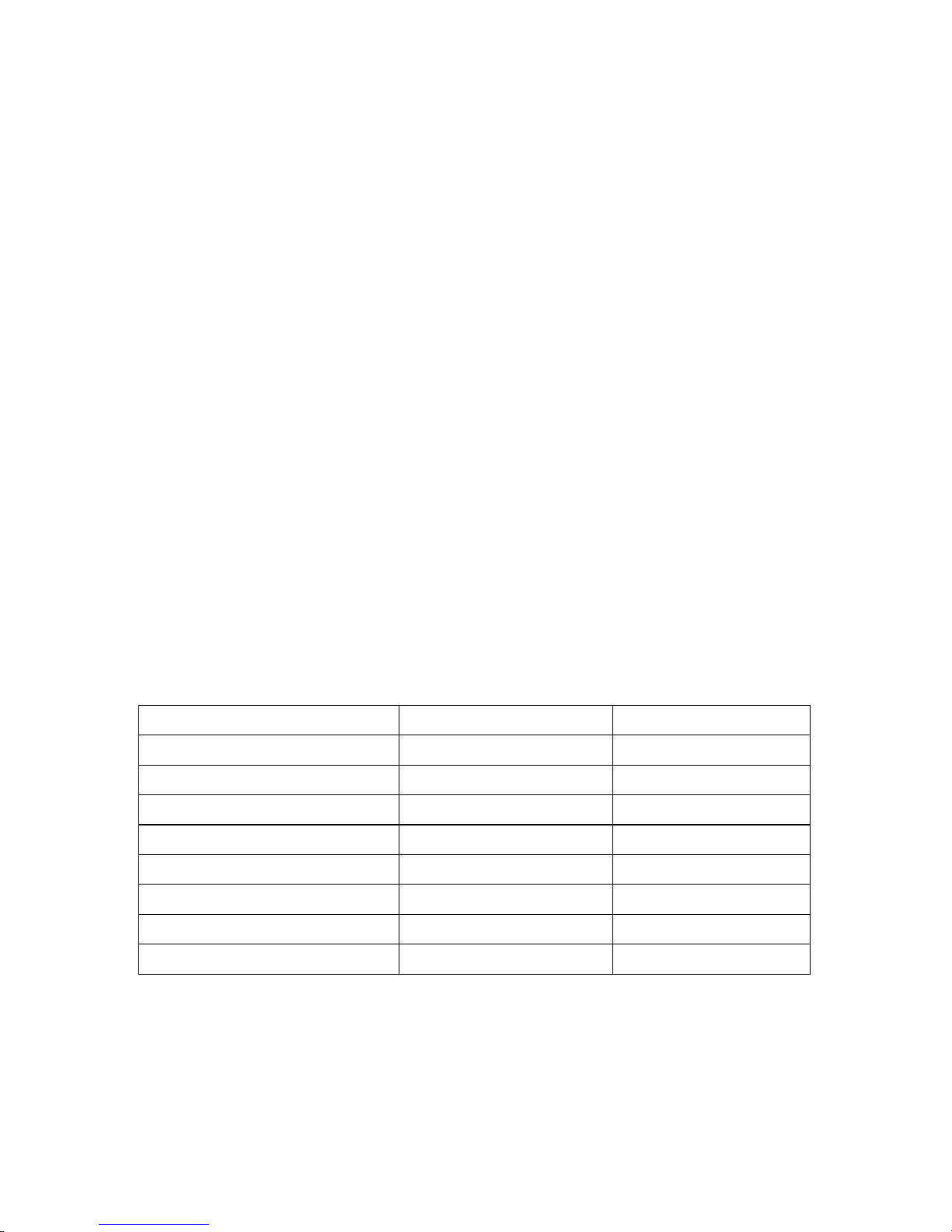
FOOD APPROX. TIME (Min.) TEMPERATURE
Fresh Chicken Legs/Wings 10 375°F
Fresh Fish with Batter 5 –7 375°F
Frozen Shrimp 3 350°F
Frozen Onion Rings 3 375°F
Frozen Fish Sticks 5 375°F
Frozen French Fries 5 375°F
Frozen Chicken Nuggets 5 375°F
Fresh Vegetables 6 370°F
WARM SETTING
Set the temperature dial to the “WARM”setting.
Never keep or warm foods lower than 165 - 180°as dangerous bacteria
can grow.
Food that has been cooked and then cooled can be reheated again.
Reheat quickly to 165°and keep at this safe temperature.
4