MOUNTING THE UNIT
1) The unit should be mounted as close to the point of use as possible.
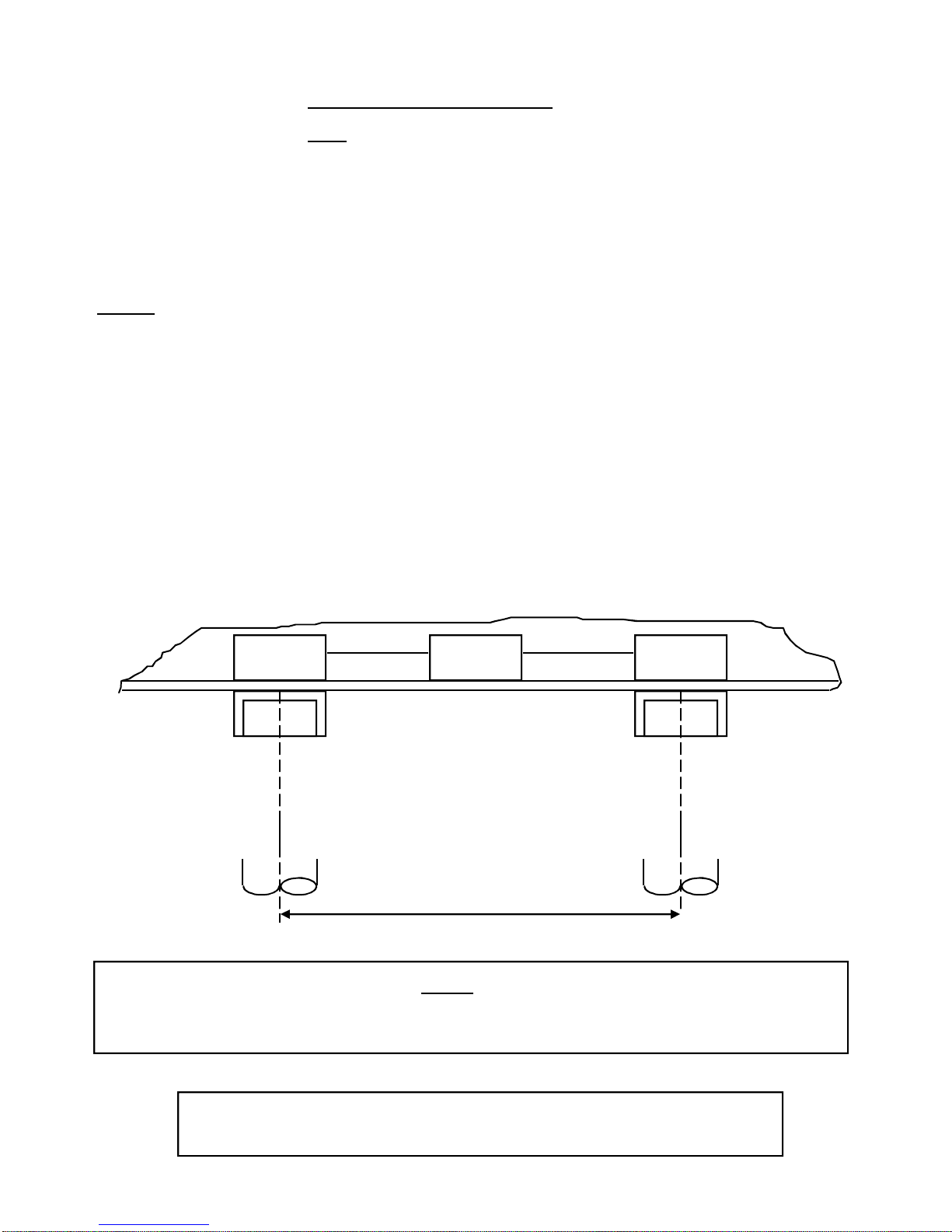
2) This unit must only be mounted in the vertical positionwith the water fittings located at the
bottom of the unit. Mounting other than in the vertical position WILLcause element burn out.
3) The cold water inlet is on the right hand side and the hot water outlet is on the left hand side.
Under NO circumstances can these be reversed.
4) Leave a minimum of 8” above the unit for easy replacement of the elements.
5) The heater should be fixed to the wall using all six mounting holes of the backplate. Unit
weight is approximately 70 lbs. Use an appropriatefastener for this weight. For the unit to be
mounted against hollow walls, suggest using steel wall anchors, with the correct grip range
and #6-32 screw size minimum.
6) The unit should be installedin the plumbing system in such a way that there is no tendency
for the unit to be starved of water: for example: by an excessive draw-off of cold water just
before the unit.Also do not fit an unrestricted hot water draw-off point below the heater as
this will tend to empty the heater by siphoning.
3
NOTE
ALL MOUNTING AND PLUMBING MUST BE COMPLETE BEFORE YOU PROCEED
WITH ELECTRICAL HOOK-UP. TEST THE INSTALLATION
FOR LEAKS BEFORE CONNECTING THE ELECTRICAL SUPPLY.
Hazardous Locations - Nonincendive Type Installation
1) The unit is mounted in an approved NEMA4 Enclosure.
2) Non-incindivefor Class I, Division 2, GroupsA, B, C&D. Temperature class: T5 (212 °F)
3)As to installation,refer to the National Electrical Code and NFPA 70. For locationsC1, Div.2
refer to section 501-4 (wiring methods) and 501-10 (utilizationequipment) respectively.
Note: If ignitionatmosphere is <T5 class, or if other classifications are required, another method of
compliance would be “Purged and Pressurized”. This is the process of supplying anenclosure
with a protective gas at a sufficient flow and positivepressure to reduce the concentration of
any flammable gas or vapor initiallypresent to an acceptable level. For further information, see
ANSI/NFPA 496-1998, Purged and Pressurized Enclosures for Electrical Equipment.