Theory of operation - Speaker output
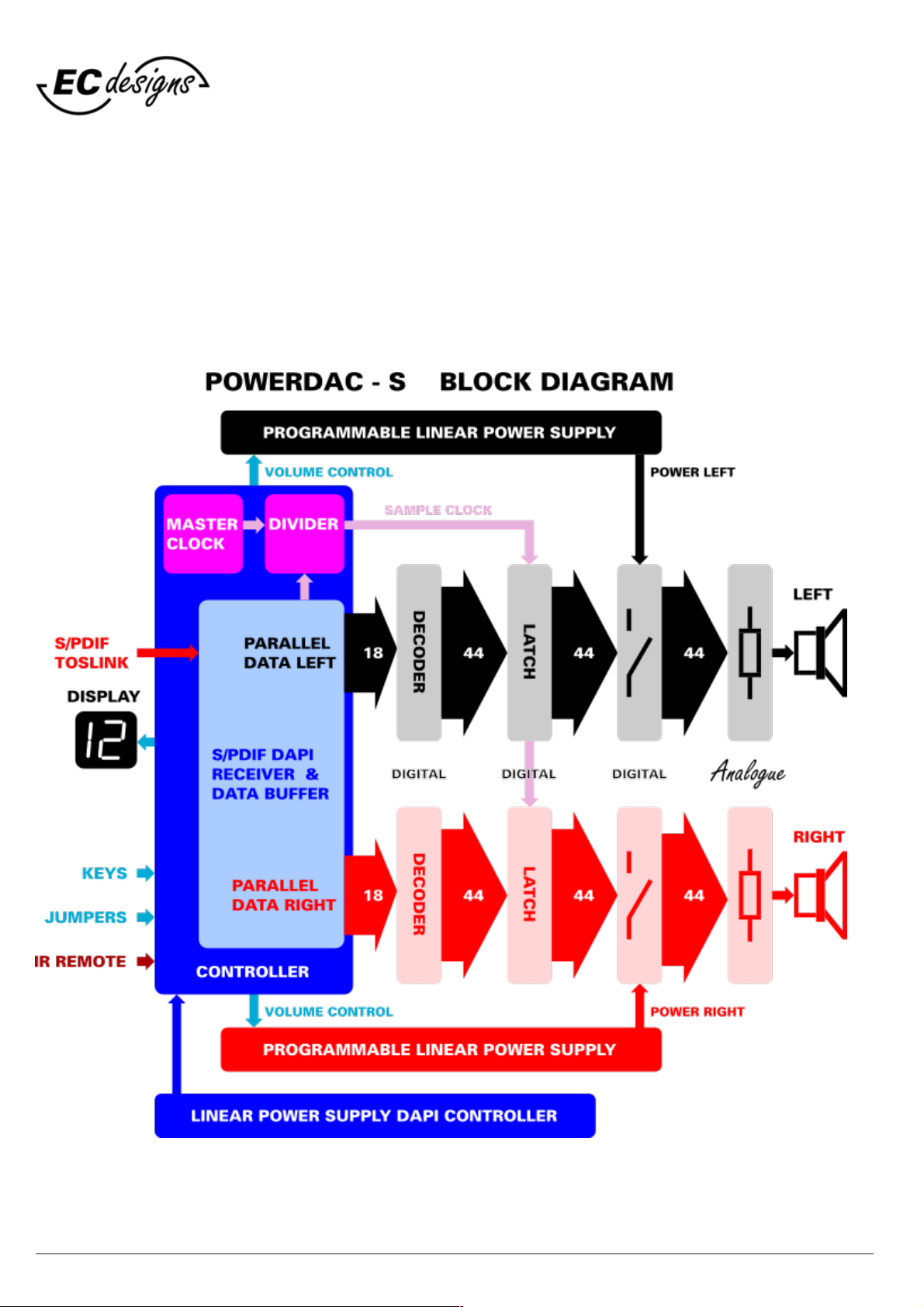
Batteries are used in the examples below to simplify the theory of operation, in reality these are the
programmable linear power supplies shown in block diagram above.
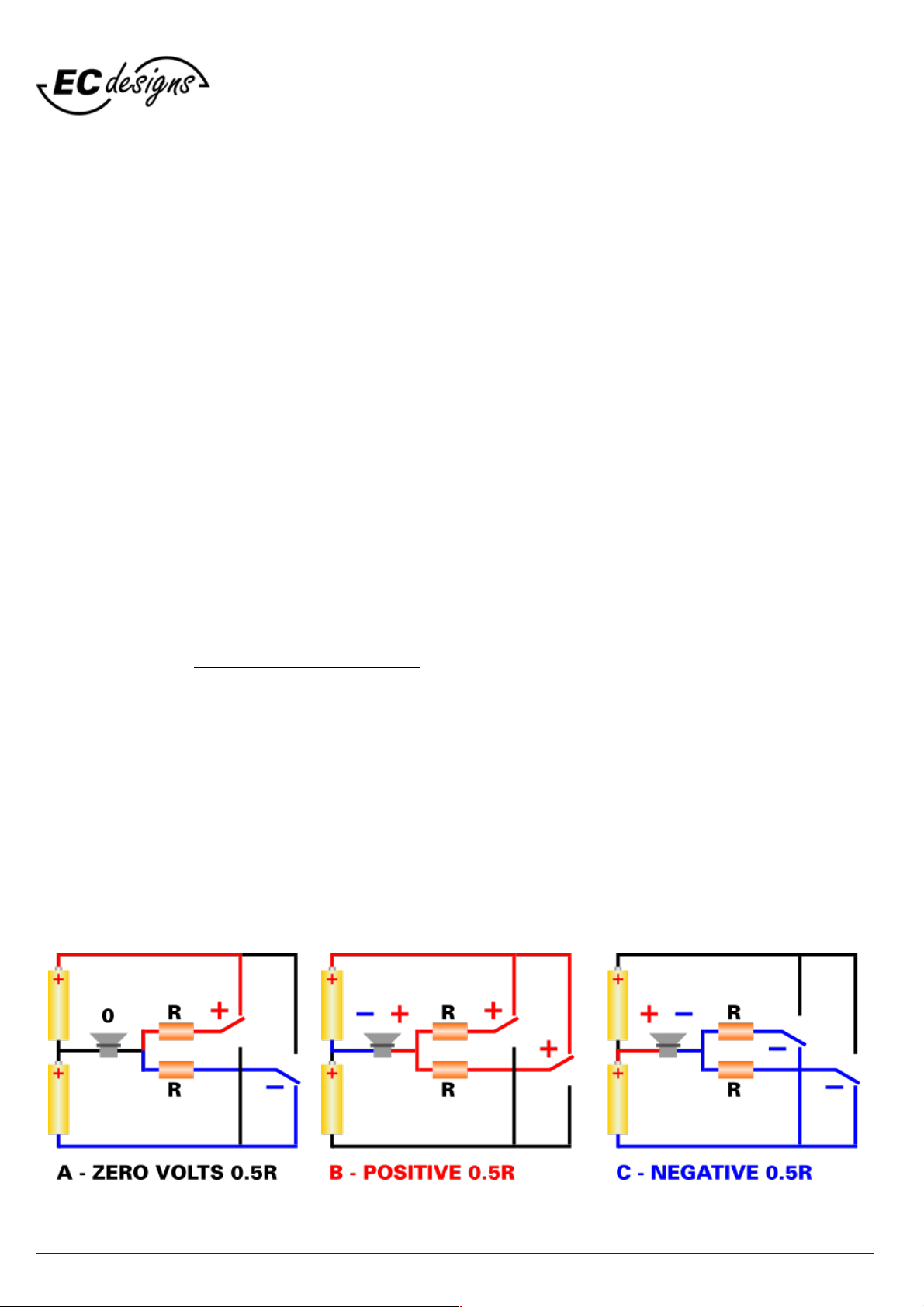
We have: two batteries (yellow), a speaker (grey), two equal resistors R (orange), and two electronic
switches. Batteries are a short circuit for AC signals (audio signals). Resistors limit the current through
the speaker.!
A) Switches in opposite position (+ & -) currents cancel, zero volts on the speaker. Membrane does not
move.
B) Switches are both positive (+ & +) positive currents add, maximum positive current flowing through
the speaker. Membrane moves outwards.
C) Switches are both negative (- & -) negative currents add, maximum negative current flowing through
the speaker. Membrane moves inwards.
In all 3 cases we have two resistors with value R in parallel and batteries are short circuit for AC. So
output impedance in all 3 cases remains the same, 0.5 R.
By changing the electronic switch settings we can have no voltage, positive voltage or negative voltage
on the speaker without requiring any amplifier.
But we need to program the current much more precisely for generating audio signals. Therefore we
use 44 electronic switches and resistors with different values (resistor array). Now we can program
262,144 different current / voltage levels and achieve 18 bit accuracy.
For 18 bits we would only require 18 switches, but because of the high currents (we have to drive a
speaker) and component limitations this is not going to work in a practical circuit.
That's why we had to add more switches that represent the 5 highest and most critical bits. We
required total of 31 switches for this. The remaining less critical lower bits require 13 extra switches so
we end up with 31 + 13 = 44 switches in total.
This way we can generate highly accurate and consistent audio signals on the speaker without
requiring any amplifier or lossy analogue signal path at all.