
Dynacraft 8004-57 Manual de usuario
1
3 WHEELED SCOOTER
FOR AGES THREE TO FIVE
MAXIMUM WEIGHT: 50 lbs. (22.6 kgs.)
OWNER’S MANUAL
THIS MANUAL CONTAINS IMPORTANT SAFETY, PERFORMANCE AND
MAINTENANCE INFORMATION. READ THE MANUAL BEFORE LETTING YOUR
CHILD HAVE THEIR FIRST RIDE ON THEIR NEW SCOOTER, AND KEEP THE
MANUAL HANDY FOR FUTURE REFERENCE.

2
INTRODUCTION
ABOUT THIS MANUAL
This manual was written to help you get the most performance, comfort,
enjoyment, and safety when your child is riding his or her new three wheeled
scooter. It is important for you to understand your child’s new three wheeled
scooter, how your child should use it and what you need to do to keep your
child safe.
GENERAL WARNING
Riding can be a hazardous activity even under the best of circumstances.
Proper maintenance of your child’s new three wheeled scooter is your
responsibility as it helps reduce the risk of injury. This manual contains many
“WARNINGS” concerning the consequences of failure to maintain or inspect
your child’s new three wheeled scooter. Many of the warnings could say, “your
child may lose control and fall.” Because any fall can result in serious injury or
even death, we do not repeat the warning of possible injury or death when-
ever the risk of falling leads to a “WARNING”. NOTE: The illustrations in this
manual are used simply to provide examples; the components of your child’s
new three wheeled scooter might differ. In addition, some of the parts shown
might be optional and not part of your child’s new three wheeled scooter’s
standard equipment. The following manual is only a guide to assist you.
A SPECIAL NOTE FOR PARENTS
Your child’s new three wheeled scooter is distributed by Dynacraft BSC,
Inc. and is intended for riding on flat surfaces. Uses such as aggressive off-
road riding, downhill riding, jumping tricks, stunting and other extreme uses
are not recommended. If you allow your child to do such things with this
scooter you must assume sole responsibility for any harm to your child that
may result.
It is a tragic fact that scooter accidents involve children. As a parent or
guardian, you bear the responsibility for the activities and safety of your minor
child. Among these responsibilities are to make sure that your child’s new
three wheeled scooter, which your child is riding, is in good repair and safe
operating condition; that you and your child have gone over the use, operation
and safety section of this manual; that you and your child have learned, and
understand what to do and what not to do with your child’s new three wheeled
scooter, and the common sense rules of gravity, safe speed and
courteous riding.
3
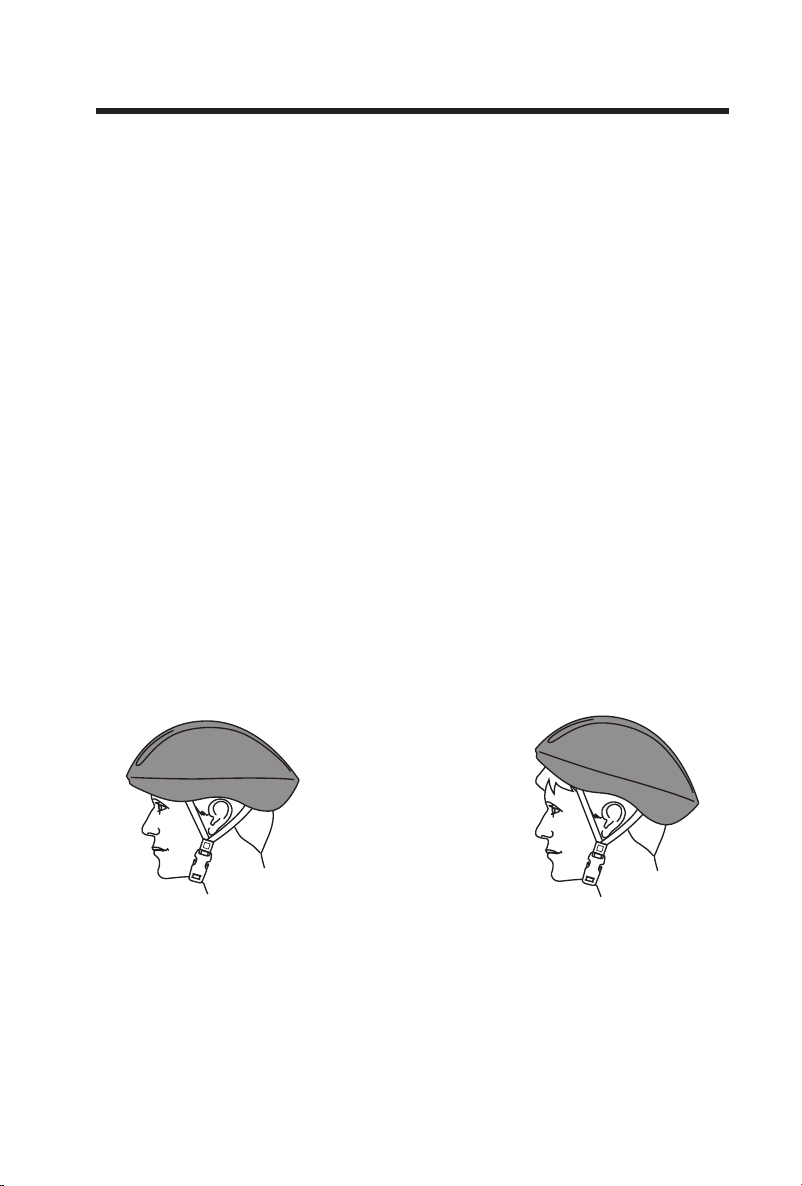
CORRECT FITTING –
MAKE SURE YOUR HELMET
COVERS YOUR FOREHEAD.
CORRECT FITTING –
MAKE SURE YOUR HELMET
COVERS YOUR FOREHEAD.
INCORRECT FITTING –
FOREHEAD IS EXPOSED
AND VULNERABLE TO
SERIOUS INJURY.
USE, OPERATION, AND SAFETY
As a parent, you should read this manual before letting your child ride his
or her new three wheeled scooter. The age grade of 3 to 5 years old is based
on United States government guidance on child development and appropriate
toys, but young children are all different. If your child walks and runs with con-
fidence, then the three wheeled scooter will help your child develop balancing
skills and learn about steering.
You can not expect your child to understand how
difficult it is to stop on hills or at speed, and your close supervision and sound
limits about speed and grade are required for your child’s safety. So encourage
play and having fun with the three wheeled scooter, but keep it on flat surfaces,
always wear shoes (never barefoot, sandals or flip flops), and avoid traffic and
pedestrians.Remember, only you are the best judge of whether your child
is at the appropriate development stage for safe play with this scooter.
Always have your child use safety equipment and appropriate clothes and
shoes. Safety equipment is a helmet, knee pads and elbow pads. The helmet
is not only a good idea but required in many communities. To protect your
child, the helmet must comply with CPSC, 16 CFR Section 1203 requirements
and be worn correctly.

4
The three wheeled scooter is intended to allow children to learn at their own
pace while feeling safe that they are not going to fall. Have them start by hav-
ing one foot on the three wheeled scooter and the other foot pushing off the
ground. The action is like walking and they will progress as they become com-
fortable. Your responsibility is to set limits on speed and appropriate location
for play. Be aware that young children can often master riding, but will still lose
their balance and fall while at play. So part of your supervision is that they not
leave the three wheeled scooter or other toys around where they play as they
may fall on them. It is also your responsibility to maintain the three wheeled
scooter after correctly assembling it.
Children should be made aware of all possible riding hazards and correct
riding behavior before they take off on the scooter. Please explain to them as
often as necessary:
• Always wear a helmet and other safety equipment.
• Always keep the chin strap on the helmet securely buckled.
• Observe the age and weight limitations on the cover of this manual.
• Never have more than one rider and never try to tow anything.
• Do not ride at night.
• Do not ride in wet weather.
• Obey all local laws about cycling.
• Do not ride near swimming pools, ditches or drop offs.
• Do not ride if parts are broken or worn until fixed or replaced by your parent.
• Always ride on smooth, flat surfaces and avoid too much speed.
• Do not ride on streets, around cars, on hills, barefoot, or in skateboard or
vehicle traffic.
• Speed is a danger, avoid excessive speed going down hill; also avoid stunts,
jumps and bumps.
• Avoid sharp turns, bumps, drainage grates, trick stages, ramps, half pipes,
or skateboard parks.

5
PARENT’S RESPONSIBILITY
• Some parts are optional and may not be part of the scooters standard
equipment.
• Children should be SUPERVISED BY AN ADULT while riding this scooter.
• Be sure to read all the instructions carefully and assemble the scooter
according to these instructions before you allow the child to ride.
• This scooter requires assembly by a qualified adult.
• Special care should be taken to instruct children in safe riding.
• Check the scooter before the child rides to determine if there are any
POTENTIALLY hazardous parts or conditions.
• DO NOT ALLOW THE CHILD TO RIDE AT NIGHT.
• Do not allow this scooter to be ridden on streets or areas with auto traffic.
• For your safety, we advise you to use this scooter with protective equipment,
helmet (keep the chinstrap securely buckled), elbow pads, knee pads and
gloves.
• To protect your child, the helmet must comply with CPSC, 16 CFR Section
1203 requirements and be worn correctly.
• Be sure the rider is wearing appropriate footwear when riding the scooter.
• Be sure the rider keeps both hands on the handlebars for proper control.
• Do not allow the rider to wear anything that obstructs hearing, visibility or
function.
• Do not allow more than one rider on the scooter at a time.
• Do not allow this scooter to be operated on or near streets, sloped drive-
ways, alleys, hills, ditches, in ground pools, areas near steps or any other
hazardous areas.
• Ride on smooth, paved surfaces away from motor vehicles.
• Avoid sharp bumps, drainage grates, and sudden surface changes. Scooter
may suddenly stop.
• Avoid streets and surfaces with water, sand, gravel, dirt, leaves, and other
debris. Wet weather impairs traction, braking, and visibility.
• Avoid excessive speed associated with downhill rides.
• Obey all local traffic and scooter riding laws and regulations.
• Watch out for pedestrians.
• Check and secure all fasteners before every ride.
• Replace worn or broken parts immediately.
MAINTENANCE INFORMATION
• Periodically inspect your scooter for wear or damage.
• Tighten any loose fasteners as needed.
• Clean the scooter with mild soap and water solution and clean cloth. Rinse
clean with water to remove soap residue.
6
SCOOTER ASSEMBLY
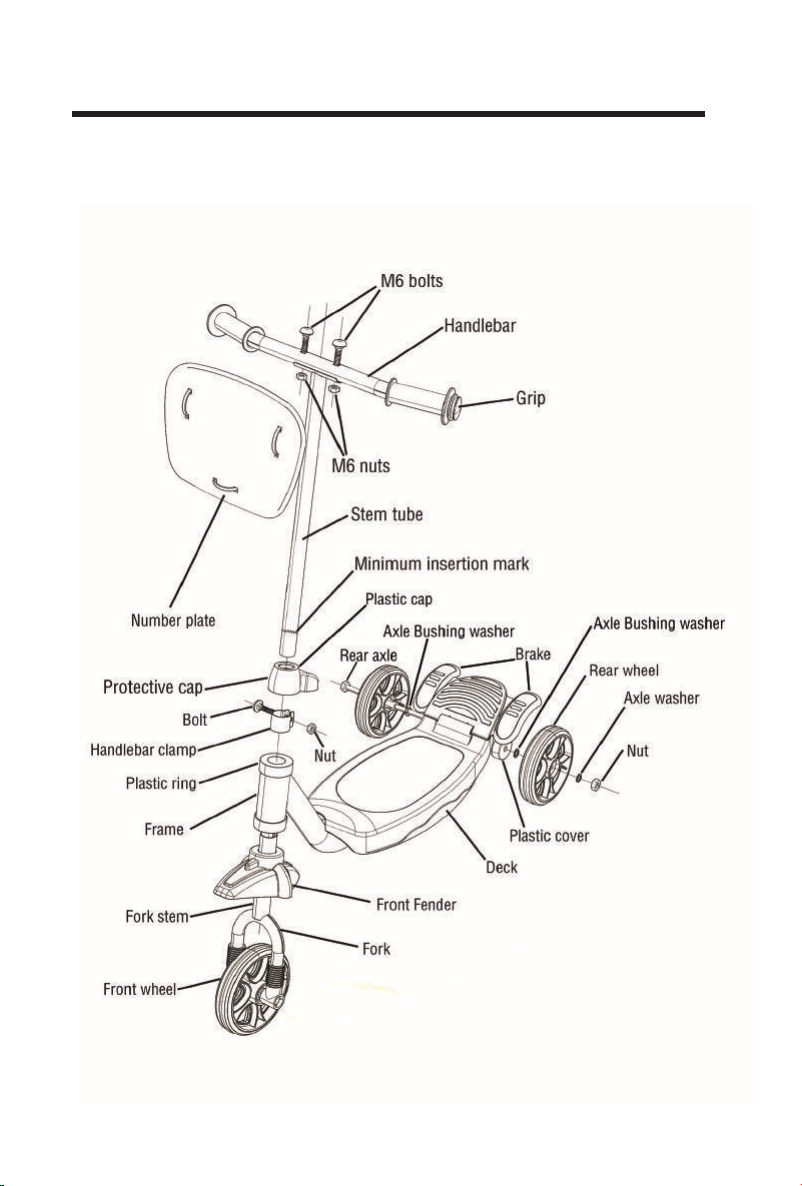
PART DESCRIPTION
7
Please fully read these instructions before operation and keep for future information.
WARNING: This scooter requires assembly by an adult.
ASSEMBLY INSTRUCTIONS
An adult must assemble this product. Keep small loose parts and plastic
bags out of the reach of children.
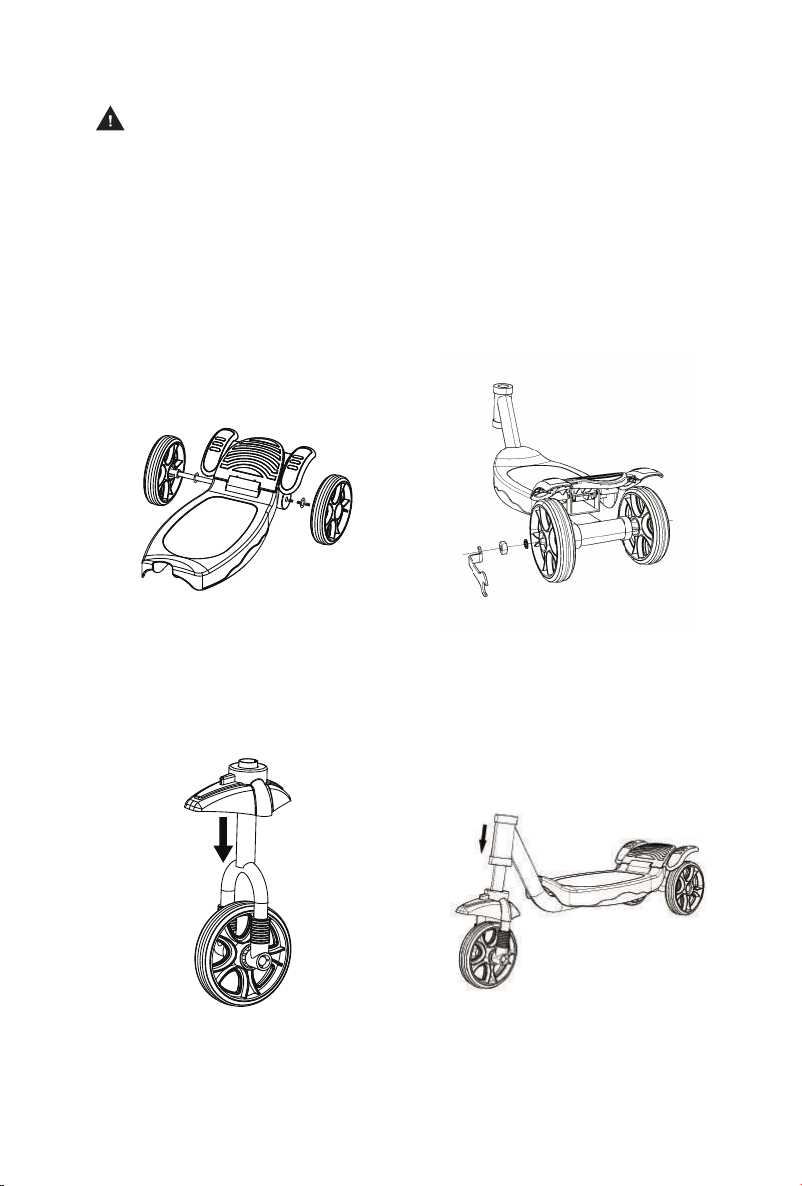
Step 1: Step 2: Secure the rear wheel with
the rear axle washer and
the rear axle nut .
Step 3: Place the front fender on fork stem as shown. Insert the front fork
(together with the front wheel) into the frame headtube, making sure
the slot in the front fork faces the rear of the scooter.
Insert rear axle through the
rear wheel, install axle bushing
washer and rear deck. Then
place the other axle bushing
washer to the rear axle.
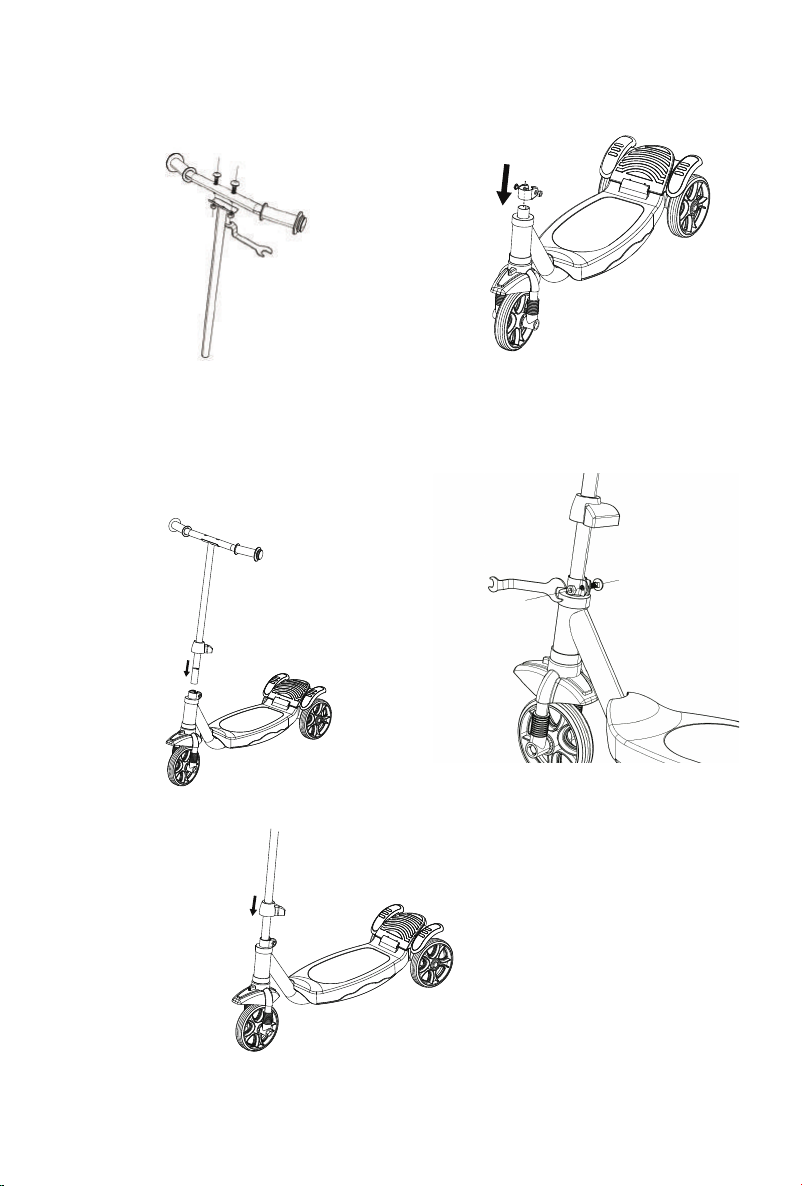
Step 5: Place the handlebar clamp
onto the fork stem tube.
Step 4: Attach handlebar to the
stem tube. Secure the handlebar
with the M6 bolts and nuts.
Step 6:
Slide the protective cap onto the
handlebar stem tube first. Then
insert the handlebar into the frame
head tube to the minimum insertion
mark, then align the handlebar and
the front fork.
Step 7: Tighten the nut onto the bolt
of the handlebar clamp
securely.
Step 8: Slide the protective cap down to cover the handlebar clamp.
Note: Tighten the handlebar nut enough that it will not come loose.
8
9
RIDING YOUR SCOOTER
BEFORE EACH RIDE
1. Verify the scooter is working properly.
2. Reread and follow all safety warnings in this instruction manual.
RIDING YOUR SCOOTER
1. Place your foot on the footboard of the scooter (i.e. usually the left foot for
the right handed) and use your other foot to propel the scooter.
2. To stop the scooter, use one foot to press the brake at rear and step off the
footboard.
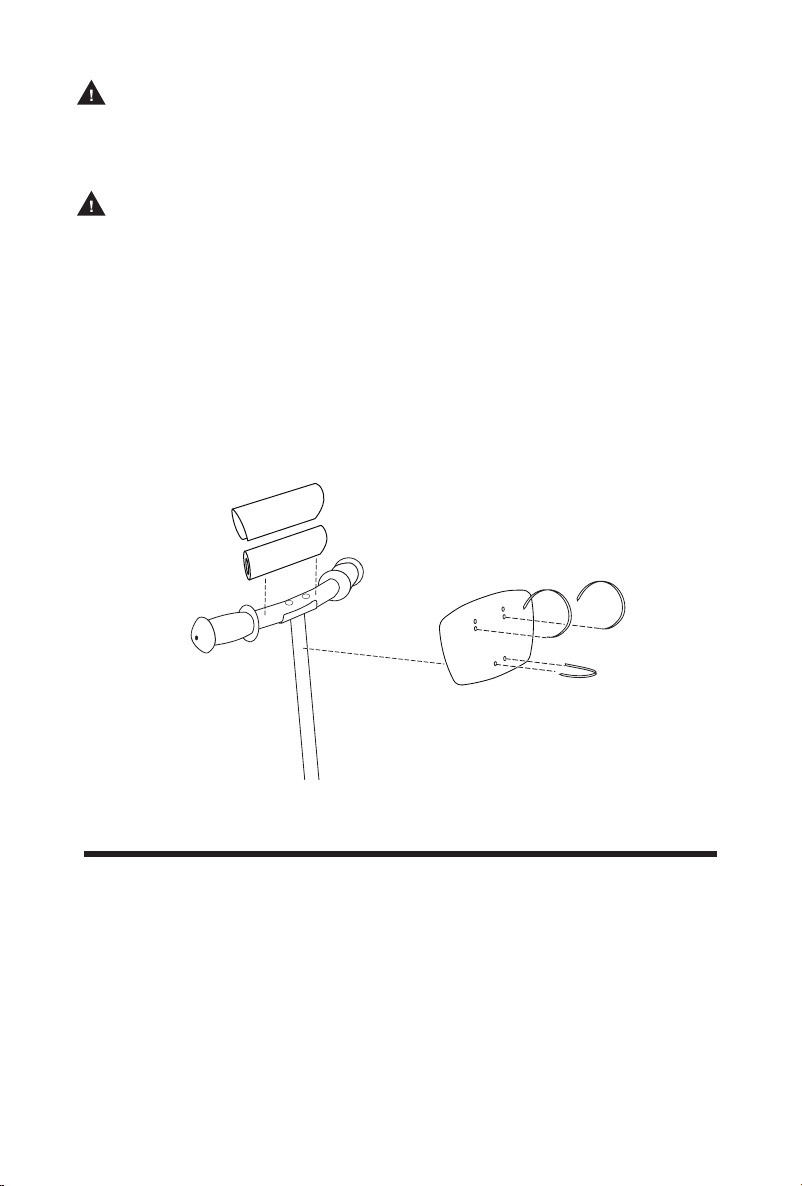
ACCESSORIES TO BE ATTACHED
Secure the accessories (number plate, pad, bag, bell, streamers) if equipped, to
the handlebar.
WARNING:
Ensure that the minimum insertion mark on the stem tube in not visible
below the top of the steerer tube. Secure the handlebar in the steerer
tube by tightening the clamp bolt.
WARNING:
Test the security of the handlebar by clamping the front wheel between
your feet and trying to move the handlebar up, and from side to side.
The handlebar should not move when applying pressure.
IMPORTANT NOTE

10
• Handlebar hand grip should be replaced if damaged as bare tubes
have been known to cause injury.
• Replacement forks must have the same rake and tube inner diameter as the
original product.
• Not suitable for children under 3 years as pieces may break off and cause a
choking hazard.
• Ensure any accessories supplied are secure to the product and do not
interfere with operation of the unit.
• Replace worn handlebar grips.
A scooter that does not work properly can cause you to lose control and fall.
Inspect the entire scooter thoroughly before every ride, and do not ride it until
any problem has been corrected.
• Periodically inspect the scooter for wear or damage.
• To clean the scooter, use a mild soap and water solution and clean cloth.
Rinse clean with water to remove soap residue.
MAINTENANCE
Before every ride, check your scooter and its components against the
following checklist. In addition, if you have an accident, even a minor one,
always inspect the scooter thoroughly before riding the scooter again.
• Check that wheels are straight.
• Check attachment of bolts on wheels.
• Check handlebar and stem for signs of stress or fatigue.
• Inspect your tires for wear or damage.
• Check the attachment of the handlebar.
• Check the wheels to see if they can spin smoothly.
• Check the product before each ride to determine if any potentially hazardous
parts or conditions have developed.
• Replace worn or broken parts immediately.
WARNING
Tabla de contenidos
Otros manuales de Scooter de Dynacraft

Dynacraft
Dynacraft 8803-39 Manual de usuario

Dynacraft
Dynacraft My Little Pony Manual de usuario

Dynacraft
Dynacraft ELECTRIC POWER SCOOTER Manual de usuario

Dynacraft
Dynacraft Surge Manual de usuario

Dynacraft
Dynacraft MONSTER HIGH Manual de usuario

Dynacraft
Dynacraft Barbie Manual de usuario

Dynacraft
Dynacraft MONSTER HIGH Manual de usuario

Dynacraft
Dynacraft 24V eSKATEBOARD Manual de usuario

Dynacraft
Dynacraft FOLDING Manual de usuario


