- The chimney should run through the interior of the building. Install insulated double-walled
pipes when the chimney flue runs outside the building.
- When the flue has to have angles or bends, avoid horizontal or downward sections.
- You must plan for the cleaning of the flue and, if necessary, install pipes with access holes or
cleaning hatches in sections that are not easily accessed.
- When a metal chimney is fitted inside a brick chimney, it must exceed the height of the latter
and protrude a few centimetres at the top.
- The installation of the pipe and cap must strictly prevent water from getting into the
appliance on rainy days. Water causes more damage to woodburners than the high
combustion temperatures for which they are prepared.
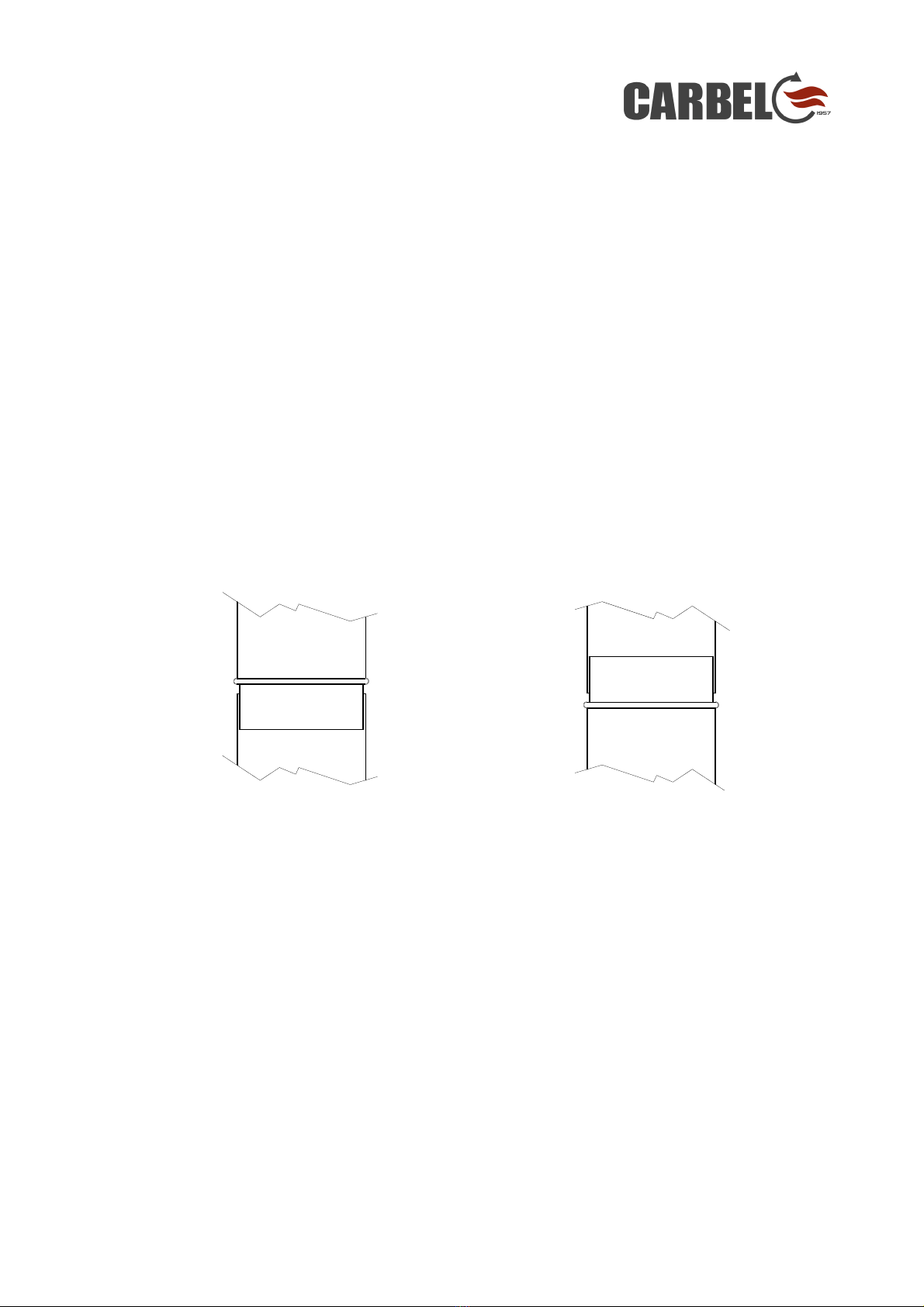
When the pipes run through the inside of the home or a brick chimney, they should be
mounted as shown in Figure 1 to prevent liquids produced by the condensation of the gases
flowing through the joints and out of the pipes. If a pipe section runs outside the building it must
be mounted in the direction shown in Figure 2 to prevent rainwater draining down the exterior of
the pipe and entering into the pipe interior through the joints.
Figure 1.
Correct direction of the pipes inside the
home. The liquids produced by the
condensation of the gases do not flow
through the joints and out of the pipes.
Figure 2.
Correct direction of the pipes outside the
home. Rainwater does not enter into the
pipe through the joints.